My Radiotherapy Experience
The three pillars of mainstream oncology are radiotherapy, chemotherapy and surgery. None of these really appealed to me but that wasn’t going to stop me using them if it was a matter of staying alive.
Speaking from my own experience, when you initially find out that you have cancer you are in a mentally fragile place. I felt vulnerable and a bit scared if I am to be honest. The biggest problem I found was that I knew very little about cancer. The concept was like a big hammer hitting me on the head so that all my attention was stuck on it. It took a while before the fog started to dissipate so I could start to see a bit more clearly.
As I said earlier, my initial experience with oncology was in the public health system. I had found a specialist who specialised in plastic surgery, this guy had been referred by a friend and I was very grateful. At that stage all I was concerned about was getting some answers. The first step was to have tests. I was scheduled to have an MRI, a biopsy and a PET Scan. Once the tests were done I had to wait for the results, it seemed like forever. The specialist referred me to his Head and Neck team at Monash Hospital in Melbourne. I fronted up and discovered that it was the same place that my Mum and Dad had been treated toward the end of their lives plus it was just down the road from my old High School and not too far from our family house where I had spent my teenage years. The irony was not lost on me. I had done everything in my power to escape from this suburb 50 years earlier and here I was back again waiting to have judgement passed on me about my future. The first meeting was to be with this Head and Neck team and was to be called Staging.
Stage refers to the extent of your cancer, such as how large the tumor is, and if it has spread. Knowing the stage of your cancer helps your doctor:
- Understand how serious your cancer is and your chances of survival
- Plan the best treatment for you
A cancer is always referred to by the stage it was given at diagnosis, even if it gets worse or spreads. New information about how a cancer has changed over time gets added on to the original stage. So, the stage doesn’t change, even though the cancer might.
Most staging systems include information about:
- Where the tumour is located in the body
- The cell type (such as, adenocarcinoma or squamous cell carcinoma)
- The size of the tumour
- Whether the cancer has spread to nearby lymph nodes
- Whether the cancer has spread to a different part of the body
- Tumour grade, which refers to how abnormal the cancer cells look and how likely the tumour is to grow and spread
I was terrified. The outcome of the initial meeting was that I needed to have an operation on my throat to get some more material for biopsies. This was going to involve a general anaesthetic and a few days in hospital. Their main concern was finding the primary source of the cancer. All that showed up on the PET Scan was that there was cancer in a lymph node on the left side of my throat. I won’t go into too much more about this period but I will say that there was another operation and the outcome was that they could not locate a “primary cancer” and that they recommended an operation to remove the cancerous lymph node plus surrounding lymph nodes just in case. I would end up with a “cool scar” and other potential deformations in my throat and neck area. I wasn’t too happy about this but I agreed.
This was late January 2021, almost 2 months after my diagnosis. I was already having daily IV infusions and Hyperbaric Oxygen plus recording all my food and drink. I was constantly in a state of nutritional ketosis and overall I was feeling pretty good. Dr Eng recommended that I see a radiologist who he had started working with. His idea was to treat my lymph tumour with low doses of radiation over a longer period of time. Oh shit, this was a new component that until now I hadn’t even considered. I gave it a bit of thought and decided to trust Dr Eng. You see, the idea of having my throat cut wasn’t really all that appealing.
I was listening to podcasts about integrative approaches to cancer treatment every day. When I was in the sauna, while I walked, even while I slept! The general message that I was getting was that by doing a combination of treatments you could prepare and protect your healthy cells while making your cancer cells more vulnerable to treatment. This made a lot of sense to me. The analogy was made of a battle between the Greeks and the Spartans. They all sort of look the same so differentiating on the battle field wasn’t all that easy. So the idea was for the General of the Spartans to have a signal which when uttered would command the Spartan troops to raise their shields above their heads to protect themselves. The Greek troops would be left standing totally vulnerable to the arrows that the Spartan bowmen fired en masse. So to put it simply my healthy cells would be protected and my cancer cells would be highly sensitive to the radiation therapy. I wasn’t going to kid myself. I wanted those cancer cells dead and if this helped to kill them I was in for it.
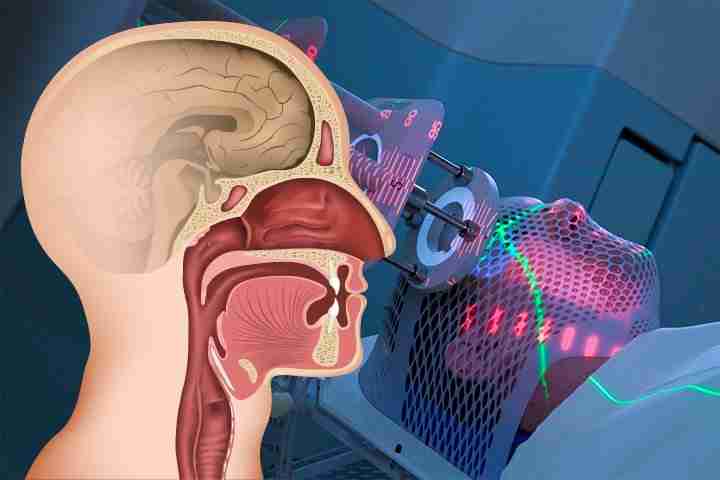
I had an initial meeting with the radiologist. Dr Eng had got it right. The doctor who he referred me to was about 70 years old and had been practising for decades. He was laid back, friendly and once again quietly confident. The initial consultation went for a lot longer than I expected. So long that I forgot that my car was parked in a 90 minute spot and I ended up with a parking ticket. He explained the strategy and went over the theory of aiming the radiation at a very exact and precise location for a short blast five days a week over a 6 week period. I would be having another MRI and from the information that this imparted he would work out the best dose and the exact area to hit. This seemed pretty good to me. I knew that the radiotherapy was going to be toxic to my body but I was doing so many adjunct therapies to protect me that I felt confident that I was going in the right direction.
A short while before I began the radiotherapy I discovered an American nutritionalist named Miriam Kalamian. She specialised in the use of the ketogenic diet to minimise the effects and proliferation of the cancer cells. I seriously recommend that you read her book (……….) and watch a few of her YouTube podcasts. Her personal story is fascinating as well as touching. Miriam’s approach was very black and white and appealed to me and the state of mind that I was in at the time. I organised a Zoom consultation with her. She lives in Montana in the U.S. My only contact with Montana was decades earlier through a song by Frank Zappa in which he sings about going to Montana to start a dental floss farm. Great track from an album called “Apostrophe”. The consultation was long and informative. I must say here that the fact that I had already done a huge amount of personal study and groundwork made it far easier to understand and accept the principles that she propounds. Miriam uses the Cronometer app to help track the macros you eat and to tweak them to get into the right level of nutritional ketosis. I’ll write more about this in my chapter on biometrics. What I was concerned with was to minimise the toxic effects of the radiation and for this she was a great help.
I’m not going to even try to go into the mechanism of radiotherapy bit I do recommend that you try as hard as possible to get a basic understanding of it if this is the road that you choose to travel down.
I started my radiotherapy on February 22nd, 2021. Here’s what I wrote that day. Over the next 6 weeks I arrived for my Radiotherapy treatments each morning. The technicians were very professional, always on schedule. I was in and out in about 20 minutes each day. I went directly from the radiation therapy to my Hyperbaric Oxygen session. There has been a lot of research done on HBOT and wound healing. I attribute the almost complete lack of side effects from the radiation therapy to having daily HBOT and IV treatments plus all of the other adjunct therapies that I was doing. Each day when I finished my Oxygen I went across town to my IV session. I finally completed my radiation on April 8th.
I was so damn pleased that I had very minimal side effects. My neck was a bit red but this was only up there with a mild sunburn and my taste buds were slightly compromised for a couple of weeks. Food didn’t taste so exciting for a while. That was it. The nurses were very impressed but strangely enough they didn’t ask me about what I had been doing to protect myself from the “deadly rays of radiation”. They did have an idea about all of my strange ideas because I spoke about what I was up to during our weekly check up sessions. They all cared but at the same time the idea that there could be anything else apart from mainstream oncology was not part of the picture.
I’ve seen my radiotherapy oncologist a few times now and had several Zoom consultations with him. He is a really cool guy and from what I can fathom he knows his stuff when it comes to treating cancer with radiation.