A General Review of My Health and Lifestyle
There has to be something scientific about anecdotal studies or personal observation. By anecdotal I mean a result based on my own personal experience as opposed to a large scientific study. If the results are empirical and can be seen and felt then for me that is a reflection of the workability of a treatment or regimen. The one thing that I cannot be certain about is what actions worked better or were more efficient and effective than others but there is also a gut feeling and personal intuition that you can use to guide yourself.
Over the past 3 years I have turned my health around from what I see in retrospect as 25% efficiency to 80% efficiency. These figures are just plucked out of my head and are abstract estimates, but for me they are representative of my beginning point and where I am now. I’d say at the beginning of my journey I may have had 5-10 years of active life left in me whilst now I optimistically believe I can arrive at 100 years of age in 30 years time in pretty good shape. This is just a viewpoint that I hold although I do have confidence in it happening based on how things are going.
The most basic, fundamental ingredient for me throughout the past 3 years has been self discipline and following close by, almost neck to neck comes knowledge. Persistence has also been an integral part. Looking back I can see that my transformation is based on “trilogies”. Abstract triangles that I have used in my life for the past 46 years.
KNOWLEDGE, RESPONSIBILITY, CONTROL
BE, DO, HAVE
AFFINITY, REALITY, COMMUNICATION
START, CHANGE, STOP
CREATE, SURVIVE, DESTROY
As words and concepts they are only “significances” but when they are understood and are used as tools they can guide your actions and help you understand what you have done and what you need to do to better your interaction with the universe.
I’ll start with BE, DO, HAVE. It’s as simple as working out a plan based on a goal. It could be called “Planning by Product”. What is a product in this sense? It is something tangible that you can do something with. It has some sort of value and can be exchanged with some other aspect of the universe.
You first go backwards and then forward.
What did I want to have?
Based on my condition in late 2018 I was on my way down a big hole. I was 66 years old, grossly overweight with a big protruding belly, addicted to alcohol, my liver was on it’s way out, my blood pressure was out the roof, I displayed all of the symptoms of metabolic syndrome especially insulin resistance, I was sedentary and unfit plus unknown to me at the time I had the genesis of cancer.
What did I want to have? I wanted life, health, purpose, mental clarity, happiness. I wanted all of the things that I wanted when I was young. I wanted to live in a healthy and fit body until I was at least 100 years old.
The first thing I had to do was to confront that I wasn’t going to make it in the condition I was in. I wasn’t going to have what I wanted so badly unless I really confronted where I was at. So the next step was to work out what I was going to do.
At the time the water (of life) was a bit murky so the things I needed to do were framed as broad strokes like stopping drinking, losing weight, doing exercise, eating well …. all generalities that needed to be refined. I had begun though and had some ideas about what actions I needed to take.
So my next challenge was what role “I” was going to play in all of this. What did I need to be to pull this off?
What does it mean to be? To exist? To hold a position in space?
I realized that no matter what, I was already being. Being what though? I had to assume an identity, to assume control of my own destiny. To own the responsibility for my own condition and simply accept that I had arrived where I was because of my own actions and inactions.
Without really even knowing it I had arrived at a point that I could look back at later and see that I had decided to be a strong, self disciplined person who accepted responsibility for his own destiny.
BE, DO, HAVE
So as a natural consequence of arriving at the realization that “my life and condition must be confronted” I had some sort of vision of what I needed to do to have health and happiness. The first thing I had to do was to completely stop drinking alcohol. This was my albatross, the invisible cross I carted around on my shoulders that gave me permission not to accept responsibility for my own future. Once I had rid myself of this addiction I could then do the things I needed to do to work toward arriving at a place of health and wellness.
KNOWLEDGE, RESPONSIBILITY, CONTROL
My next step was to glean whatever knowledge I could about how my body worked and what I needed to eat and not eat to lose weight, get healthy and handle the brain fog I experienced every afternoon, curtail the demons of addiction. Without knowledge you are blind and wandering aimlessly through a maze of confusion.
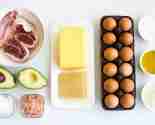
How do you know if you have found the correct information and knowledge? There is so much data out there which is now available to all of us. You have to find a path that is real to you. I was guided by information based on studies where results could be confirmed. I had to go with something and I opted to choose a healthy ketogenic diet which is essentially low carb, no processed food, no sugar. Mainly food that I prepare myself in my own kitchen from fresh, preferably organic ingredients …. a moderate amount of protein, grass fed and finished meat, wild caught fish, pasture raised chickens and free range organic eggs and high fat comprising of grass fed butter, cold pressed olive oil, MCT Oil, avocados, saturated fat on meat and some full fat dairy like hard cheese and thick cream, nuts like macadamia and walnuts and a few blueberries and stewed rhubarb from time to time. When I do bake, which is rarely, I use coconut and almond flour, inulin and 95% cocoa chocolate, coconut butter or very occasionally chocolate flavoured with stevia or monk fruit.
The transition was gradual and I worked toward a healthier and more low carb, high fat diet until my body had transitioned from burning glucose as a source of fuel to ketones which are produced by the liver when the body starts burning fat as fuel.
This took a lot of work and a lot of research and study. The knowledge was there but not all that easy to assimilate. It took time and effort.
The other big change that I made back in 2019 was to ditch breakfast. I found the concept of intermittent fasting online somewhere and it made enough sense to me to give it a go. It was a challenge initially but as the days went by I got more and more used to it that eating from 1 pm to about 8 pm became my new normal. Just 2 meals a day, no snacks. Somewhere in my life I had been convinced that breakfast was crucial to my well being. The interesting thing though is that most breakfasts are full of carbohydrates, laden with glucose and fructose like cereal, toast, jam and fruit juices, all of which cause insulin spikes which ultimately contribute to insulin resistance, weight gain and metabolic syndrome. If you did a chemical analysis of most breakfast food and drinks you might be shocked at the lack of nutritional value. It seemed to me that it’s akin to starting your day by poisoning yourself.
I didn’t have any food at all outside my prescribed times, this is called “the eating window”. The idea is to give your digestive system a rest each day for at least 16 hours. This gives your body a chance to heal itself as well as to keep the insulin levels under control. As I transitioned from burning glucose as a fuel to burning ketones I noticed that hunger was no longer an issue and the brain fog that struck each afternoon slowly dissipated until it just didn’t exist anymore. In the past I needed snacks to get my blood sugar up but as I delved further into the ketogenic diet my blood sugars normalised and my cells were happy with the fat, vegetables, protein that I was eating. I ate loads of broccoli and cauliflower, brussel sprouts and spinach drenched in grass fed butter. Cruciferous and green leafy veggies. Initially I ate a lot of bone broth that I prepared myself and created low carb soups that were always on hand.
Here’s another important point. Preparation is crucial to success. Planning and preparation is an integral part of successfully transitioning to a ketogenic diet. There are so many things that you just can’t eat. Almost all takeaway food has processed carbs in it. There is so little that you can buy from dine-in or takeaway food shops that will sustain you when you are actively pursuing a ketogenic diet. In the past I could just throw together a sandwich if I felt hungry or stuff my face with some sort of food made from grains or laden with toxic vegetable oil, either as an ingredient or a cooking method, a pastie, a pie, noodles, savoury slices. Try something, go for a walk in a food court in a big shopping centre and see if you can find something to eat that isn’t full of carbs, sugar or seed/vegetable oil. All contributors to the inflammation that is making you fat and sick.
OMG, I’m sounding like a food fascist but the thing is that when you start learning about nutrition and food you tend to eventually have the epiphany that the main reason for eating is to supply your body with clean, healthy fuel that can be converted into energy. I concede that part of eating is the pleasure that one derives from it as well as the social experience of sitting down with your family and friends but you can still put together a meal that tastes amazing and if the worse comes to worse you can take your own food with you to social events.
Knowledge can be a double edged sword. At the same time it gives you the power to be responsible for your own well being and in a position where you can be in control. There it is “knowledge, responsibility and control”.
Another aspect of being in control of your own health is testing. In the 21st century we have amazing technology available at our finger tips. Technology to measure glucose and ketones in our blood, oxygen levels, exercise, sleep patterns and quality, heart data. There are amazing apps that we can use to record what we eat and drink which then break this raw information down to useable data. It all takes time and for some of us may be considered hard work but I can assure you from my own experience that when I do keep these records I can be far more responsible and in control of my own health.
Discipline leads to control . You almost have to be moving towards a goal (have). As soon as any of these factors drop out it is easy to lose direction and even fall off the wagon. Habits can be both counter to your survival as well as pro survival. So yes, all of this takes more time and effort but if you can be in control of your habits you can create more time. This might sound “supercalafragilistic”.
For me it was all about scheduling and having some sort of form to my daily activities, testing, record keeping and regimens. The other factor that I want to address here is the financial cost of being healthier. Good quality food costs more. For example, organic vegetables, grass fed and finished meat, free range organic chickens and eggs, good quality fats all cost more and this can be daunting, especially when you see a bunch of organic broccoli costing twice as much as the commercially grown version. This is where you have to remember that the reason for eating is to supply good quality fuel to your body so it can do the work it is capable of to create energy and to heal itself. So, on one hand the raw ingredients I buy now cost more but I need less and I waste less. I no longer spend money on alcohol. It’s easy to kid yourself but alcohol costs a fortune and also supplies huge amounts to government coffers through added taxes. I estimate that I personally save $10,000 a year now that I abstain from alcohol. Preparing your own meals is another good example. How easy is it to spend $50 a day (or more) on takeaway coffees, breakfast and lunch. That’s another $10,000 “plus” a year. What I’m saying here is that you can actually save money while you pursue a healthy lifestyle. You won’t need breakfast. You can take your own lunch with you. You should stop drinking coffee at lunchtime anyway because it will affect your sleep. Once again it’s simply a matter of confronting what you currently spend on satisfying your body’s needs and how much time you spend eating each day. It takes a bit of work but now you can invest this time and money into being healthy and fit. Do yourself a favour and work out what percentage of your wage you spend on eating and drinking. You may be surprised. And this added scrutiny may enable you to redirect more time, energy and resources from indiscriminate eating and drinking to activities which will improve your health, longevity and fitness.