Nutritional Ketosis and Cancer
It seems that there is a common misunderstanding in regard to the ketogenic diet and the intake of healthy fat. Unfortunately the word fat has such morbid connotations in the vernacular of food in this day and age.
From what I can see most people mistake “keto” for a low carb, high protein diet as opposed to a diet that is designed to put the body into a state of nutritional or therapeutic ketosis (Not to be mistaken with diabetic ketosis).
I have to admit that even now I find it almost overwhelmingly uncomfortable when I look at the “macros” and see that almost 80% of the food eaten needs to fit into the “fat” category. How do you explain this to people. In light of the past 50 years off western dietary propaganda it seems gross.
Even when I was a young boy my mother kept a lard jar, we ate butter and fatty roast lamb was served up as Sunday lunch with a few simple vegetables. The interesting thing is that back then obesity was not a common phenomena.
I am going to put forth a simple hypothesis (a supposition or proposed explanation made on the basis of limited evidence as a starting point for further investigation). My hypothesis is based on my own limited experience and the results that I got, but it is also based on actual results and outcomes that can be tested and measured.
There are innumerable books that are pro-keto and an equal amount of articles by naysayers who theorise that keto is a fad diet that is only popular because a few celebrities are waxing lyrical about it’s weight loss potential. My question is “How does one work out whether a well constructed, healthy ketogenic diet can bring about a greater level of health and well being if a) a healthy ketogenic diet cannot be properly and correctly defined and b) this data has not been intelligently applied to a real live person and the results observed and measured?”
I didn’t study biology at school, up until the past few years I have never studied much about how our bodies work on a metabolic and cellular level and anything that I have learned is from researchers who I have found on the internet and chosen to trust based on what I consider to be their intelligence, pragmatism and what I perceive to be their ability to think logically and scientifically. I have used my own body as the “guinea pig” in my personal experiment to apply the data I have gleaned from my extensive study and personal observation. My study and application and the results and observations of my efforts are 100% anecdotal and should not be construed as medical advice or scientific research.
So here is my hypothesis.
When you look at the human body in the 21st century there are signs that our modern diet and lifestyle have led us as a species toward obesity and compromised health. As a species and especially in the more affluent western civilizations we eat based on our socio-economic status and desires as opposed to eating for health, nutrition, fuel and longevity. When looked at through the evolutionary lens the human body is not all that far removed from our ancestors who were essentially hunters and gatherers not much more than 6,000 years ago. This appears to be roughly when we started settling down in cities and growing crops and changing the way we lived our lives and pursuing our lifestyle. Fast forward to the 21st century and a vast majority of people live in cities do limited physical movement and have access to all sorts of food, 24/7 … based on their financial position and desires. Most of this food is processed and contains huge amounts of carbohydrates, sugar/high fructose syrup and toxic seed oils. The simple truth is quite possibly that this food looks good, tastes great and makes you want to eat more but in real terms it does not contain a great deal of healthy fuel to supply the body with the nutrients that it needs to supply it with energy, to continue to be healthy and have a functioning immune system that will protect us from our own auto immune problems and external pathogens.
My observation is that the food we eat is meant to be the fuel that provides us (our bodies) with energy, nutrition, fibre and the wherewithal for our cells to do their job and to keep us moving, using our cognitive powers, looking good and reproducing. All you need to do is to compare a photograph taken at a busy beach in the 1940s to one taken these days to view how our bodies have changed.
I believe that sometime in the 20th century we were hoodwinked into believing that saturated fat was responsible for most of our physiological problems and ill health and that we were offered an alternative of low fat, highly processed foods that were full of sugar or fructose plus polyunsaturated vegetable oils that were supposed to make us healthy but which in actual fact have led to a huge deterioration of health and consequently opened the door for big Pharma to supply us with pills and medicines that are supposed to combat the issues that are being proliferated by toxic processed food and a sedentary lifestyle.
Based on this hypothesis I made a decision in early 2019 to change my diet, lifestyle and general outlook to life. I was 67 years old at the time, overweight, unhealthy and pretty much on the road to an early death. I’m not going to go into what I did in detail but now 3 years later I am 30 kgs lighter, my blood pressure is 100% normal, my heart is in great shape and sits around the low 60s, my liver is in tip top shape and functioning as it should, I have 3 times the energy I had back when I began, I don’t get sick … for example I have not had corona virus. I sleep well, my cognitive powers have vastly improved as has my self discipline and overall responsibility for my own well being and health, I have a flat stomach,18% body fat and a BMI of about 23 and I am happier, more optimistic and enthusiastic about life.
To put it simply I started studying the bodies functions, metabolism and looked at how the food I ate influenced the way my body functioned including hugely significant subjects like insulin resistance. Slowly and almost clumsily I changed my diet to a healthy high saturated fat, medium protein and low carb diet and the results have been spectacular. I’m never going to say that it was easy, I will admit to having to give up most yummy food and treats, pretty much anything that is baked but I learned how to transform my appreciation of taste to the point where even cauliflower tasted great.
Cancer and Ketosis
So where does cancer fit into my personal experience with the ketogenic diet?
Firstly I need to tell you a couple of things about myself. I smoked cigarettes for over 40 years, I loved carbohydrates and after my son passed away in 2012 I became an alcoholic. I’m not kidding when I say this, I was drinking a large bottle of vodka every night. Sure, sometimes I would give up for a while but I was truly addicted and always ended up convincing myself that “I was a Russian” and hitting the hard stuff again. My drinking problem developed over several decades but hit its peek in the 2000s. I finally gave up, cold turkey on February 14th, 2019, the night before we embarked upon a 4 week trip to India. I didn’t tell anybody, I just stopped. I am not advocating cold turkey when it comes to addictions. You really should talk to your medical provider and get some guidance. But it worked for me. I haven’t touched alcohol since but I still identify as an alcoholic. I used a lot of spray adhesive and spray paint back in the 80s when I had a business making block mounted prints. I didn’t wear a bloody mask which is hard to believe now but I suppose that when you are younger you feel indestructible. I also suffered from hypoglycaemia in decades gone by. On a positive note, I did try to eat healthy food. I was a vegetarian for about 4 decades but the truth be known my dietary choices were based on gut feelings not scientific research and some of my “healthy habits” surely had a negative impact.
Who knows why some people get cancer and others don’t? Yet, there is more and more research and speculation all of the time. This is a good thing from my perspective. There are huge questions to be tackled and I’m open to any speculation.
I was diagnosed with Squamous Cell Carcinoma on November 24th, 2020. When did cancer start developing in my body? Why? Nobody could tell me. In actual fact the oncologists couldn’t even locate the primary source of my cancer, even after a couple of diagnostic operations it was still a mystery. Still is.
For all I know it may have been caused by the alcohol or maybe the cigarettes. The point is that I did something somewhere in my life to compromise my body enough for my mitochondria to be damaged and for my cells to become cancerous and life threatening.
In my case the cancer had formed a tumour in my lymph nodes in the left side of my neck which falls into the category of head and neck cancer.
What a uniquely freaky experience being told that you have cancer is. The emotions, the strange thoughts, the fear, the “why me”, the unknown. At this point you have two choices. One is to put yourself in the hands of the mainstream oncologists who deal with cancer every day of their lives and the other is to make a decision to find out for yourself. To study what you can about cancer, it’s potential causes, current research, alternative viewpoints. It is like being stuck in a vortex, spinning around, not in control and wondering how long you have to live. As I spun around the vortex I grabbed onto whatever I could and looking back now I admit that I initially put a lot of control into the hands of the mainstream guys who seemed to know what they were talking about. I had a couple of pretty full-on diagnostic operations that didn’t come up with any answers and then after the first month had elapsed somebody suggested that I look at hyperbaric oxygen therapy, this led me to an integrative doctor who specialised in cancer and treating it with IVs and other alternative protocols. Thank god, this was enough for me to escape the vortex and to finally put some space between myself and my condition. This is when I realized that knowledge is power and thus my journey began. To cut a long story short by the middle of 2021 I was given the all clear and now a year later I’m still free of cancer. I never experienced any illness or negative symptoms and once I started on my road to personal empowerment and responsibility I never once doubted that I wasn’t going to cure myself with the help and support of the team I had assembled to help me beat the cancer.
The Ketogenic Diet
By now I was already pretty well versed in the ketogenic lifestyle. Looking back now over the past 18 months I firmly believe that my strict adherence to a very strict healthy ketogenic diet and the goal of creating a “high” ketone level in my body was the bedrock of my strategy against cancer. There is no doubt that there were many parts of this strategy including Hyperbaric Oxygen Therapy, Vit C and Curcumin IVs and other alternative medical therapies, exercise, journalling, infra red sauna and cold plunge, intermittent fasting, radiation, recording metrics and more.
The sword that I could wield everyday that became my main weapon was my diet.
The basis of being in nutritional ketosis is that the body does not need sugar/glucose to function when it has been adapted to burning fat. Cancer thrives on sugar, a bit like a “scoby” needs sugar to produce kombucha through the process of fermentation. I’m not going to even try to explain this now but I will add some references that you should take a good look at. The most important thing to know is that you can starve the cancer of sugar which will help to inhibit its proliferation.
From my own experience of talking to people the biggest misunderstanding and challenge is the amount of healthy fat that is needed and that a ketogenic diet for cancer is very low in carbohydrate, about 20 grams. You’d be surprised how low this is. Dieticians categorize food into macros …. fat, protein and cards. The body needs fat for energy, protein to repair tissue and build muscle but once you are in nutritional ketosis you don’t need carbohydrates. I urge you to do some serious study into insulin resistance and insulin in general. There is so much data available and it will enlighten you on the pitfalls of the standard Australian diet (SAD).
The breakdown is something like 80% fat, 15% protein and 5% carbohydrates. According to the research of American cancer researcher Dr Thomas Seyfried the goal that you are going for is to achieve a specific balance between blood glucose and blood ketones. This is measured by a metric called the Glucose ketone Index (GKI). This metric is worked out by dividing the ketones into the blood sugar/glucose. Example : BS 4.5 Ketones 3 – 4.5/3=1.5. According to Seyfried the optimum metric to be aiming for is 1. That means you would need to shoot for a blood sugar reading of 4 and a glucose reading of 4. I won’t kid you, this isn’t easy but I did achieve it quite often so you can as well. My advice is to use an app called Chronometer and religiously record everything you put in tour mouth. This takes time but you will get faster and more efficient as you get the feel of it and the metrics it gives you are invaluable. For example it will tell you how many grams of fat you have eaten as well as carbs etc after each day. It’s all about keeping a track of the figures and tweaking your diet and lifestyle as needed.
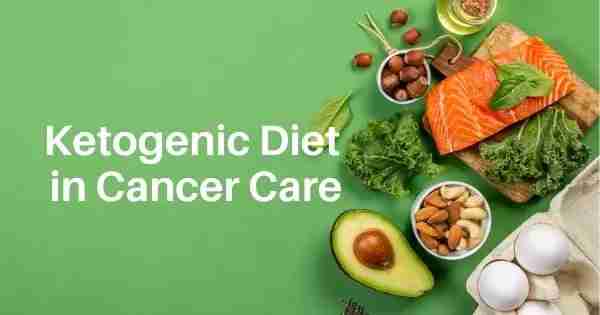
The other suggestion I would make to help you stay in a state of nutritional ketosis is to practise what is called intermittent fasting or time restricted eating. The general idea is that you stop eating at say, 7 p.m and do not put anything in your mouth for the next 18 hours which means you eat lunch at 1 p.m, ideally a healthy fatty meal which could be an avocado, some eggs and a salad with organic cold pressed olive oil. Another amazing tool is MCT oil, a medium chain triglyceride derived from coconut oil. A couple of table spoons of this will go a long way to a) increase your ketones and b) get your fat intake up.
There is no way that I can go over everything in this post but the main thing that I want to say is that by keeping my blood sugar stable and relatively low and keeping my ketones between 2.5 and 4 (ideally 4) I was able to help slow down the proliferation of the cancer cells and also help my cells and overall body respond better to the oxygen, IVs and other therapies and to help protect my body and cells against the negative effects of the radiation therapy that I received. In actual fact the nurses were scratching their heads in regard to the fact that I really did have minimal effects from the radiation therapy.
I’ll try to expand on this post over the next few weeks and insert references and podcasts from people who I listened too and trust in regard to nutritional ketosis and cancer.
One person who I highly recommend is Dr Steven Phinney. He is the guy who coined the term nutritional ketosis to differentiate it from diabetic ketosis which is toxic and dangerous. I will reference 3 talks that he has done on the subject of nutritional ketosis so you get an idea of what a ketogenic diet is all about.
I hope this helps for now. There is a lot more that I can write about but this is meant to just be a guideline and to help understand a few basic premises.
What I’ve done below is to reference a whole lot of links that cover the ketogenic diet and cancer. If you are reading this you might be interested.
The following is a fabulous discussion between Dr Peter Attia and Dom D’Agostino Ph.D
The complete interview is well worth listening to BUT it is 3 hours long. The really relevant section to cancer starts at 2 hours. I firmly recommend listening to this end section.
There are many more references that I will add as time goes by so keep posted.