My First Day of Radiation Therapy.

Big day today. Zap. Bang. Boom.
X-Rays pointed at my throat and zapped by 2 gy (a low measurement) of radiation. Cancer killing rays but also healthy cell killers. Actually it kills whatever it’s pointed at.
I got my GKI (ketone glucose index) to 1 yesterday and the day before, this has been a huge accomplishment which I have been working toward since I first discovered that I had cancer. This is called nutritional ketosis.
From what I understand this will help my cancer cells “stand up to be destroyed” and help my healthy cells go into “protection mode”. I need to ask more questions and study in depth about this so I can understand the mechanics more and I need to find exogenous ketones quick smart because it looks like the ketone magic happens in the afternoon for me, not so much in the morning. I will blood test just before I get my mini Hiroshima. Having said that, my ketones were 4.7 before I started the radiation this morning, which is fabulous.
I’m relieved yet nervous that the day is finally here to begin stage one of the intense part of the cure for my cancer.
I see it as a 2 pronged strategy.
The first part is to get rid of the active, malignant cells and the second and possibly more important part is to pull down the numbers on my circulating tumour cells which will greatly reduce the threat of the cancer coming back.
I am being so intensely disciplined in regard to my treatment. I can tweak my diet even more but overall I am very impressed with what I have achieved applying the ketogenic diet to my condition. Plus the Hyperbaric Oxygen Therapy, IV infusions and immunotherapy that I am doing.
My goal is metabolic health. I need and want healthy happy cells throughout my body.
Cells whose DNA are not mutated and cells with happy and healthy mitochondria plus an active, intelligent and functioning immune system that does it’s job well.
I have to admit that if I do come out the other side of this without cancer I will have gained a huge amount of knowledge about my body on a cellular and functional level. This new information will be invaluable in my quest to age well and have lots of fitness and energy.
Someone once called me a “glass half full” sort of person. It didn’t mean much to me back then but now after the past 10 weeks I have a whole new perspective on what it means and I agree wholeheartedly. I couldn’t imagine anything worse than a “glass half empty”.
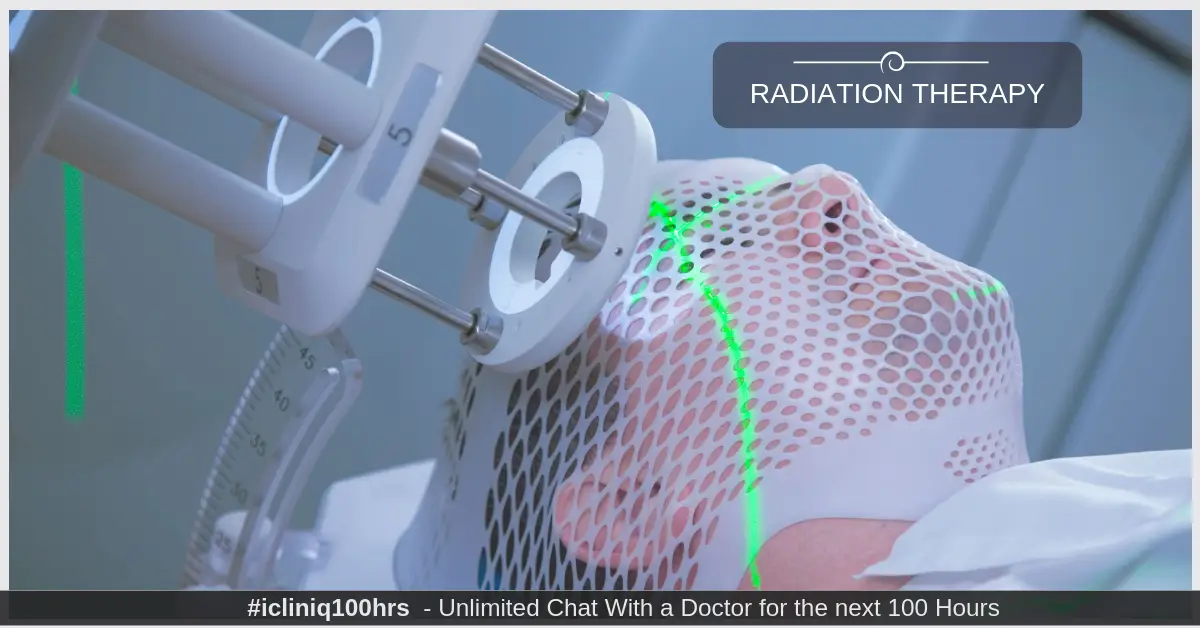
We will head off soon to make our way to Epworth Hospital in Richmond where the Icon Cancer Centre with its specially designed (for me) mask waits and the radiation machine is probably already beginning to whir for the day.
The mask was made for me a couple of weeks ago when I had my CAT scan done to exactly locate the lymph node and cancer cells so the radiation oncologist could do the modelling and planning to prepare the strategy to destroy the cancer cells. Its purpose is to hold my head still and in the same location every day over the next six weeks. The mask looks like a plastic cake protector that has been moulded to fit my face. The idea is that you get locked into the exact same position each morning for the big zap. They aren’t joking when they say they don’t want you to move your head. It isn’t something that you would want to resist. It will be all about relaxing and staying calm. I get 2 gy of radiation per day for 33 days.
My job is to do everything in my power to keep my body on top of it and even beyond that so my healthy cells remain that way and my cancer cells offer themselves up for the slaughter. This involves low blood glucose, low insulin production, high ketone bodies, lots and lots of detoxing, a healthy G.I tract, calmness, no stress, good sleep, happiness, the best possible nourishment, no sugar at all, no processed or junk food and loads of self discipline.
Even though this all started sometime ago, we are now approaching March. That potent month to the year when so many good and wonderful things and so many horrific losses have happened in my life. It’s interesting that this will also be the month that seals my fate in some ways.
Well. My life over the next 6 weeks will be very regimented. Planned to the last minute. Diet, HBOT (Hyperbaric Oxygen Therapy), IV infusions, Immunotherapy, exercise, food prep and planning, tests, lots of driving, working out and implementing ways to make money to finance everything.
It is a bit like starting a new business that really has to succeed.
But you know what. I’m “up for it” this time.

After The First Treatment
All went well. Georgie came with me for my first treatment and then we skidaddled down to Bridport St in Albert Park for lunch before getting to Dr Eng’s IV clinic for my Vit C infusion at 2 p.m.
I arrived at Epworth on time and everything went smoothly apart from a meeting with a very serious “I know it all” nurse who I am going to have to endear myself too.
When I went into the treatment room I took off my shirt and lay on the machine bench. They put my specially formed mask on and tied me down. I even got to request some music of my own choice. The mask is OK if you just relax and don’t think about it but I can see how it would be easy to freak out if you resisted.
I was strapped down for about 20 minutes this morning so the machine could adjust itself to my “programming”. This time will reduce as time goes by.
I didn’t really feel anything while I was being irradiated. Apparently the first 2 weeks will be OK and then that’s when the side effects can kick in. This is yet to be seen.
The radiation therapy has begun.
From Wikipedia Radiation therapy | |
|---|---|
| ICD-10-PCS | D |
| ICD-9-CM | 92.2–92.3 |
| MeSH | D011878 |
| OPS-301 code | 8–52 |
| MedlinePlus | 001918 |
Radiation therapy or radiotherapy, often abbreviated RT, RTx, or XRT, is a therapy using ionizing radiation, generally as part of cancer treatment to control or kill malignant cells and normally delivered by a linear accelerator. Radiation therapy may be curative in a number of types of cancer if they are localized to one area of the body. It may also be used as part of adjuvant therapy, to prevent tumor recurrence after surgery to remove a primary malignant tumor (for example, early stages of breast cancer). Radiation therapy is synergistic with chemotherapy, and has been used before, during, and after chemotherapy in susceptible cancers. The subspecialty of oncology concerned with radiotherapy is called radiation oncologist.
Radiation therapy is commonly applied to the cancerous tumor because of its ability to control cell growth. Ionizing radiation works by damaging the DNA of cancerous tissue leading to cellular death. To spare normal tissues (such as skin or organs which radiation must pass through to treat the tumor), shaped radiation beams are aimed from several angles of exposure to intersect at the tumor, providing a much larger absorbed dose there than in the surrounding healthy tissue. Besides the tumour itself, the radiation fields may also include the draining lymph nodes if they are clinically or radiologically involved with the tumor, or if there is thought to be a risk of subclinical malignant spread. It is necessary to include a margin of normal tissue around the tumor to allow for uncertainties in daily set-up and internal tumor motion. These uncertainties can be caused by internal movement (for example, respiration and bladder filling) and movement of external skin marks relative to the tumor position.
Radiation oncology is the medical specialty concerned with prescribing radiation, and is distinct from radiology, the use of radiation in medical imaging and diagnosis. Radiation may be prescribed by a radiation oncologist with intent to cure (“curative”) or for adjuvant therapy. It may also be used as palliative treatment (where cure is not possible and the aim is for local disease control or symptomatic relief) or as therapeutic treatment (where the therapy has survival benefit and can be curative). It is also common to combine radiation therapy with surgery, chemotherapy, hormone therapy, immunotherapy or some mixture of the four. Most common cancer types can be treated with radiation therapy in some way.
The precise treatment intent (curative, adjuvant, neoadjuvant therapeutic, or palliative) will depend on the tumor type, location, and stage, as well as the general health of the patient. Total body irradiation (TBI) is a radiation therapy technique used to prepare the body to receive a bone marrow transplant. Brachytherapy, in which a radioactive source is placed inside or next to the area requiring treatment, is another form of radiation therapy that minimizes exposure to healthy tissue during procedures to treat cancers of the breast, prostate and other organs. Radiation therapy has several applications in non-malignant conditions, such as the treatment of trigeminal neuralgia, acoustic neuromas, severe thyroid eye disease, pterygium, pigmented villonodular synovitis, and prevention of keloid scar growth, vascular restenosis, and heterotopic ossification. The use of radiation therapy in non-malignant conditions is limited partly by worries about the risk of radiation-induced cancers