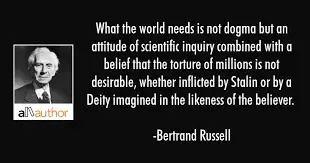
Dogma
I’ve just got back from a 10 km walk and made and drank my MCT and Curcumin concoction and now it’s time to have a rant.
While I was on my walk I listened to a podcast called The Drive which featured Peter Attia interviewing Dom D’Agnostio. The podcast went for 3 hours and at the 2 hour mark they started talking about ketones and their effect on cancer cells. This morphed into a full blown discussion on what might be called “metabolic oncology”.
While I didn’t understand some of the technical and bio-chemistry concepts I did get the overall concept and found it amazingly interesting and also very relevant to my current situation.
I’m putting a link too this podcast to the right. The podcast goes for 3 hours so move forward to the 2 hour mark which is where they start talking about “metabolic cancer treatment” or what is also known as press – pulse therapy, which I will try to explain a bit later in this post (in a very simplistic way). The link just above goes into all the technical details and theories if you want some complicated reading.
The following quote is an extract from an article entitled “Dogmas, Paradigms and proving Hypothesis” that appeared in www.nature.com in June 2010. To read the full article click on the link.
“Strong hypotheses stand the test of time because of rigorous experimentation by authors and the scientific community.
From time to time a manuscript arrives accompanied by a cover letter in which the authors state that the new work being submitted “overturns existing dogma” on some immunological process. Others suggest their work is “paradigm changing” and go on to describe how they prove their hypothesis. Naturally, such bold claims capture our attention, but unfortunately, more often than not, they fall short. Why is this so?
Part of the problem is the authors’ choice of words to describe the hypothesis addressed in the study and why this question is relevant to a large cross-section of the community. A ‘dogma’ is defined as a principle or set of principles laid down by an authority and held to be incontrovertibly true. However, immunology is an experimental science and rarely if ever can dogmatic claims be made in science. Moreover, a paradigm (a word derived from the Greek paradeiknynai, meaning ‘to show side by side’) is defined as an outstandingly clear or typical example or archetype. Perhaps better stated, a paradigm is a current model supported by abundant experimental evidence. For example, one immunological paradigm at present might be the hypothesis that innate immunity triggered by pattern-recognition receptors initiates and shapes adaptive immune responses through the expression of proinflammatory cytokines. For authors who seek to claim “paradigm-changing” results, the onus is on them to explain why the previous theory cannot explain the present findings. They also need to put forth a new or unifying hypothesis that can account for both the previous work and the new experimental data. Admittedly, the bar is higher for authors claiming to “change” a paradigm.
Although it is true that certain theories are held to be valid for a considerable period of time, such theories are usually based on an accumulated body of experimental evidence arising from multiple independent laboratories using a variety of approaches and different degrees of interrogation. When the predictions of a given theory are not supported by new experimental data (often because of more stringent testing or the development of new technologies that provide different ways of examining the problem), the theory needs to change. This scenario is most true when researchers attempt to translate or extend a theory derived from animal model systems to human immunology. For example, the finding of a molecular or cellular interaction needed to produce or inhibit a particular immune or inflammatory response in mice may suggest a therapeutic intervention, yet after it is tested in more clinically relevant scenarios, the targeting of such molecules or pathways fails to produce the anticipated effect.”
The reason that I bought this up is that the dilemma that I now face is that there are new theories on Cancer as a metabolic disease based on Nobel Prize winner, Otto Warburg’s 1930s theory on cancer.