Surrender to Sleep
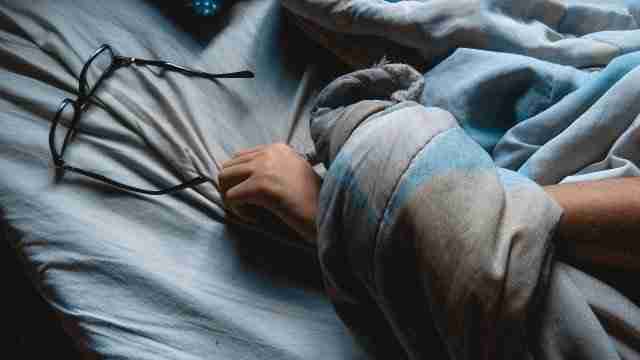
Getting to sleep is and has been an issue for me for many years. I never seem to be tired enough to just fall asleep. I lie there in absolute amazement as Georgie turns off the light, closes her eyes, and in what seems to be seconds, she is slumbering and falling deeper and deeper into sleep.
Things got somewhat better last year when I changed my diet and stopped eating sugar and gluten, but I go through cycles.
When we are in Bali, which being pretty close to the equator, has about 12 hours of light and an equal amount of dark, I just drop off like a baby …. usually around 10 p.m and I wake at 6 a.m. This is my ideal sleep situation.
Over the past couple of months my circadian cycle has gone haywire. Some nights I just lay there, read, look at YouTube clips, think … anything to pass the time. There have been a couple of occasions where I finally dropped off at 7 a.m, many others when it’s been 4 a.m and pretty much never before 2.
I just can’t close my mind down. One thing leads to another, it’s like being on a raft in a fast running river that you can’t slow down with lots of interesting things in the water and on the shore to look at.
Sleep looks like it is my next hurdle to get over.
It’s not that I don’t get enough sleep. I probably average 7-8 hours, maybe less sometimes but the amount of sleep is generally OK. I also think that my quality of sleep has improved considerably since I’ve changed my bad habits.
What’s out is my circadian rhythm. I need some discipline and control.
One last observation is that when I am awake and the lights are out there always seems to be a propensity to fall into “the pit of infinity and my place in it”. I’m getting much better at navigating away from this but I must note that it is there like a big magnet pulling me in to a place that I don’t need to go.
Wikipedia : A circadian rhythm is a natural, internal process that regulates the sleep-wake cycle and repeats roughly every 24 hours.[1] It can refer to any biological process that displays an endogenous, entrainableoscillation of about 24 hours. These 24-hour rhythms are driven by a circadian clock, and they have been widely observed in plants, animals, fungi, and cyanobacteria.[2]
The term circadian comes from the Latincirca, meaning “around” (or “approximately”), and diēm, meaning “day”. The formal study of biological temporal rhythms, such as daily, tidal, weekly, seasonal, and annual rhythms, is called chronobiology. Processes with 24-hour oscillations are more generally called diurnal rhythms; strictly speaking, they should not be called circadian rhythms unless their endogenous nature is confirmed.[3]
Although circadian rhythms are endogenous (“built-in”, self-sustained), they are adjusted (entrained) to the local environment by external cues called zeitgebers (from German, “time giver”), which include light, temperature and redox cycles. In medical science, an abnormal circadian rhythm in humans is known as circadian rhythm disorder.[4]
Over the next month my project is to get my sleep patterns under control.