Penestanan – Our Bali Village
The year was 1983, I was on my first overseas trip with my young family. Bali was on the cusp of its tourist boom but was still a hidden tropical paradise where my one year old daughter, who had long blond hair was still a rarity. Our first stop was Kuta, but a Kuta that had not yet morphed into the manic place that it is today, it was still pretty much a small village on the beach. Bemo Corner was the centre of the town, just around the corner from Poppies.
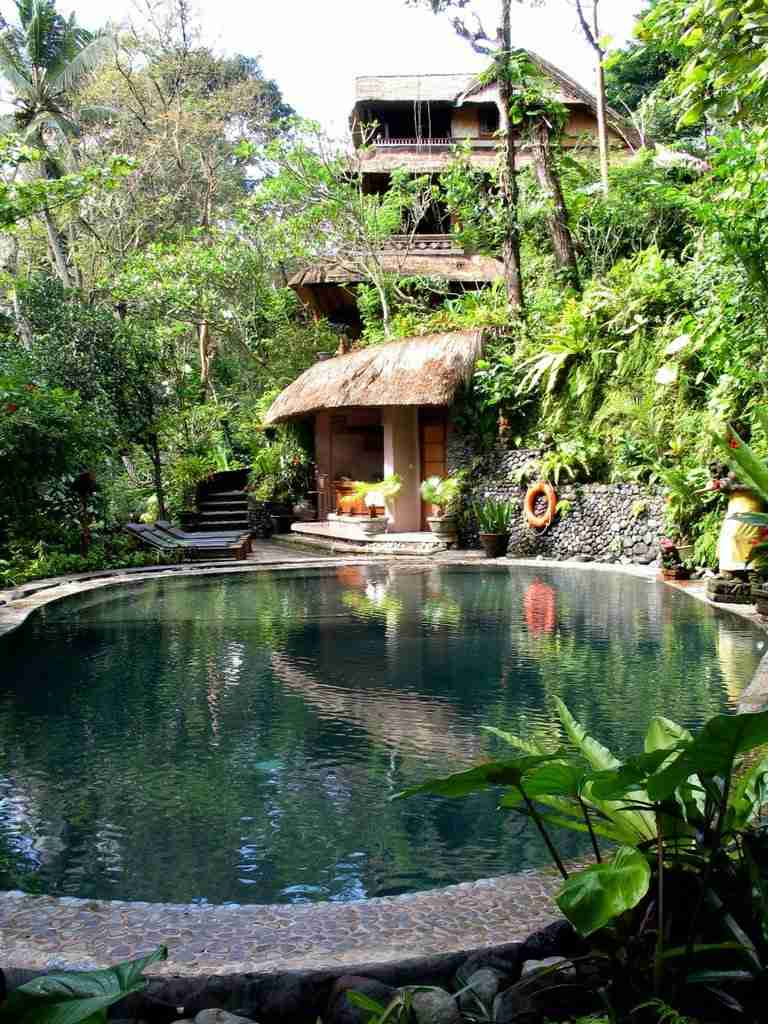
Our next stop was the exotic Hotel Tjampuhan on the outskirts of Ubud, the spot that the King of Ubud gave to Walter Spies in the 1930s to make his home in Bali, where he became a legend and helped make Ubud the artistic heartland of Bali. The roads were unmade, there was hardly any electricity, fireflies lit the night pathways, we didn’t even have running water. This really was a magical place far away from the madding crowd in the central highlands of the tropical island of Bali. The morning of the world.
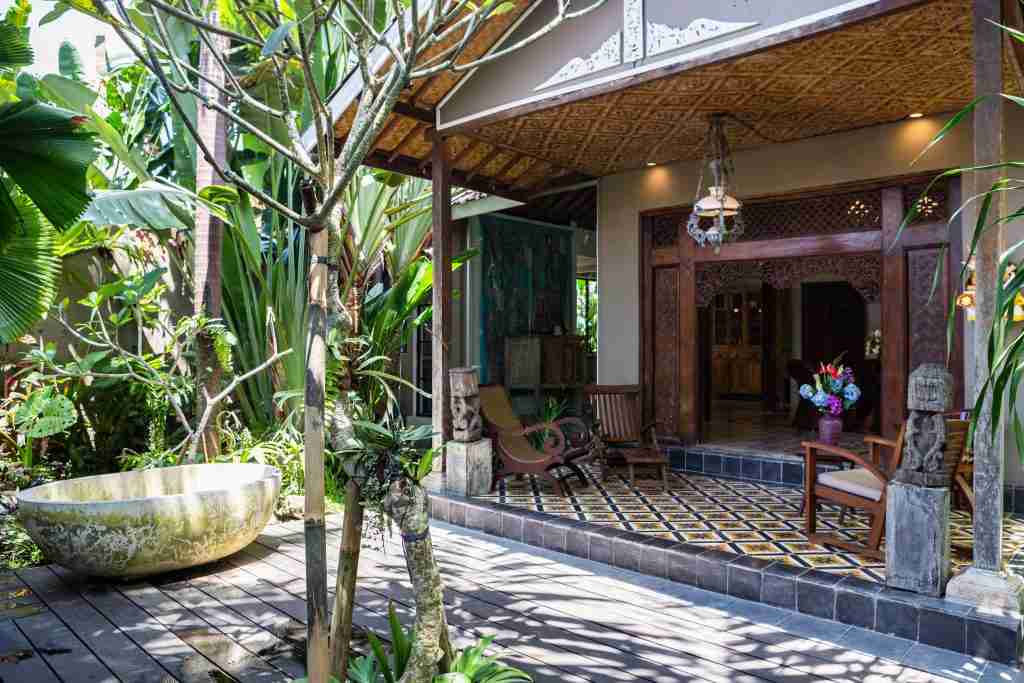
Little did I know that I would return many times over the next 40 years and that my wife and I would eventually have our own Villa not more than 5 minutes walk from the bridge at Tjampuhan. Our villa is named after our Art Gallery that was established in the early 2000s. It is called “Villa Tusk” and is located in down a quiet gang (laneway) in Penestanan Kelod not far from the fabulous vegan restaurants Alchemy and Zest.
Back in 1983 I had no idea that the majestic steps opposite our Hotel took you up to a village called Penestanan. There were 2 more trips in the 80s and about 5 more in the second half of the 90s. We always seemed to end up in the village of Penestanan or close to it.
More about my personal Bali experiences later.
Penestanan is known as the Young Artist Village. In 1956 a Dutch artist named Ari Smit first visited Bali and decided to make it his home. In the early 1960s Smit gave art supplies to some of the children in Penestanan, a village in Gianyar wedged between Tjampuhan and Sayan. An area which is now collectively called Ubud. The children received some guidance from Smit and went on to create the naive art style called “Young Artists Style”. Work by Smit and the young artists can be seen in the Agung Rai Fine Art gallery on the outskirts of Ubud.
Another prominent westerner who made his mark in the area, albeit several decades earlier, was the German artist Waiter Spies who I mentioned earlier. Spies made his home at the confluence of the 2 Wos Rivers (Oos and Cerik) at Tjampuhan. In the 1930s Spies hosted many western artists, actors, anthropologists, musicians and general bohemians at his Villa which can still be seen on the grounds of the Hotel Tjampuhan near the base of the Penestanan Steps.
This area of Ubud has a special significance in the history of Bali. In the eighth century the Javanese Hindu priest Rsi Marhandya came to Bali from Java. The spot he chose to meditate at was the confluence of the 2 Wos rivers (Oos and Cerik). Later a shrine was established in this location by Dang Hyang Niratha, the Javanese priest who is regarded as the founder of Bali’s religious practises and rituals as we know them today. The area was named after the word “Ubad” the word in ancient Balinese for medicine. Hence the village being named Ubud. In this spot now you will find Gunung Lebah Tjampuhan Temple under the bridge that crosses the Wos River that runs through Ubud.
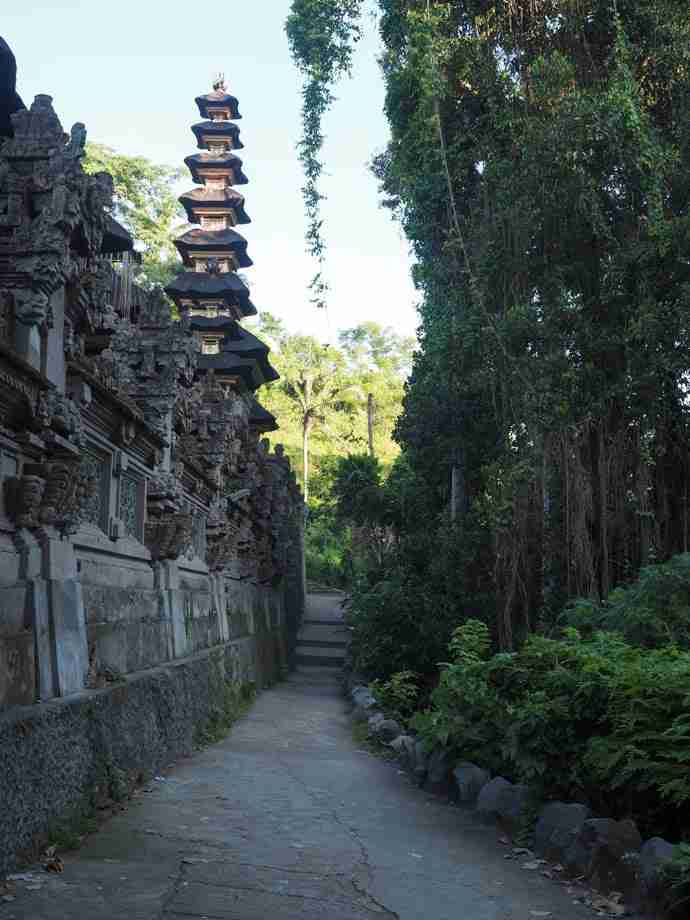
For me there has always been a sense of “returning home” as I head west down Jalan Raya Ubud toward the bridge at Tjamphuan and then taking the sharp left turn to Penestanan. It wasn’t really until the mid 90s that I actually started staying in Penestanan. Back then I still called the whole area Ubud, which is almost correct as Ubud consists of 13 Banjars that run 6 villages. I still didn’t have the concept of Bali being a whole series of adjoining villages with their own banjar (city council), temple, burial ground, gamelan orchestra etc. In 1996 I went to Bali with my kids who were young teenagers at the time. We stayed down south and then went to Ubud where we discovered a homestay called Kori Agung up a flight of steep steps. Fast forward to 2022 and it is now called The Yellow Flower. Kori Agung was pretty basic. No swimming pool or air conditioning and about 3 kms from the centre of Ubud. We trekked in to Casa Luna most nights to watch pirated DVD movies that were played in a communal area on a television, it seemed so exotic. When we came out at around 10 pm the streets of Ubud were empty , we would make our way back to the Penestanan Steps. We returned in February of the following in year. Then in January 1998 I discovered Taman Bebek, a homestay overlooking the beautiful Ayung River Valley, very close to the place where musicologist Colin McPhee built his house in the 1930s when he was studying Balinese Gamelan music. This was in the village of Sayan, right next door to Penestanan. I went back three times in ’98. We often drove through Penestanan to get back to Taman Bebek (Duck House).
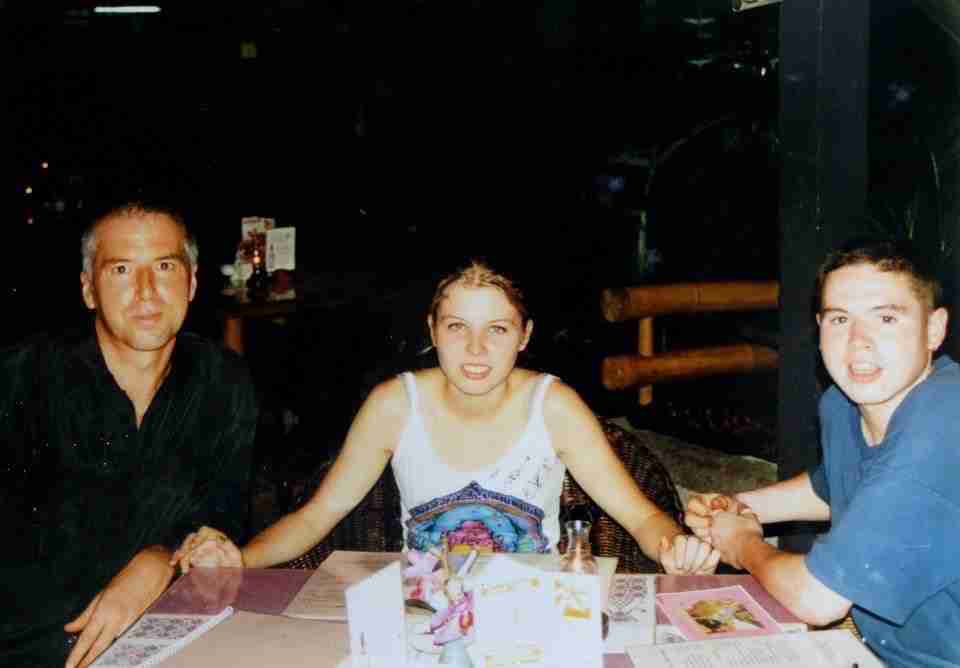
This was the year that I decided that one day I would have my own house in Bali and it would be somewhere around this magical part of this unique and mystical island of Bali. This dream took another 20 years to realize itself.