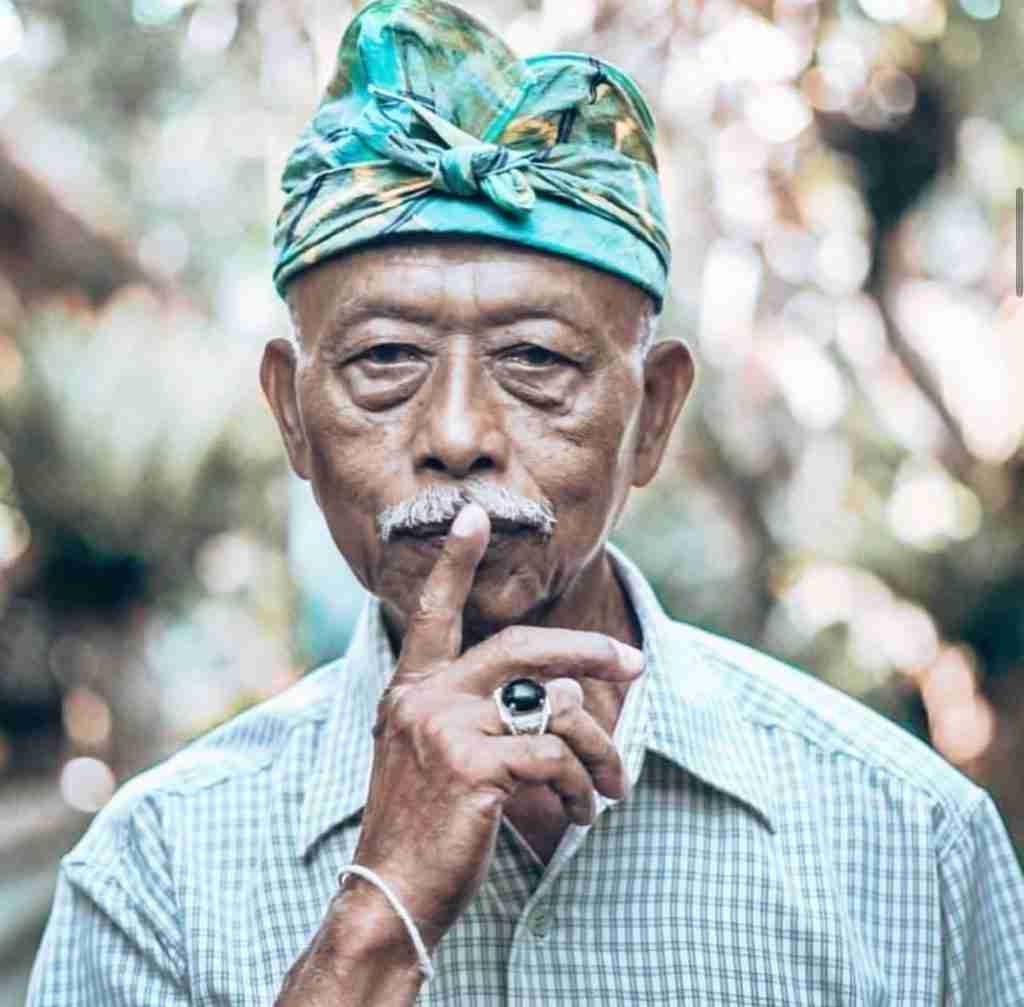
Nyepi
Nyepi: A Day of Silence, Stillness, and Soul
I’ve now spent at least 5 Nyepis in Bali—maybe more, but certainly the past three years without fail. And each time, I find myself falling a little deeper into its spell. For one sacred day and night, the island breathes differently. The streets fall silent, the sky deepens its blue, and Bali seems to tuck itself under a soft blanket of nothingness.
Nyepi, for those unfamiliar, is the Balinese Day of Silence, observed as part of the Saka New Year in the Balinese Hindu calendar. It typically falls in March, following a sequence of elaborate rituals—melukat (purification), melasti (sea temple blessings), and of course, the wild and fiery Ogoh-Ogoh parades the night before, where demons made of papier-mâché and bamboo are marched through the villages, danced into chaos, and then ritually burned. It’s a symbolic banishment of evil spirits, both external and internal.
Then, everything stops.
And I mean everything.
From 6:00 a.m. to 6:00 a.m., Bali enters a full state of pause:
•No cars or motorbikes.
•No lights, no electricity if possible.
•No cooking.
•No working.
•No talking loudly.
•No internet (well, mostly).
•No flights landing or taking off.
Even the airport closes—one of the few places in the world that does so every year on a scheduled day. It’s like Bali disappears from the grid of the world, stepping into an invisible dimension where time softens and self-reflection takes center stage.
For the Balinese, Nyepi is about introspection, renewal, and balance. It is not just a tradition—it is a spiritual reset button. And for us outsiders, those fortunate enough to be here during it, it is a rare and powerful gift: a chance to listen to the silence, both around us and within us.
I remember lying in bed on my first Nyepi, hearing no cars, only the sounds of nature … insects, birds calling to each other, roosters crowing, a dog barking in the distance . Apart from these natural sounds, just stillness. The moon glowed brighter without light pollution. The stars, freed from the veil of electricity, revealed themselves like old friends returning from a long absence. I could almost hear the earth hum.
For a culture so interwoven with ceremony, symbolism, and respect for the unseen, Nyepi is not about escapism—it’s about accountability to the cosmos. It reminds everyone, even the most pragmatic among us, that life isn’t just about doing. It’s about being. And more than that, about recalibrating your relationship to the forces that guide and surround you.
I think one of the most beautiful aspects of Nyepi is that it levels the playing field. Whether you’re Balinese, expat, tourist, young or old, rich or poor—on this day, you’re part of a collective hush. A communal agreement to let the world exhale. It’s as if the entire island agrees to not interfere with the sacred workings of nature for just one day.
There’s an environmental beauty too. Carbon emissions drop dramatically. The air clears. Satellite images have shown Bali going almost completely dark. It’s not performative. It’s real. The island rests—and in doing so, it heals, just a little. And so do we.
I sometimes think: what if the rest of the world adopted a day like this? What if the Western world, so addicted to movement and noise and “more,” just stopped… even for 12 hours? What would we hear in that silence?
Each Nyepi reminds me to be softer with myself. To let go of the noise I carry around in my head. To forgive my clumsiness, to appreciate the simplicity of breath, to sit still with nothing to prove.
And that, to me, is the quiet power of Nyepi. Not as a spectacle, but as a surrender. A remembering. A way back into ourselves.
If you ever find yourself in Bali during Nyepi, don’t resist it. Don’t try to escape it. Let it wash over you. Let the silence speak. It will say exactly what you need to hear.