Why I Wear an Oura Ring: Data, Accountability, and the Art of a Second Surge
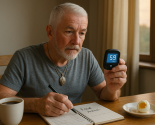
I’ve been wearing an Oura Ring for about four years now, ever since my cancer diagnosis. At the time, I was looking for every possible edge—something to help me monitor what was really going on in my body. What I found was more than just a fitness tracker. I found a tool for self-awareness, accountability, and longevity.
For anyone—especially those of us in our 60s, 70s, and beyond—who’s working on what I like to call a “second surge,” this little ring is worth its weight in gold.
What the Oura Ring Measures
Unlike most wearables, the Oura Ring goes deep, quietly collecting an array of physiological signals and returning them in the form of clear metrics and trends. Here’s what I look at most:
Sleep: duration, sleep stages (REM and deep), sleep efficiency, latency, and disturbances
Activity: daily movement, workout intensity, calorie burn, steps, and inactivity alerts
Heart Rate Variability (HRV): a vital stress and recovery marker
Resting Heart Rate (RHR): a key marker of cardiovascular fitness
Body Temperature Trends
Respiratory Rate
Cardiovascular Age Estimate
Readiness Score
Recovery & Resilience
Each morning, I get a snapshot of what my body did while I slept, how it recovered, and how prepared it is to take on the day. That level of feedback changes how you approach your health.
How My Metrics Stack Up
Cardiovascular Age: 9.5 years younger than my biological age
VO2 Max Estimate: 33, putting me in the top range for my age
Resting Heart Rate: around 48 BPM
HRV: averages 29 ms (a bit of a mystery to me—more on that below)
REM Sleep: approx. 1.5 hours
Deep Sleep: around 30 minutes (still working on improving this)
Readiness Score: monthly average is 86
Resilience: variable and harder to interpret
None of these numbers exist in isolation. They interact, shift, and fluctuate based on what I eat, when I train, how well I sleep, and how I manage stress. The ring gives me the raw data I need to understand these patterns—and tweak accordingly.
Understanding Key Metrics
HRV (Heart Rate Variability): The Nervous System’s Whisper
HRV is the time variation between heartbeats. It sounds technical, but it’s one of the most sensitive markers of nervous system balance. A higher HRV generally means better recovery, lower stress, and more parasympathetic activity (your rest-and-repair state).
Low HRV? You could be heading for illness, fighting inflammation, overtrained—or just not sleeping well. It’s not about chasing high numbers daily, but about spotting drops and trends. That’s where the insights lie.
Resilience: What Is It, Really?
Oura recently introduced a Resilience score, but I’m still trying to decode it. It supposedly reflects how well your body handles stress—both good and bad.
Here’s the challenge: the ring doesn’t yet seem to differentiate between hormesis and harmful stress.
Hormesis: beneficial stressors like exercise, sauna, cold exposure, or intermittent fasting that push the body to adapt
Chronic Stress: the damaging kind—overwork, emotional burnout, illness, inflammation
My daily protocols include a lot of acute stressors: sauna, cold plunge, strength training, weighted walking, HBOT, EBOO, testosterone injections—all of which can look stressful on paper. When I go all in, my resilience score drops. Is that a red flag—or just a misunderstanding of hormetic load?
More research (and software refinement) is needed. In the meantime, I pay attention, cross-reference with how I feel, and make adjustments.
Sleep: The Master Reset
We now know, thanks to researchers like Matthew Walker (Why We Sleep), that sleep isn’t just downtime—it’s mission-critical.
Deep Sleep: Where the brain flushes toxins via the glymphatic system, memory consolidation happens, and the body physically repairs
REM Sleep: Crucial for emotional processing, creativity, learning, and neurological integration
My deep sleep is around 30 minutes per night, which I’d like to improve. But my REM is solid at 90 minutes or more, which likely supports my emotional stability and problem-solving.
Oura helps us see how late eating, alcohol (which thankfully I don’t use), blue light, or poor sleep hygiene mess with these stages—and I can course-correct quickly.
Why It’s Worth the Investment
The Oura Ring is not cheap. But as someone who’s deeply invested in my own longevity and quality of life, I see it as one of the best investments I’ve made. Why?
It makes me accountable to myself
It helps me plan my training and recovery
It shows me when something’s off—before I feel it
It connects the dots between action and consequence
It offers a long-view of my body’s trajectory
I’ve written recently about the power of self-accountability. The Oura Ring is an extension of that mindset. Read my blog post on accountability here →
Final Thoughts: It’s Just a Tool—But a Powerful One
Wearing an Oura Ring won’t change your life. But using the information it gives you might.
It won’t replace intuition. But it can enhance it. It won’t substitute for movement, stillness, sunlight, connection, or nourishment—but it can point out when those things are lacking.
And for those of us navigating the “second half” with intention and vigour, it’s a tool and guide I wouldn’t want to be without.