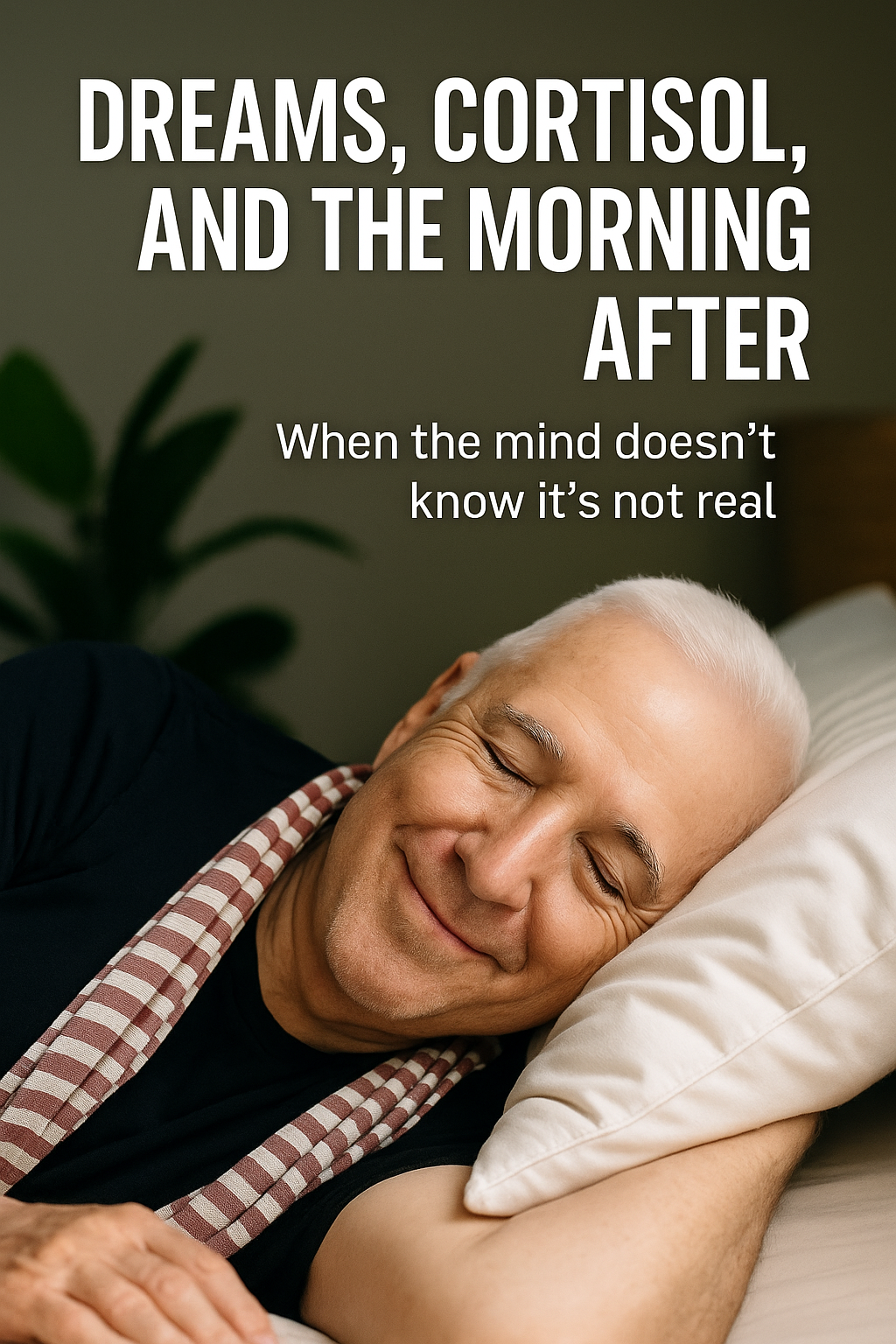
Dreams, Cortisol, and the Morning After: When the Mind Doesn’t Know It’s Not Real
REM sleep (Rapid Eye Movement) is the phase of sleep where most dreaming occurs. It’s an incredibly active period for the brain and plays a crucial role in emotional processing, memory integration, and neural restoration.
According to Dr. Matthew Walker, author of Why We Sleep, REM sleep acts like overnight therapy. It helps us decouple emotional intensity from painful memories, giving us perspective. In REM, the brain replays and reorganizes data from the day—but without the stress-triggering neurochemicals like noradrenaline that flood our waking hours.
But here’s the paradox: in bad dreams or nightmares, your brain can still activate your fight-or-flight response, including cortisol and adrenaline spikes. And yes, those hormones can elevate blood sugar levels—even in your sleep. That’s not a theory. That’s biology.
So What’s Going On When You Wake Up Shaky?
If you wake up emotionally wrecked after a dream, here’s a likely sequence:
Dream triggers limbic system activation (the emotional brain)
Brain interprets the scenario as real (especially in nightmares or trauma dreams)
Cortisol and adrenaline are released
Blood sugar may spike
HRV (Heart Rate Variability) drops
Mood is impacted—sometimes all day
Emotion is not just “in your head”—it’s in your body. It’s driven by chemicals like serotonin, dopamine, norepinephrine, cortisol, and more. Dreams, especially intense or negative ones, can stir up these chemicals just as if the events were happening in real life.
Why REM Sleep is Essential
Walker says “dreaming is like emotional first aid.” Skip out on REM—whether due to alcohol, late-night screen time, or poor sleep habits—and you’re robbing your brain of its primary tool for emotional regulation.
In fact, people who are chronically sleep-deprived or who suppress REM (e.g., from antidepressants, heavy drinking, cannabis, or sleep fragmentation) are more likely to experience:
Heightened anxiety
Poor memory
Emotional reactivity
Even symptoms that mimic PTSD
Can You Improve the Quality of Your Dreams?
Yes—although not with full control. What you can do is improve your sleep hygiene, which often leads to smoother, less chaotic dream activity. Here’s what helps me:
Go to bed early (before 10pm if possible)
Avoid food for at least 3 hours before sleep
Cut screen time 60 minutes before bed
Dim the lights and slow the pace
Use a notebook or journaling to release unresolved thoughts
No alcohol or recreational substances
Keep a cool, dark, quiet sleep environment
Interestingly, since tracking my sleep with the Oura Ring, I’ve noticed the correlation between late nights and bad dreams, light sleep, or emotional spillover the next day.
What Happens If You Stop Dreaming?
If you block or suppress REM sleep for too long, the brain goes into REM rebound—a state where it tries to catch up by cramming in longer and more intense REM phases when it can. That can lead to weirder, more vivid dreams. But long-term REM suppression has been linked to:
Depression
Mood swings
Cognitive decline
Weakened immune response
Final Thoughts: Don’t Ignore Your Dreams
If this morning taught me anything, it’s this: your dreams matter. They’re not just noise or random hallucinations. They’re a mirror of your mind’s deeper layers, your memories, your stresses, and even your biology.
They can stir your hormones, mess with your sleep, and linger long into the day. But they can also help you heal, reorganize, and process the tangled emotions of waking life.
So no, it wasn’t “just a dream.”
It was real enough to shape how I feel hours later.
And that means it’s worth paying attention to.