Back in Japan: Summer 2025 Begins
This Japanese travel blog follows our journey from July 29 to September 3, 2025—five weeks of trains, temples, gardens, and serendipitous detours. We left home on July 29 and arrived in Tokyo on the evening of July 30, the first stop on an itinerary that has already taken us from neon-lit streets to quiet riverside paths.
I’m updating it daily, capturing not just the places we visit but the rhythms, textures, and small discoveries that make travel so addictive. On September 3, Georgie and I will return to Melbourne, but Finn will remain in Kyoto, hopefully stepping into a role teaching English to local students eager to learn.
Think of this blog as a running diary—a way to stitch together our experiences day by day, so that by the time we’re home, we’ll have more than just photographs. We’ll have the story.
Stage One – July 29 – August 3 Melbourne/Tokyo/Kakunadate
After months of planning and preparation, we’re finally here—back in Japan. This time, it’s not just a fleeting visit. We’ve landed with more purpose, more luggage, and a very different agenda. I’m here with Finn and Georgie for a five-week adventure. Finn is planning to stay on, hopefully for three to six months, and move into a share house in Kyoto by mid-August. Georgie and I will travel around together while he gets settled.
We left Melbourne on Tuesday afternoon, thanks to Kaye’s generosity, spending the night at the Park Royal at Melbourne Airport. That made our early morning flight via Cairns a whole lot easier. We finally arrived in Tokyo late Wednesday night—and it already feels like we’ve been on the road for a week.
We booked two small rooms at the APA Hotel Higashi Shinjuku—one for Finn and one for us. If you’ve never stayed in a Japanese business hotel, imagine a clean, quiet shoebox. But they do pack in a few luxuries, including a bathhouse on the 2nd floor that quickly became part of my daily ritual. There’s something almost meditative about soaking in scalding hot water before scrubbing yourself clean in a neat little cubicle—each person in their own space, doing their own thing. A very Japanese way to begin the day.
A Few Days in Tokyo
This was a soft landing—Tokyo was about getting our bearings. We were here just over a year ago, so it wasn’t entirely new, but there’s always something refreshing about diving back into the organised chaos of the city. Our hotel was in Shinjuku, a district that truly never sleeps. Shinjuku is famous for its shopping, neon-lit nightlife, and maze of train stations—it’s vibrant, messy, thrilling, and a little seedy in parts, but it grows on you.
On our first day we walked to Shibuya, despite the sweltering heat. Apparently, it’s Japan’s worst heatwave since the early 1900s, but honestly, it felt like a mild day in Bali or a hot summer in Melbourne. Shibuya is one of those iconic areas that feels like a movie set—home to the famous “Shibuya Scramble” crossing, giant LED billboards, and fashion boutiques. The highlight for me? Visiting the Fender Flagship Store, a guitar lover’s paradise. It’s not just a retail store—it’s part art gallery, part guitar museum. You can play beautifully displayed instruments, explore rare collections, and feel like a kid in a very sophisticated candy shop.
That afternoon, we grabbed a solid Japanese lunch near Shinjuku Station. Meals here are always an experience—even the most humble restaurant takes care to balance flavour, presentation, and atmosphere.
Borderless and Borderline Expensive
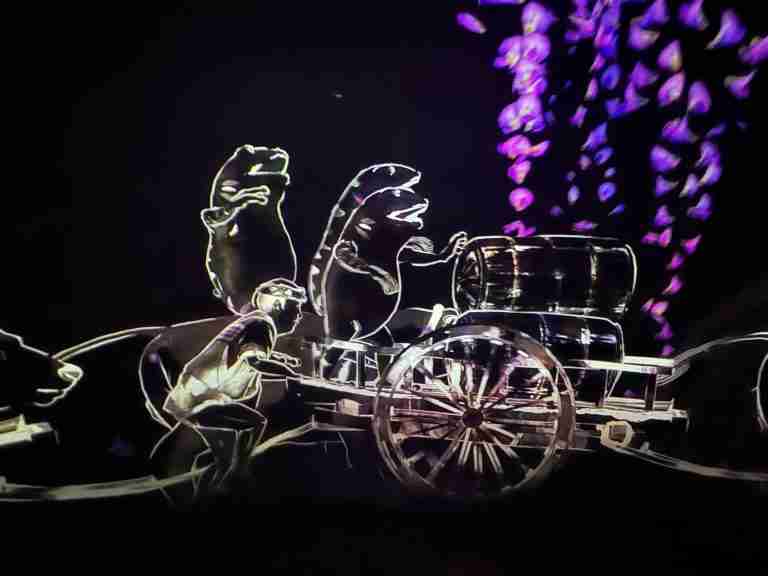
On Friday, we took an Uber across town to visit teamLab Borderless, which turned out to be the true highlight of our Tokyo stay. It’s hard to describe this place without sounding like I’ve been smoking something. Imagine stepping into a dream where light and sound move around you—interactive digital art installations that sense your presence and respond as you walk through. There are no maps. No boundaries. You just wander and let the place unfold around you. At one point, glowing flowers bloomed at my feet. At another, giant whales floated past me in the dark. It’s as immersive and otherworldly as art can get.
The new location is inside Azabudai Hills, an upmarket mega-mall where even the fruit is priced like luxury jewellery. I spotted a watermelon going for $110 AUD, peaches for $65, and single apples at $15 a pop. A decent coffee? $8.50. I love a good latte, but I’ll stick to convenience store cans at that price.
After TeamLab, we visited a design store Georgie had her eye on, soaking in yet another layer of Japanese minimalism and style.
Shrines and Streets
Yesterday, we ventured to the Meiji Shrine, a tranquil forested oasis in the heart of the city, dedicated to Emperor Meiji and Empress Shōken. It’s an escape from Tokyo’s buzz—towering trees, gravel pathways, and a sacred stillness that hushes even the most talkative tourists. Then we headed back toward Cat Street, a quirky, narrow strip in Harajuku packed with indie boutiques, cafés, and secondhand stores—more relaxed than the mega-brand energy of nearby Omotesandō.
Back in Shinjuku that night, the contrast was stark. Neon lights, pulsing crowds, and the faint whiff of something unidentifiable wafting through the back alleys. It’s grungy but always entertaining.
Supplements and Smoothies on the Road
Traveling with your own health protocol is a bit like carrying a small pharmacy. I brought protein powder, BCAAs, vitamins, minerals, and even a portable “vitaliser” so I can make smoothies. It adds to the luggage load, but it’s worth it, especially for me and Finn. Georgie’s not quite as enthusiastic—protein drinks and supplements are not her vibe—but she’s tolerating the health-nut energy.
Off to Kakunodate
This morning, we heaved our luggage through the backstreets to Shinjuku Station, then transferred to Tokyo Station to board the Shinkansen, Japan’s world-famous bullet train. These trains glide at up to 320 km/h and are so smooth they feel like levitating lounges. You get on, sit down, and before you know it, you’re halfway across the country.
Our next stop: Kakunodate, a beautiful town in Akita Prefecture, known as “Little Kyoto” for its well-preserved samurai district and old wooden mansions. It’s also famous for cherry blossoms in spring, but even in summer, it’s a haven of traditional architecture and slower rhythms. After the chaos of Tokyo, it should be a welcome change.
Kakunodate: The Quiet Ghost of Summer
Sunday Night – August 3rd
We arrived in Kakunodate around 3pm after a smooth Shinkansen ride from Tokyo. The town is tucked away in Akita Prefecture, in the northern part of Honshu. Known as “Little Kyoto of the North,” it’s famous for its well-preserved samurai houses, old merchant streets, and in spring, a riot of cherry blossoms—over 400 sakura trees line the banks of the Hinokinai River, drawing tourists from all over Japan.
But this wasn’t spring.
This was summer.
And summer in Kakunodate is a different story.
When we stepped off the train, we were hit with a wall of dry heat that instantly reminded me of those blistering hot childhood summers in Shepparton. Country heat. It presses down on you in a way city heat doesn’t. The train station was quiet. The town seemed still, almost eerily so. We checked in to our basic but comfortable hotel, unpacked, cooled off, and ventured out again around 4:30, armed with umbrellas to shield us from the sun.
The first thing that struck us? This place is set up for a very specific season—and this wasn’t it. Without the blossoms, Kakunodate slips into something more subdued, almost spectral. Most restaurants were shut or cash-only, and there were stretches where we didn’t see another soul. It felt a bit like we’d wandered into a ghost town that had packed up and gone into hibernation.
Still, there’s something about this kind of stillness that invites a different kind of experience—one that forces you to slow down and really look.
We found a 7-Eleven on the edge of town (the unsung hero of Japan’s convenience culture) and grabbed cash. I picked up a packet of dried sardines and a pickled lettuce salad—low-carb, minimal joy. But enough to tide me over.
Eventually we landed in a humble little restaurant across from our hotel, one of the few open, and shared a traditional sukiyaki—beef, tofu, noodles, and vegetables simmered in a sweet-salty soy broth. Warming, nourishing, and exactly what we needed. Finn took a bath while Georgie and I prepared for a short twilight stroll. The town doesn’t exactly light up at night, but it’s peaceful in a way that forces you to listen to the cicadas and your own thoughts.
I’m not quite sure how I feel about Kakunodate yet. It’s beautiful in its own quiet way, but it hasn’t quite revealed itself. I get the feeling we’ll need to dig beneath the surface over the next couple of days to find what makes it tick.
About Kakunodate
Kakunodate was founded in the early 1600s as a castle town, part of Japan’s feudal structure under the Tokugawa Shogunate. It became home to a number of samurai families—high-ranking warriors who lived in wooden mansions with long, stone-walled lanes. Many of these historic homes have been lovingly preserved and are now open to the public, complete with artefacts, gardens, and that distinct sense of stillness that only places with real history carry.
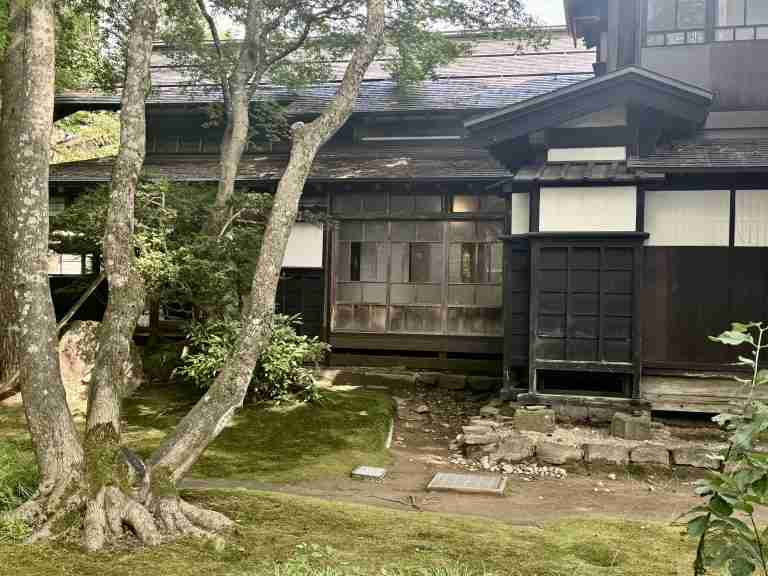
While the original Kakunodate Castle no longer exists, the town’s layout remains true to its Edo-period design. The samurai district, or bukeyashiki, is one of the best preserved in Japan. Unlike touristy reconstructions, these homes were lived in—and in some cases still are—by descendants of samurai families. You can wander past giant wooden gates and peer into shaded courtyards that haven’t changed in centuries.
This quiet reverence for the past is what gives Kakunodate its soul. In spring, the town explodes with colour and visitors. But in summer, especially under a relentless sun, it takes on an entirely different personality—quieter, more introspective, almost meditative. Perfect, in a strange way, for someone like Finn, who tends to prefer nature and smaller towns over the crowded bustle of big cities.
Tomorrow we’ll explore the samurai houses Georgie’s so keen to see. I’m hoping we’ll stumble on something that unlocks the magic of this place. But even if we don’t, the quiet here is doing its own kind of work.
And maybe that’s the point.
Kakunodate: A Hot Day in the Samurai Quarter
Monday, August 4, 2025
We gave up trying to set the world on fire—the sun was doing a good enough job.
It’s Monday morning in Kakunodate, and as we wipe the sleep from our eyes and sip our budget iced coffees from Lawson Station—conveniently right next door to our hotel—it’s already 27°C by 7am. They’re predicting 33 by 11am and 37 down in Tokyo. Japan’s legendary summer heatwave rolls on.
Despite the heat and a slightly restless night (too much caffeine, a paper-thin pillow, and paper-thin walls—poor Finn had a snorer next door), we managed a short walk early this morning before the town began to stir. I’m no expert in Japanese geography, but I realised something amusing as I was brushing my teeth—I’m now closer to Vladivostok than I’ve ever been in my life. Not that I’ll get there, but there’s something novel about standing on the edge of Japan and knowing that Russia is just a bit further north across the water.
Last night we took a walk up the dim streets past Kakunodate’s famous samurai district—a kilometre-long stretch of preserved Edo-period homes, hidden behind wooden fences and shadowed trees. We couldn’t see much in the dark, just silhouettes of heavy gates and glimpses of old Japanese tile roofs. Tonight, we said. We’ll return in the daylight.
And we did.
Samurai Showdown (of Sorts)
After a quick breakfast and a bit of negotiating with Finn (who needed to sleep off the snorer), we headed out again at 9am to visit the homes that brought us here—Georgie’s fascination with traditional architecture, especially samurai-era design, was the reason we came all this way.
Kakunodate’s samurai quarter is one of the best preserved in Japan. These weren’t just museum pieces—many homes are still inhabited by descendants of samurai families. A few are open to the public, complete with artefacts, tatami rooms, and lovely moss-covered gardens.
But… and it’s a hesitant but… we’ve been spoiled. We’ve seen samurai houses in Kanazawa, Matsue, even little places that rarely make the tourist circuit. And to be honest, some of those left more of a mark. Maybe it was the summer heat dulling our senses, or maybe the ghost-town quiet of Kakunodate in August—but the district felt a little like it was waiting for spring to come back before it truly came to life.
That said, the craftsmanship is still exquisite—huge wooden beams, perfect lines, meticulous layout, and that gentle hush that old Japanese architecture seems to generate even when tourists are walking through with plastic fans and phone cameras.
Ramen and Redemption
We found a ramen shop tucked behind the station area—no frills, but incredible food. The kind of lunch where you don’t talk much because you’re too busy eating. Then back to Machiya Hotel to regroup and plan the evening.
Healing Waters (and Boiling Saunas)
Around 4:30pm, we walked five minutes down the road to Kakunadate Onsen, a local bathhouse that became an unexpected highlight of our stay. It’s simple, unpretentious, and absolutely sublime.
Let me tell you—the sauna was hellfire. Almost 100°C. The cold plunge wasn’t Arctic-level, but it was enough to jolt your soul back into place. Then came the main bath, hovering around 43°C—hot enough to melt your thoughts, in a good way.
We did the full cycle:
3 saunas, 3 cold plunges, 3 hot baths.
A kind of purification ritual by repetition. It was, honestly, one of the most satisfying things we’ve done in this town.
The hotel arranged entry vouchers for both tonight and again tomorrow morning, so we’ll start our Tuesday in the same steamy, cleansing way.
The Journey Continues
Just before our sauna and dinner—simple, fresh, hearty—we decided to switch our return Shinkansen to an earlier train. Originally we planned to leave Kakunodate at 3pm and arrive in Tokyo at 7. Now we’ll leave earlier and get into Tokyo by mid-afternoon, giving us more flexibility and time to reorient. Kakunodate is roughly 550 kilometres north of Tokyo, but thanks to Japan’s brilliant train system, the journey is smooth and scenic in just under 3 hours.
We’ll go to sleep tonight in the same tiny room, but somehow it feels a bit roomier now. Maybe because we’ve started to find our rhythm again. Kakunodate was strange, sleepy, and a little subdued, but I don’t regret the visit. Sometimes the quiet places show their colours more slowly.
And besides, any day with saunas, cold plunges, and sukiyaki is a good day.
Leaving Kakunodate: Eggs, Onsens & A Samurai Farewell
Tuesday, August 5, 2025
It’s midday, and we’ve just settled into our seats on the Shinkansen—a 3-hour, 550-kilometre glide back to Tokyo. Next stop: Ginza, where a “mystery hotel” awaits. We’re well-stocked for the ride: boiled eggs, cold pork slices, a radish salad, and iced coffees from Lawson Station, our go-to morning ritual now.
Traveling in Japan with a low-carb mindset is a bit like playing culinary roulette. Keto? Not quite. But I’m doing my best to keep the carbs down and avoid sugar, even if the labels are all in Japanese and I’m guessing half the time. For example: this morning’s “Japanese omelette” looked innocent enough—until the first sweet bite revealed a stealth sugar bomb. I had skipped the rolled omelette assuming it would be sweeter, but no, the “Japanese” version got me.
Luckily, ChatGPT has turned out to be a surprisingly helpful travel companion—part translator, part tour guide, part “get me out of this situation” lifeline. I’ve been using it to translate food labels, identify mystery ingredients, and even get real-time help figuring out what temple or statue I’m standing in front of. Between that and my CGM, I’ve managed to keep blood sugar spikes minimal—even if there’s the odd hidden syrup or sneaky rice flour in something.
A Morning Farewell to Kakunodate
We turned in early last night and woke to a warm, blue-sky morning—our final one in Kakunodate. Naturally, we made a beeline for Kakunadate Onsen, just five minutes from the Machiya Hotel. Three rounds of sauna, cold plunge, and hot bath felt like the perfect farewell ritual. I still swear that sauna was pushing 100°C—like sitting in a furnace with a time limit—but the cold plunge sorted that out quick smart. I’d return to Kakunodate for two things only: the cherry blossoms in spring, and that onsen sauna. Maybe the ramen, but I’m not quite that sentimental.
Before we left, Georgie visited the Aoyagi House, which turned out to be a highlight in an otherwise sleepy summer town.
The Aoyagi Samurai House: A Glimpse into Samurai Prestige
If you visit just one samurai residence in Kakunodate, make it the Aoyagi House. This sprawling compound once belonged to the Aoyagi family, a powerful samurai clan who served under the ruling Satake family for generations. It’s the most extensive and best-preserved of all the bukeyashiki (samurai homes) in town.
Dating back over 300 years, the house offers a real sense of how high-ranking samurai lived—not just in terms of architecture, but also daily life. Expansive tatami rooms, meticulously maintained gardens, weapons displays, antique furnishings—it even houses a small museum filled with armour, swords, Edo-period medical tools, and relics of a warrior class long gone.
Unlike some samurai homes that feel sterile or roped off, Aoyagi House still breathes. You’re allowed to wander freely through most rooms, and there’s a real human touch to how the exhibits are presented. The Aoyagi family’s descendants still oversee the site today, preserving not just the physical structure but the spirit of samurai life—with all its discipline, elegance, and quietly rigid pride.
So that’s it. Kakunodate is now behind us—the northern region of Honshu fading into rice paddies and forests out the train window. Tokyo awaits, along with Ginza’s glittering department stores, a possible suitcase swap, and one more round of urban chaos before we head west again to Kanazawa.
We’re tired. We’re sweaty. We’re a little poorer.
But this strange little town—with its quiet streets, sleepy samurai lanes, and steamy bathhouse—was worth the detour.
From Heat to High-Rises: Tokyo Reloaded
Wednesday, August 6, 2025
We stepped off the Shinkansen into a wall of heat. Whatever respite we’d enjoyed that morning in Kakunodate had evaporated by the time we reached Tokyo Station—and the Japanese summer was back with a vengeance.
Navigating Tokyo Station is not for the faint-hearted. It’s a sprawling, multi-level hive of train lines, bullet trains, subways, shops, and thousands of rushing commuters. With over 4,000 trains per day, it’s one of the busiest and most complex railway hubs in the world. Originally opened in 1914, the station blends traditional brick architecture with futuristic underground networks. It’s beautiful and overwhelming all at once—like stepping into a giant puzzle made of steel, tiles, and footsteps.
We’d planned to grab an Uber to our new hotel in Ginza, but coordinating that proved more trouble than it was worth. So, with a bit of grit (and sweat), we pushed our bags through the streets, dodging pedestrians and praying for shade. It turned out to be only a 15-minute walk, though it felt longer in the heat. Not bad, really, considering the alternative.
Fresa Inn Ginza: Shoebox with Style
We checked into the Fresa Inn, a modest business hotel with all the basics. The room’s a fraction larger than the APA box in Shinjuku, but not by much. The bed is technically a “double” but really more like a king single, and we had to pull it out from the wall so Georgie could slide in and out without climbing over me. Still, clean, efficient, and right in the heart of Ginza.
Ginza: Tokyo’s High-End Spine
Ginza is Tokyo’s luxury corridor—a district built on old silver minting grounds (the name “Ginza” literally means “silver guild”). In the post-war boom, it became the city’s premier shopping, art, and entertainment neighbourhood. Think Chanel, Louis Vuitton, Apple, and towering department stores with velvet-gloved attendants and air conditioning that makes you forget there’s a sun outside.
We wandered the main street (Chuo-dori) and popped into Itoya, a legendary 12-floor stationery store that feels more like a gallery than a place to buy pens. Founded in 1904, Itoya offers everything from handmade Japanese paper to calligraphy tools, designer notebooks, and fountain pens that cost more than a small car. A stationery lover’s dream.
From there, we stumbled into one of those incredible basement food halls that live beneath Tokyo’s department stores. Part gourmet supermarket, part culinary theatre, part edible art gallery—you can lose hours (and all your cash) in those places.
First Impressions?
My first reaction to Ginza: “Where’s the soul?” So many skyscrapers. So much glass. So much elegance. But after an hour or two, I started to get it. Ginza isn’t warm and fuzzy, but it’s beautifully curated. A kind of cool precision that grows on you.
Back to Shinjuku for Dinner
We caught a train back to Shinjuku Station for dinner, retracing our steps to the meat-and-beer joint where we had our very first meal this trip. Tokyo’s public transport is truly a masterpiece. There are over 100 different train lines operated by various companies—JR, Tokyo Metro, Toei, and others—all interweaving through the city like arteries. It’s daunting at first, but once you get the hang of it, you can get anywhere in the city with speed and precision.
Books, Art, and Blisters
This morning, Georgie and I woke early and wandered out for coffee near the hotel, eventually landing at Ginza Six, a sleek high-end shopping complex. On the top floor, we found Tsutaya Books, a stunningly designed bookstore/gallery hybrid. It’s quiet, spacious, and filled with beautiful art and design books, along with a contemporary gallery space in the centre. Easily the most soul-soothing place we’ve been in Ginza so far.
Back at the hotel, Finn was having a quiet morning, and we rejoined him around 1pm for lunch and a walk. He had a Zoom meeting with the Kyoto share house admin team at 3pm, which he handled like a pro.
Terrada Art Complex: Not Quite What We Hoped
In the afternoon, Georgie, Finn and I caught a train—and then a bus—out to Terrada Art Complex in Shinagawa, which I’d read was one of Tokyo’s new contemporary art hubs. The concept sounded great: former warehouse spaces turned into sleek galleries and studios, often rented by emerging artists to host their own month-long exhibitions.
The galleries were well designed, but sadly, the art left a bit to be desired. Some pieces felt unformed or lost in layers of meaningless abstraction. I’ve never had much patience for art wank—the kind that hides behind intellectual fluff with no real emotional substance. I moved quickly from room to room, feeling underwhelmed. But Finn, ever curious, found a couple of artists he liked and even chatted with them for a while. That made the trip worthwhile.
Rush Hour & Ramen
We walked back to Shinagawa Station during peak hour—packed trains, shoulder-to-shoulder crowds, but that’s Tokyo for you. Despite the chaos, everything works. Everyone moves with rhythm. No pushing. No shouting. Just a quiet determination to get home.
We wrapped up the day with a humble but delicious bowl of ramen at a tiny restaurant near the hotel. No artifice. No hype. Just good food.
And maybe that’s the contrast that makes Tokyo so fascinating: you can spend the morning in a high-rise bookstore gallery, the afternoon in a warehouse of strange art, and the evening slurping noodles in a back alley—all within the same city block.
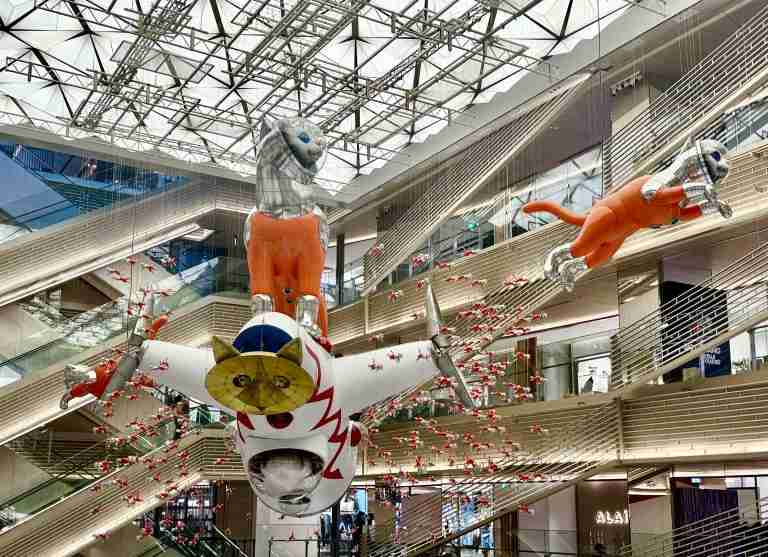
Kanazawa: Festivals, Philosophy, and a Blazing Summer
Sunday, August 10, 2025
Today is our second full day in Kanazawa, and so far it’s my favourite stop on this Japanese trip.
Kanazawa sits on the western coast of Honshu, facing the Sea of Japan. It’s the capital of Ishikawa Prefecture and home to just under 460,000 people. For centuries, it was the seat of the powerful Maeda clan, one of the wealthiest families in Japan’s feudal era. Unlike many Japanese cities, Kanazawa was spared heavy bombing during World War II, which means much of its historical architecture—samurai districts, teahouses, temples—survived intact. Today it blends history, art, and culture with an easygoing charm, and it’s a place where you can walk from a centuries-old geisha quarter to a cutting-edge contemporary art museum in under 15 minutes.
From Ginza to the West Coast
We left Tokyo on Friday morning after three days in Ginza. On Thursday night, Finn discovered a row of tiny restaurants tucked under the railway line, and we had a great meal there before our final night at the Fresa Inn.
The trip to Kanazawa was fast—about 450 kilometres from Tokyo—and the Shinkansen had us there in around 2.5 hours. We rolled in at about 3 p.m. and checked into The Manten Hotel. Our room is still small by Western standards, but Georgie booked us a twin this time, and the extra few square metres feel like a luxury suite compared to what we’ve had. Better still, the hotel has a sauna, onsen, and cold plunge—all my favourite ways to start and end a day in Japan.
Last year, we stayed about 1.5 kilometres from the station, which gave me a very different sense of Kanazawa—more provincial, quieter, almost sleepy. This time, being right by the station, the city feels bigger and more modern: bright lights, bustling malls, and an energy I hadn’t noticed before.
Higashi Chaya: Kanazawa’s Geisha Quarter
After checking in, Georgie and I wandered toward the Higashi Chaya District, Kanazawa’s most famous teahouse quarter. “Chaya” means “teahouse” in Japanese, but historically these weren’t ordinary cafés—they were elegant entertainment venues where geisha performed music, dance, and conversation for elite guests. Higashi Chaya was established in 1820, and its streets are still lined with beautifully preserved wooden buildings, lattice windows, and gold leaf shops (Kanazawa produces 99% of Japan’s gold leaf). The district sits along the Asano River, its old-world charm amplified in the late afternoon light.
We arrived around 5 p.m., just as many places were closing, so we planned to return the next morning. Still, just walking the narrow lanes, hearing the creak of the old wooden boards underfoot, you could feel the echoes of another era.
Letting Go of Keto
That night, Finn found an Indian restaurant near the hotel. I’ve more or less given up on strict keto for now, though I’m still avoiding heavily processed food. Soy-boiled eggs and salads have been my train staples, but I’m not going to walk past a good curry without stopping.
Unfortunately, my small fibre neuropathy is flaring up badly—maybe the heat, maybe recovery from my recent hernia operation, maybe just age catching up with me. My feet burn and ache in a way that makes every one of those 18,000+ daily steps a challenge. I suspect I’m paying the long-term price for decades of alcohol abuse in my earlier life.
Saturday: Art, Baths, and Croquettes Without the Beef
We started Saturday with a sauna, cold plunge, and onsen. Japanese saunas run hot—95–100°C—and the whole bathing ritual is done quietly, with men and women in separate areas. Being naked is mandatory, and you quickly stop caring—it’s just the done thing.
Finn slept in, so Georgie and I caught the Kanazawa Loop Bus to the 21st Century Museum of Contemporary Art. The loop bus is simple: tap your IC card (like Suica or Pasmo—reloadable smart cards that work on trains, buses, and even vending machines) when you get on, and again when you get off. The fare is a flat 200 yen (about $2), and the route circles the city’s main sights.
The 21st Century Museum of Contemporary Art
Opened in 2004 and designed by the architects SANAA, the museum is a circular glass building with no “front” or “back,” designed to be approachable from all sides. It specialises in experimental, interactive works by Japanese and international artists.
Most of the exhibitions left me cold—I’m a “love at first sight” person with art. If it doesn’t grab me instantly, I move on. But then I found a piece that stopped me in my tracks: William Kentridge’s The Refusal of Time. Kentridge, a South African artist known for his animated films and theatre works, collaborated with composer Philip Miller to create this multi-sensory installation. Projected animations played on leaning plywood panels, surrounding a strange, illuminated wooden contraption—part metronome, part breathing machine—that seemed to pulse with the rhythm of the room. The soundtrack was a wild fusion of brass, percussion, and experimental textures—Frank Zappa meets South African street parade. It was hypnotic, mechanical, human, and absurd all at once. That piece alone was worth the visit.
From Zen to Festivals
After lunch (a disappointing potato-only “beef” croquette), Georgie led us to the D.T. Suzuki Museum, dedicated to the Zen philosopher who helped introduce Japanese Zen Buddhism to the West in the early 20th century. The building, by architect Yoshio Taniguchi, is minimalist perfection: concrete, glass, and water, surrounded by the remains of the old Honda family estate. The main feature is the Water Mirror Garden, a still rectangular pool that reflects the changing light—a place for quiet contemplation. We wandered the adjacent gardens, which carry the same sense of balance and restraint I love in Japanese design.
By 3 p.m., the heat was intense again, and we headed toward the bus stop—only to find the service had been suspended for a festival. Best detour ever.
Kanazawa Yume Kaidō Festival
We’d stumbled right into the Kanazawa Yume Kaidō, a vibrant summer street performance festival held every August. The streets were alive with marching brass bands, often made up of school students playing complex pieces while moving in perfect sync. Between them came troupes of dancers in colourful costumes, pounding taiko drums and waving flags, performing choreographed routines to thumping J-pop beats. The atmosphere was electric—something between a New Orleans parade and Bali’s Nyepi Eve, minus the giant Ogoh-Ogoh figures.
We stayed for about an hour before retreating to the hotel for another round of sauna and onsen. By 7 p.m., we were back out for the evening session, soaking up the final performances under the streetlights.
A Late-Night Noodle Finish
By the time we returned, it was 9 p.m.—long past my usual dinner time—but the Manten serves free late-night ramen, and the queue was already curling through the lobby. While waiting, I managed to trip on some stairs, nearly taking Georgie down with me. Thankfully, my reflexes saved us both, leaving me with nothing more than a sore hip and a healthy dose of embarrassment.
Ramen eaten, we said goodnight to Finn and collapsed into bed.
Tomorrow, the festival continues—but for now, Kanazawa has already claimed its spot as the highlight of this trip.
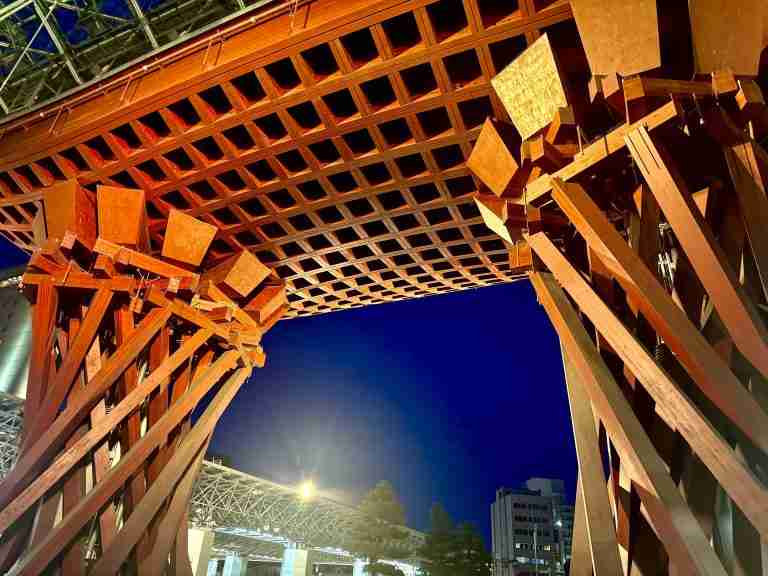
From Samurai Lanes to Kyoto Rails
Monday, August 11, 2025
We’re on the tracks to Kyoto now, having just changed trains at Tsuruga—a transfer from the sleek, futuristic Shinkansen to a slower intercity service. Outside the window, the sky is clear, the light is gentle, and for the first time in days the sun isn’t punishing us. It’s still humid and warm, but far milder than Kanazawa’s recent heat.
Meanwhile, down in Kyushu, parts of Japan are being battered by floods—a reminder of the country’s extremes. Yet here, everything runs smoothly. The Japanese rail network is one of the great engineering and social achievements of the modern world: punctual, clean, efficient, and beautifully integrated into daily life.
The Japanese Rail System: Precision on Tracks
Japan’s rail network began in 1872, with the opening of the first line between Tokyo’s Shimbashi and Yokohama. Today, it’s an intricate web of over 27,000 kilometres of track, run by a combination of private and regional companies, all interlinked with clockwork precision. Trains connect remote rural towns to megacities, often running every few minutes during peak hours.
The jewel in the crown is the Shinkansen, the bullet train, which debuted in 1964, just in time for the Tokyo Olympics. That first “dream line” ran from Tokyo to Osaka at speeds of 210 km/h—unheard of at the time. Now, the latest models regularly cruise at 300–320 km/h, linking cities hundreds of kilometres apart in just a few hours. The network stretches from Hokkaido in the north to Kyushu in the south, and future plans include the Chūō Shinkansen, a maglev train that will run from Tokyo to Nagoya in 40 minutes at speeds over 500 km/h.
What’s extraordinary isn’t just the speed—it’s the precision. The average delay of a Shinkansen train is measured in seconds per year, despite earthquakes, typhoons, and extreme weather. Compare that to Australia, where even suburban trains run on guesswork, and you start to see the gulf.
Australia could have built its own high-speed network decades ago, linking Melbourne, Sydney, and Brisbane. It would have reshaped the nation—creating decentralised towns along the corridor, easing the pressure on major cities, and cutting domestic flight traffic dramatically. Instead, political short-sightedness won the day. It’s the same story as the NBN—the National Broadband Network that began as a bold fibre-to-the-home project and ended up as a compromised, multi-technology mess. Poor planning and half-hearted execution meant we spent billions without ever achieving the infrastructure leap that was promised.
Japan, by contrast, keeps building, upgrading, and future-proofing. And it shows.
Morning in the Samurai Quarter
Before leaving Kanazawa, we squeezed in one last walk after a round of sauna, cold plunge, and onsen at the Manten Hotel. Georgie’s already told me our Kyoto hotel has a sauna, which delights me no end.
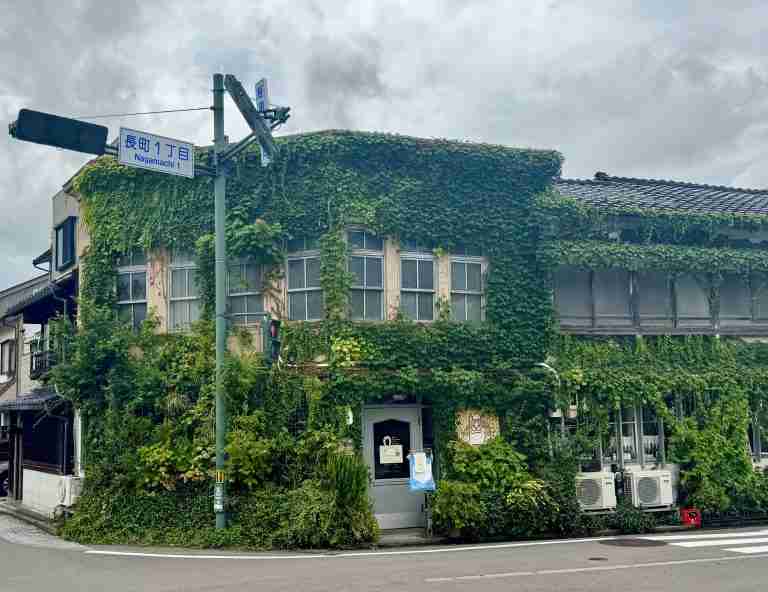
We headed back to the Nagamachi Samurai District, a place we’d explored last year but were keen to revisit. Nestled at the foot of Kanazawa Castle, Nagamachi was home to the samurai of the Maeda clan during the Edo period (1603–1868). Living here was both a privilege and a duty—close enough to protect the castle, far enough to maintain privacy and order.
The district’s charm lies in its preservation. Narrow lanes are lined with ochre-colored earthen walls, tiled roofs, and wooden gates, with narrow canals running alongside the streets. Many walls still have thick tile tops to withstand heavy snow, and in winter they’re wrapped with straw mats (komogake) for protection. Even on a summer morning, you can picture the rhythm of life here centuries ago: the sound of sandals on wet stone, the quiet conversation of retainers passing in the lanes.
Some residences are open to the public, most famously the Nomura Samurai House, home to a high-ranking retainer family for over 400 years. Inside are tatami rooms, exquisite carved transoms, samurai armor, and one of the most perfect pocket gardens in Japan—a miniature landscape of moss, stone, and water.
Unlike grand estates like Kakunodate’s Aoyagi House, Nagamachi’s homes feel intimate. They were working households as much as symbols of status—places where the sword was polished in one room and children played in another.
We lingered a while, soaking in the history, before heading back to the hotel to pick up our luggage and make our way to the train station.
Onward to Kyoto
Now the samurai lanes are behind us, fading into memory like the rhythmic clack of the rails. Kyoto awaits—its temples, gardens, and quiet lanes ready to pull us into another chapter of Japan’s layered history. And with a sauna waiting at the other end, I’m already looking forward to tomorrow morning.
Kyoto: Second Chances and Wandering Paths
Tuesday, August 12, and Wednesday, August 13 2025
I was last in Kyoto a little more than a year ago. The weather then was perfect—clear, mild, and ideal for exploring—but somehow the city didn’t completely click with me. Maybe I wasn’t in the right frame of mind, maybe I’d seen too much in too short a time.
Now, in August 2025, I’ve returned with fresh eyes, and something is shifting. Despite the summer heat, Kyoto is beginning to open up to me in a way it didn’t before. I have a feeling it might end up being my favourite city in Japan—though with three weeks still ahead of us, I’ll wait before making it official.
Kyoto: The Cultural Soul of Japan
Kyoto was Japan’s imperial capital for more than a millennium, from 794 to 1868, and remains the country’s cultural and spiritual heart. With 1,600 Buddhist temples, 400 Shinto shrines, and 17 UNESCO World Heritage Sites, it’s a city where history doesn’t just live in museums—it’s woven into the streets, gardens, and wooden townhouses.
Unlike Tokyo, Kyoto was spared heavy bombing in World War II, leaving its historical districts intact. Today, it’s a city of contrasts: geisha walking in Gion’s narrow lanes, glass-and-steel museums rising beside Zen gardens, and the latest technology quietly embedded into a city that still closes its sliding doors at night.
Kyoto’s geography gives it a unique sense of enclosure—it sits in a basin, ringed on three sides by low, forested hills: Higashiyama to the east, Kitayama to the north, and Nishiyama to the west. The hills not only shape the climate but also frame the city’s iconic seasonal views, from cherry blossom clouds in spring to fiery maples in autumn.
The Crane & Turtle Garden – A Landscape of Symbolism
Yesterday, Georgie and I started our day by visiting the Crane & Turtle Garden, a masterpiece originally designed in 1632 by the renowned gardener Kobori Enshū. The garden is a work of living symbolism: white sand raked to represent the sea, two small islands shaped as a turtle to the east and a crane to the west—both traditional symbols of longevity and prosperity. At its heart lies a sacred stone, precisely aligned with Tokugawa Ieyasu’s shrine, creating a rare connection between nature, legend, and political history.
Standing there, you can feel the balance and intent in every line, every stone. My photo doesn’t really capture it—but in person, it’s an artwork that seems to breathe.
Nanzen-ji Temple – Power and Simplicity
From there, we walked over to the Nanzen-ji Temple complex, one of Kyoto’s most important Zen temples and the head temple of the Rinzai sect. Founded in the late 13th century, it was once the retirement villa of an emperor before being converted into a temple. The Sanmon Gate, with its towering circular wooden pillars, commands the entrance. It’s vast yet spare—powerful without being overbearing, and somehow embodying the calm discipline of Zen.
The Suirokaku Aqueduct – Meiji-era Engineering in a Zen Setting
Behind Nanzen-ji, cutting through the temple grounds, stands the Suirokaku Aqueduct—a striking red-brick structure built in 1890 as part of the Lake Biwa Canal project. Designed by engineer Sakuro Tanabe, a graduate of the Imperial College of Engineering in Tokyo, it was an ambitious undertaking for the time, bringing water and hydroelectric power from Lake Biwa in neighbouring Shiga Prefecture into Kyoto.
Its Roman-arched design is a rare sight in Japan, especially in a Zen temple setting, and the craftsmanship is remarkable: over 90 metres long, with 34 brick arches, it’s still in use today. I loved this piece of infrastructure—not just for its utility, but as a piece of art in its own right, blending Meiji-era industrial ambition with a setting that’s centuries older.
The Philosopher’s Path – A Return Walk
We finished our outing with a walk along the Philosopher’s Path (Tetsugaku-no-Michi), a two-kilometre stone walkway beside a narrow cherry-lined canal. We’d been here before, but I appreciated it more this time. Named after Nishida Kitarō, one of Japan’s leading 20th-century philosophers, who used to stroll the path daily as a form of meditation, it winds past small shrines, cafés, and craft shops.
In summer it’s quiet, shaded, and serene—the perfect place to let your mind drift, just as Nishida once did.
Today’s Meanderings
This morning, after a round of sauna, cold plunge, and hot onsen at the hotel, we walked to Kyoto Station to meet Finn and try to get his iPhone repaired (it went for a swim in the bath). Unfortunately, Kyoto Station—immense, multi-level, and maze-like—defeated us. We never found the repair shop.
Instead, we set off towards the Golden Pavilion (Kinkaku-ji) but turned back at the sight of the tourist queues, heading instead for Genkō-an Temple.
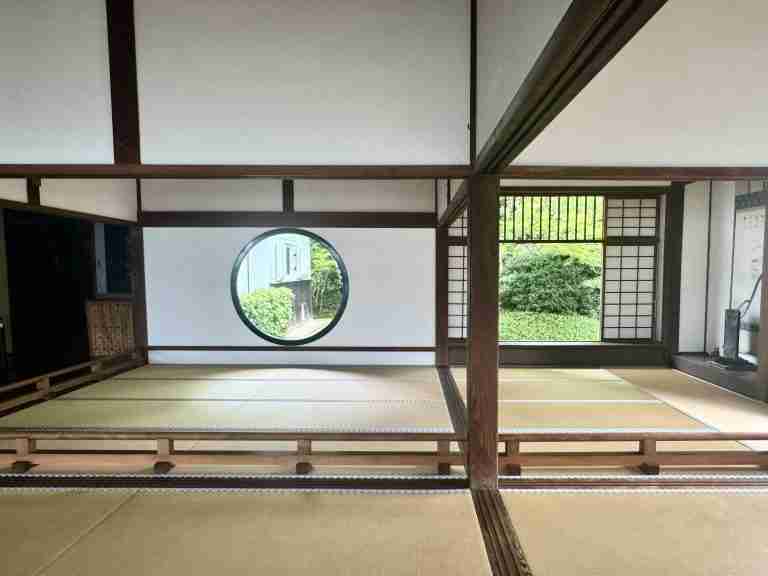
Genkō-an: Windows into Zen
Genkō-an is a small Zen temple founded in 1346, known for its two distinctive windows: the Square Window, symbolising the cycle of human life—birth, ageing, suffering, death—and the Round Window, representing enlightenment and the universe. It’s also a “blood ceiling” temple: its wooden ceiling is stained with the blood of warriors who died in a 17th-century battle, repurposed here as a reminder of life’s impermanence.
I’ll admit, I prefer the grand wooden temples like Nanzen-ji. Genkō-an felt more like a historic house than a temple, but its symbolic windows and quiet tatami rooms have their own subtle charm.
By mid-afternoon, we’d had enough of buses and heat. We were lucky to find the No. 6 bus back towards our hotel. We grabbed a late lunch at the ramen shop next door, and now Finn and I are about to head to the sauna. Kyoto’s still unfolding, and who knows—tonight might surprise me.
Nara by Lantern Light
Thursday, August 14, 2025 – Evening Preview
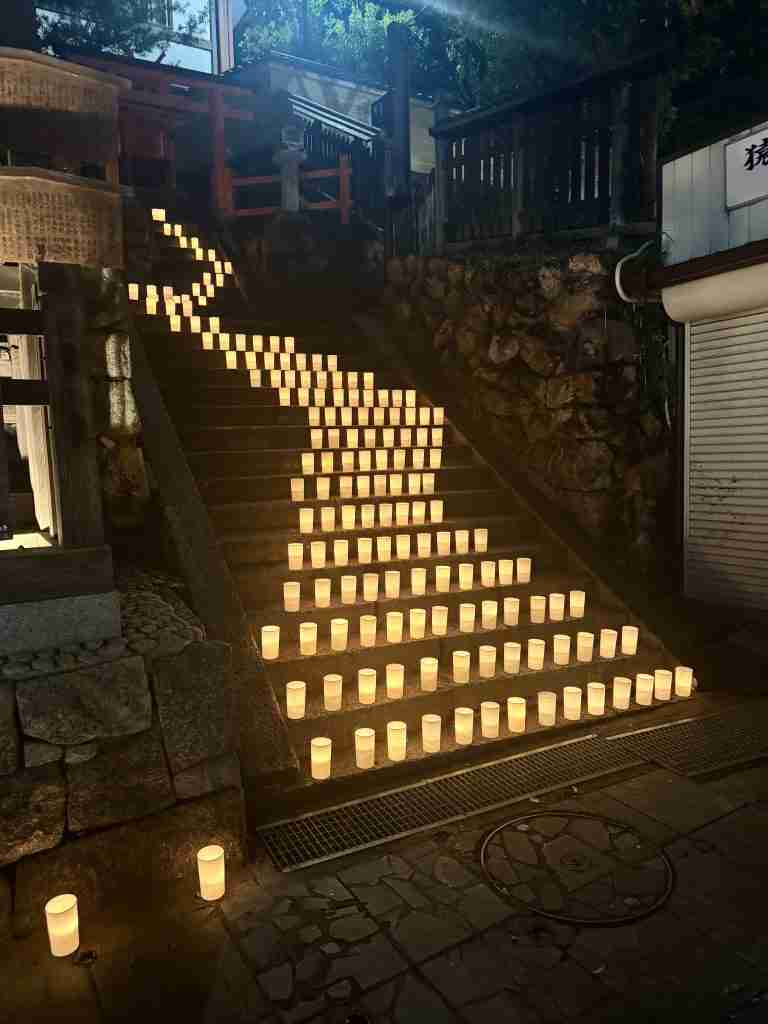
Tonight, as dusk falls over Nara, we’ll witness one of Japan’s most atmospheric summer spectacles—the Chūgen Mantōrō (Mid-August Lantern Offering) at Kasuga Taisha, the city’s most revered Shinto shrine.
Kasuga Taisha was founded in 768 AD and has been the spiritual heart of Nara for more than 1,200 years. It’s famous for its hundreds of bronze hanging lanterns and stone lanterns that line the paths leading up to the shrine. These lanterns are usually unlit, but twice a year—once in early February and again in mid-August—they are all illuminated at once.
The effect is otherworldly: more than 3,000 lanterns casting a warm, flickering light over vermilion pillars, white walls, and moss-covered stone. The August event is called the Chūgen Mantōrō, timed to coincide with the Obon season, when spirits of ancestors are believed to return to the world of the living. Lighting the lanterns is both a symbolic welcome to these spirits and an offering of gratitude.
The festival begins as the sun sets and the shrine grounds take on a hushed, expectant atmosphere. Visitors can walk the lantern-lined paths, pausing to admire the intricate metalwork of the bronze lanterns—many of which have been in place for centuries. Priests in traditional robes move through the shrine, and the air is thick with the scent of cedar and incense.
While the lantern light is the main draw, the deeper significance lies in its continuity. Some of the lanterns here have been dedicated and maintained by the same families for generations, their soft light carrying not just beauty but a living connection to the past.
We’ll be there tonight, taking it all in—the play of shadow and light, the murmured prayers, the way time seems to fold in on itself in the glow of 3,000 flames. Tomorrow and the next day, the lanterns will be lit again, and I can already tell I’ll want to return at least once again.
Friday, August 15, 2025
A Japanese friend in Melbourne strongly advised Georgie not to visit Japan in August—the height of the Japanese summer. Us being seasoned humidity hounds from our Bali life, we ignored the warning and came anyway.
Georgie’s main reason for making the trip now was the Setouchi Triennale, often called the Naoshima Art Triennial. Held across islands in the Seto Inland Sea, it began in 2010 as a way to revitalise rural communities that had been shrinking for decades. Empty schools, abandoned houses, even disused factories were handed over to artists, architects, and designers who turned them into permanent installations. The result: the “art islands,” where daily life and cutting-edge art blur into one.
This year’s Triennale (the sixth edition) is spread over spring, summer, and autumn, with exhibitions across Naoshima, Teshima, Inujima, and several smaller islands. International names sit alongside Japanese artists, presenting everything from Yayoi Kusama’s now-iconic polka-dotted pumpkins to community-driven projects where local residents collaborate with artists. Tadao Ando’s minimalist architecture, James Turrell’s light installations, and Rei Naito’s meditative spaces all make appearances. The whole thing feels like Japan’s boldest experiment in using art as a lifeline for dying towns.
Morning – First Visit to Saiin
I slept in until 8 am—my body demanding a break after two weeks of 20,000-step days. Even my Oura Ring told me to rest. After my usual sauna and hot bath, we left the hotel before 10 am, grabbing coffee at Astrea, the small café around the corner that has quickly become our morning ritual.
While steaming in the sauna, I’d had the idea to walk out to Saiin, the Kyoto neighbourhood where Finn will be living. It’s about 35 minutes on foot, through small, sunlit backstreets where the heat presses down but shade comes in patches.
At first glance, Saiin looked nondescript—quiet, suburban. But the Aeon Shopping Mall near Finn’s future share house changed my mind. From the outside it seemed tired; inside it was alive: fresh fish and meat counters, neat vegetable displays, bakeries, and rows of beautifully prepared meals at prices that put Melbourne to shame.
We walked past the share house (solid from the outside—fingers crossed about the inside) and then turned a corner to find a buzzing café filled with young people. Suddenly the place felt more alive. Past the station we saw even more cafés and restaurants, a busier vibe. My first impression of Saiin as too quiet quickly melted—it felt balanced, everyday, lived-in.
Afternoon – Back in Central Kyoto
We had lunch at a small café on the main street before heading back into the city. I tried (and failed) to organise a shiatsu massage—Japanese language skills crumbling at the crucial moment.
At Kyoto Station, we met up with Finn. He grabbed a quick lunch while Georgie finally bought the passport cover she’s been eyeing for a year, from a shop across the road from Higashi Hongan-ji, the massive Jōdo Shinshū temple near our hotel. Founded in the early 1600s, it’s one of Kyoto’s great wooden structures—vast halls, soaring gates, and a real sense of permanence. We visited last year, so we probably won’t return this trip.
Evening – Saiin with Finn
At around 6 pm, we caught a bus back to Saiin with Finn for his first look at the neighbourhood. He ducked into Aeon to check on his iPhone, only to find it working again as if nothing had ever been wrong.
Dinner was at a ramen joint on the main road, where we chatted with a young German man working behind the counter. He spoke perfect Japanese after two and a half years living here—proof of how deeply expat life can root itself in Japan. Afterwards, Finn introduced himself to Katsu, the owner of the hip café-microbrewery around the corner from his new house. That could turn into a handy local anchor point for him.
By the time we headed back to the hotel, I realised how much Saiin had grown on me. It’s not touristy, but it hums with daily life—university students, young workers, and local families. Busy but not chaotic, dotted with cheap eats, quirky cafés, and convenience for everything Finn will need. In the backstreets it’s calm and ordinary; by the station it’s lively and youthful. It feels like the right place for him to begin.
A Bit More About Saiin
Saiin is in Ukyo Ward, west of the Kamo River (about a 20-minute walk away). Historically, it grew in the early 20th century with the arrival of the Keifuku Electric Railroad, better known as the Randen Tram Line. The Randen is Kyoto’s last surviving tram network, running since 1910, with colourful two-car streetcars that trundle through the city at a leisurely pace. For many locals, it’s part of the daily rhythm of life. From Saiin, you can ride the tram out to Arashiyama, Kyoto’s scenic bamboo groves and riverside temples.
Unlike Kyoto’s eastern districts with their temples and teahouses, Saiin has always been more down-to-earth: student housing, family businesses, and the kind of cafés and izakayas that serve locals rather than tourists. Its proximity to Ritsumeikan University and Kyoto University of Foreign Studies gives it a youthful feel. It’s not a place for sightseeing—it’s a place for living. And now, for Finn, it’s about to become home.
Lorem ipsum dolor sit amet, consectetur adipiscing elit. Ut elit tellus, luctus nec ullamcorper mattis, pulvinar dapibus leo.
Saiin – A First Look at Finn’s New Neighbourhood
Saiin isn’t on most tourist itineraries, but it’s about to play a big role in our lives—this is where Finn will be living while he settles into life in Kyoto. We decided to check it out today, first with a morning walk and later with Finn himself in the evening.
Our morning route took about 35 minutes from the hotel, winding through a patchwork of narrow, shaded backstreets. At first, I wasn’t impressed—it felt quiet, almost too suburban. That is, until we arrived at Aeon Shopping Mall. From the outside it looked a bit dated, but stepping inside was a pleasant surprise: rows of fresh fish and meat counters, colourful displays of vegetables, bakeries with buttery pastries, and an array of prepared meals that looked both delicious and affordable. We browsed a few shops, picked up some essentials, and wandered past Finn’s soon-to-be home. From the outside, it looks solid and welcoming—though I was too distracted by a phone call to take in all the details.
Around the corner, we stumbled upon a hip little café packed with young people, a sign of the neighbourhood’s energy. That’s when it clicked—Saiin isn’t touristy, but it’s alive. It’s close to several universities, which means plenty of cheap eats, quirky cafés, and a youthful buzz without the chaos of central Kyoto.
This evening we took the bus with Finn for his first look. He ducked into Aeon to get his iPhone checked, only to find it was working fine after all. We had dinner at a ramen joint on the main street, where we met a young German man working behind the counter. His Japanese was flawless after living here for two and a half years—a small reminder of how deep expat life can integrate into Japan. Finn also introduced himself to Katsu, the owner of that same hip café we’d spotted earlier. As it turns out, it’s also a microbrewery—a potentially great social anchor for him.
By the end of the day, my opinion had shifted. Saiin is not the quiet backwater I first thought—it’s a well-balanced neighbourhood with just the right amount of buzz. It has everything Finn might need to start his Kyoto chapter: vibrant but not overwhelming, full of locals rather than tourists, and with good food on every corner. I like it so much that Georgie and I are already considering staying here ourselves when we return to Kyoto at the end of our trip.
A Bit of Saiin’s Background
Saiin sits in Kyoto’s Ukyo Ward, west of the Kamo River, and has historically been a residential and light commercial hub rather than a tourist attraction. The area grew significantly in the late 19th and early 20th centuries as Kyoto expanded beyond its historic centre, especially with the introduction of the Keifuku Electric Railroad (now known as the Randen Line), which still runs through the district today. This tram line gives the area a slightly nostalgic feel, with vintage-style streetcars trundling between neighbourhoods.
Saiin’s proximity to universities such as Kyoto University of Foreign Studies and Ritsumeikan University keeps it young, dynamic, and affordable compared to more central districts like Gion or Kawaramachi. While it doesn’t boast grand temples or famous gardens, it has its own charm—small izakayas, coffee shops, and family-run businesses that give it an authentic, lived-in feel. It’s the sort of place where the shopkeepers know the locals, and where daily life plays out far from the tourist trail.
The Randen Tram Line – Kyoto’s Vintage Streetcars
One of Saiin’s most charming features is its connection to the Randen Tram Line. Officially called the Keifuku Electric Railroad, it began operation in 1910, making it Kyoto’s only remaining tram network. The line runs from the bustling city districts out to the scenic Arashiyama area, passing through a mix of residential streets, historic sites, and suburban pockets like Saiin.
The trams are small, colourful, and have a distinctly retro feel—riding them is like stepping back in time. They operate at a slower pace than the city’s modern subway or JR lines, offering a more leisurely and intimate view of Kyoto. For many locals, the Randen isn’t just transport—it’s part of their daily rhythm, linking neighbourhoods that tourists rarely see.
Saturday, August 16, 2025 – Kyoto to Kurashiki
We just got back from Saiin, where Finn officially moved into his new share house this afternoon, just after 4 p.m. So far so good. He’s tucked away in a small room in a three-story house with eight bedrooms—plenty of other young people drifting in and out, which is exactly what he needs right now.
The neighbourhood itself is brilliant. Saiin is a lively district in western Kyoto, just three stops (about 10 minutes) on the Hankyu Line from Kyoto Station. It’s far enough out that it feels like its own world, but close enough that the city centre is always within easy reach. The streets are buzzing with little restaurants, bars, supermarkets, and the occasional hidden temple wedged between shops. It’s exactly the kind of place where life feels easy and social.
Tomorrow at noon, we’ll wave Finn off and head down to Kurashiki, in Okayama Prefecture, right by the Seto Inland Sea. Kurashiki is famous for its Bikan Historical Quarter—a beautifully preserved canal district lined with white-walled warehouses, old wooden townhouses, and willow trees drooping gracefully over the water. It’s like stepping back into the Edo period, when Kurashiki thrived as a rice distribution hub. Today, many of those old warehouses have been transformed into museums, cafés, and craft shops. The Ohara Museum of Art, Japan’s first private museum to showcase Western art, is one of the highlights.
The Seto Inland Sea itself is something special: a vast stretch of calm blue water sprinkled with over 700 islands, many of which have become living canvases for contemporary art. The region reinvented itself over the past few decades, transforming sleepy fishing islands into cultural destinations. That’s why the Setouchi Triennale is held here—one of the most unique art festivals in the world, where installations pop up in abandoned houses, along beaches, and even in old shrines. It’s art with salt air in your lungs and sea breezes on your skin.
On the health front… I’ve completely fallen off the wagon this past week when it comes to food. Carbs have crept back into my life with a vengeance, and my CGM is showing me the consequences in flashing neon: average blood sugar way up, daily swings sharper than I’d like. If I keep this up, I’ll undo months of careful work on my metabolism—not to mention put on weight fast. So the plan is to tighten things back up immediately. Japan’s food is wonderful, but discipline is going to have to travel with me from here.
From Kurashiki, we’ll keep moving—toward the islands, the Triennale, and eventually Osaka. Georgie has the itinerary in hand, so I’m mostly along for the ride. After Osaka, we’ll circle back to Kyoto for our final three days before Tokyo and then the long flight back to Melbourne.
Sunday, August 17, 2025
Kyoto to Kurashiki – A Shinkansen Meditation on Change
Life has a strange way of folding and unfolding, like an intricate piece of origami. You don’t really see the shape of things until you start opening them up, layer by layer. At 73, many people are beginning to slow down—tucking themselves into the comfort of the familiar and reflecting on the past. I seem to be heading in the opposite direction. These days I feel like I’m being reassembled into something new. What exactly? Still unclear. But I sense something waiting, tucked away in the folds.
And Finn? He’s unfolding too—right in front of our eyes. Yesterday, he moved into a share house in Saiin, a gritty and lively suburb of Kyoto, where bicycles glide past ramen shops and local students crowd the cafés. Until this week, he’d never even heard of Saiin. He knew nothing about the house, the roommates, or the rhythm of the streets. Yet yesterday, he stepped into this unknown chapter with quiet courage.
As parents, watching your child enter a world that has nothing to do with you—no guidance, no curated safety net—is both terrifying and beautiful. As Lis said, it was like dropping your kid off at university. It’s the first moment of real independence, when the past starts to loosen its grip and the future becomes something self-authored.
This morning, as Georgie and I quietly packed our bags, I caught myself picturing an alternate future—one where Finn thrives. A future where he finds the confidence to connect without needing a script, where he carves out a living teaching English and reclaims his own narrative. Where loneliness is replaced by friendships born of proximity and mutual curiosity. Where he discovers the joy of small victories: earning yen from his own labour, cooking dinner with housemates, knowing which street leads home.
And now, our part of this story pauses—for a moment at least.
Georgie and I are back in our own groove. The role of daily travel chaperones is on hold. We’ve boarded the Shinkansen, hurtling westward toward Okayama—the first leg of our two-week journey across the Seto Inland Sea, then on to Matsue, Osaka, and a World Trade Fair before looping back to Kyoto. We’ve shifted gears. No more waiting around for Finn to wake up. No more deciding the day’s plans based on someone else’s pace. We’re back to being our own version of intrepid: slightly older, a little creakier, but still game to get lost in alleyways, eat something we can’t name, and marvel at Japan’s relentless charm.
Train travel in Japan always feels symbolic to me. Everything runs on time, everything is fluid, everything moves forward. As we pull away from Kyoto, I feel like we’re shedding another skin. Not just us—Finn too. We’re all travelling toward something unknown.
And that, I suppose, is the essence of aging that no one tells you: you don’t stop beginning again.
Over the Moon in Kurashiki: A Tale of Art, Tradition & Wonder
Monday in Kurashiki was nothing short of magical. We began our day wandering through the storied halls of the Ohara Museum of Art, then stepped into the serene, tatami-lined rooms of Ikiyo-E Kurashiki—an intimate setting for over 100 mesmerizing woodblock prints by the incomparable Utagawa Kuniyoshi. And all this before our onward venture to Takamatsu!
Ohara Museum of Art: Where East Meets West Past & Present
Established in 1930 by local textile magnate Magosaburō Ōhara, the Ohara Museum of Art holds the distinction as Japan’s first private museum dedicated to Western art . The museum’s creation was deeply personal: Ōhara founded the gallery to honor his lifelong friendship with the painter Kojima Torajirō, a pioneering Japanese artist who studied in Europe three times with Ōhara’s unwavering support .
Kojima’s European expeditions fueled the museum’s early acquisitions—works by Monet, Matisse, Renoir, El Greco, Picasso, Gauguin, Modigliani, Rodin, and more now grace its walls . Housed in stately neoclassical buildings, with reinforced‑concrete pillars that mimic marble , the museum also includes the Crafts Art Gallery and Asiatic Art Gallery, presenting stunning Japanese potteries, woodcuts, and beautiful Asian antiquities from places like Egypt, Iran, and Syria .
Over the decades, the museum continued to evolve: in 1961, wings were added for Japanese paintings by artists like Fujishima Takeji, Aoki Shigeru, Kishida Ryūsei, and for crafts by masters like Kawai Kanjirō and Bernard Leach. In 1963, the Munakata Shikō woodcuts and Serisawa Keisuke’s dye works found their home in what is now the Crafts Wing (Kōgei-kan) .
Ikiyo-E Kurashiki: Kuniyoshi in the Tatami-Lined Heart of Tradition
Next, we drifted into Ikiyo-E Kurashiki—also called Ukiyo-e Kurashiki or Kuniyoshikan—set within a beautifully restored ryokan, complete with tatami mats, paper-walled rooms, and serene views of a Japanese garden . Opened in 2021, it is the world’s first museum ever to exhibit Utagawa Kuniyoshi’s prints permanently .
Inside, over 100 works span from his debut pieces to celebrated masterpieces such as the haunting “Sōma no Furudairi” (The Ancient Palace of Sōma)—featuring an enormous, anatomically precise skeleton summoned through monster-lit magic .
Every one of the 11 tatami rooms houses evocative prints—warrior scenes, kabuki actors, beautiful women, humor-rich caricatures—some framed, others close enough to feel their texture beneath your gaze . Stepping out into the lush garden between rooms offers a contemplative pause: the calm landscape framed Kuniyoshi’s ferocity with delicate balance . I truly felt over the moon as I traced every line and gaze.
The Art Journey, Room by Room
1. Ohara Museum of Art
A tribute to Western masters—Monet, Matisse, Renoir, El Greco—collected through the vision of Magosaburō Ōhara and Kojima Torajirō .
Architecturally striking with neoclassical design and reinforced-concrete pillars masquerading as marble .
Evolving wings celebrating Japanese art, crafts, and Asian antiquities—a layered timeline of cross-cultural dialogue .
2. Ikiyo-E Kurashiki (Kuniyoshikan)
A converted ryokan offering the world’s first permanent Kuniyoshi hang .
Over 100 prints across 11 intimate tatami rooms, ranging from debut works to the enthralling “Sōma no Furudairi” .
The seamless blend of domestic architecture, garden views, and immersive curation sparked pure joy.
Final Reflections
Kurashiki revealed itself as more than an art-town—it’s a living dialogue between tradition and innovation. At the Ohara Museum, art from Europe and Asia coexists under the vision of a local philanthropist. At Ikiyo-E Kurashiki, Edo-period exuberance breathes anew in tatami spaces. Both places kindled that rare, transcendent feeling: to be truly moved by beauty, across time and culture.
Let me know if you’d like prose stylized further—or expansions on Kuniyoshi’s stylistic influence, how the exhibitions spoke to your emotions, or seamless transitions into your next stop in Takamatsu!
Tuesday, August 19, 2025 – Ferry to Naoshima
We’ve just boarded the ferry from Takamatsu, gliding across the shimmering Seto Inland Sea on our way to the Setouchi Triennale on Naoshima. True to form, the ferry left precisely on time. As we pulled away from the port, the staff on shore stood smiling and waving us off—a small, quintessentially Japanese ritual that somehow feels both formal and warmly human.
This wasn’t our original plan. We’d arrived early this morning intending to take the fast boat, but it was already fully booked. Instead, we walked to the car ferry terminal and queued for 30 minutes under the heavy summer sun. The kindness of the ferry staff made all the difference: they handed out umbrellas to everyone in line, a thoughtful shield against the unrelenting August heat.
Georgie’s been a little let down. This was meant to be the crowning moment of our trip—she had booked accommodation on Naoshima itself months ago—but last week we were informed that the booking had been cancelled. So, we pivoted. Our base is now Takamatsu, a small but charming port city and the capital of Kagawa Prefecture. Takamatsu was once the seat of a powerful feudal domain, and today it’s best known for two things: Ritsurin Garden, one of Japan’s most beautiful historic strolling gardens, and Sanuki udon noodles, which locals claim are the best in the country. For us, though, Takamatsu’s highlight has been the Dormy Inn, with its rooftop Japanese bathhouse: sauna, cold plunge, and steaming hot baths. There’s something deeply restorative about starting the day this way—sweating, plunging, soaking, then sitting quietly while you wash your hair, shave, and rinse off. A ritual of renewal.
Now we’re heading to Naoshima, the most famous of the Art Islands. This cluster of small islands scattered across the Seto Inland Sea was once struggling with depopulation and economic decline. In the late 1980s, the Benesse Corporation (best known for its education services) began working with architect Tadao Ando to transform Naoshima into a hub for contemporary art. What started as a bold experiment grew into a cultural renaissance: old fishing villages reborn as open-air galleries, abandoned houses turned into site-specific installations, and world-class museums nestled into the island landscape.
Naoshima itself is home to the Benesse House Museum, which doubles as a hotel, and the Chichu Art Museum, where works by Claude Monet, James Turrell, and Walter De Maria are displayed in underground spaces designed by Ando to harmonize with light and nature. Around the island, you’ll stumble upon outdoor installations like Yayoi Kusama’siconic pumpkin sculptures—bright bursts of colour on quiet piers—and a network of Art House Projects, where contemporary artists have transformed old homes into immersive artworks.
The Setouchi Triennale, held every three years, expands this vision beyond Naoshima to a dozen nearby islands, including Teshima, Inujima, and Shodoshima. Each island has its own flavour. Teshima hosts the ethereal Teshima Art Museum, an organic, water-drop-shaped structure that feels more like a living organism than a building. Inujima, once scarred by abandoned copper refineries, has been reborn through art projects that blend industry, architecture, and environmental renewal. Shodoshima, the largest of the islands, layers its olive groves and traditional soy sauce factories with contemporary installations scattered across its hills and villages.
The Triennale brings it all together: hundreds of artists from Japan and around the world responding to the sea, the land, and the people who live here. It’s as much about revitalization as it is about art—an ongoing story of how creativity can breathe new life into places the modern world forgot.
So here we are, finally on the ferry, sails set toward the islands where art meets sea and sky.
Teshima: Where Water Thinks
August 20, 2025 – Teshima Island, Seto Inland Sea
We caught the ferry to Teshima this morning. My first impression was that I might like this island more than Naoshima—but who knows, these things are always fleeting. The ride took about 50 minutes, but I was writing most of the way, so time slipped by unnoticed.
It’s hot again. It’s hot every day. Only crazy people come to Japan in summer—especially this summer, which has apparently been one of the hottest in the past hundred years. My face is glowing red from the sun, my clothes drenched with sweat. Georgie had done most of the planning and today was all about one thing: the Teshima Art Museum.
I had zero expectations.
The ferry arrived late—past our reserved ticket time—so we ditched the idea of renting bikes and caught a bus instead, winding 4 km through leafy roads. We jumped out at a sun-drenched stop overlooking the Seto Inland Sea. The view was spectacular, though I couldn’t help thinking we have views like this back in Victoria. It’s a beautiful planet.
We wandered to the entry point of the museum path, grateful that they still honoured our tickets despite being over an hour late. The walk to the museum was unexpectedly serene: a gently curving concrete path, shaded by foliage, overlooking the ocean. And then, like something from a minimalist fairy tale, we arrived at what looked like the oversized concrete entry to a Hobbit house—low, round, discreet.
We entered.
At first glance, the space seemed almost empty. Vast. Cool. Round. White. Silent. The roof arched above us like the inside of an eggshell, with a massive, round hole in the ceiling letting the sun pour in. Most of the other visitors were sitting or lying on their backs, quietly. I got a strange buzz of expectation—but also that little voice wondering, “Is this it?”
Then I began to move.
On the smooth concrete floor, I noticed small blobs of water—just droplets, really. Then I saw they were moving. Bumping into each other. Merging. Sliding along invisible paths. I crouched and watched as the droplets pooled and then broke apart again. They were alive—not in the literal sense, but in the way a fire crackles or clouds reshape themselves in wind.
And then it hit me.
Tiny pin-sized openings in the floor were releasing these droplets, each one sparking a little burst of energy that flowed into this larger, shared field. It was like watching a choreography of water. The longer I watched, the more mesmerising it became. A kind of liquid intelligence.
And suddenly, the whole space took on meaning.
The Museum Itself: Where Art, Architecture, and Nature Dissolve
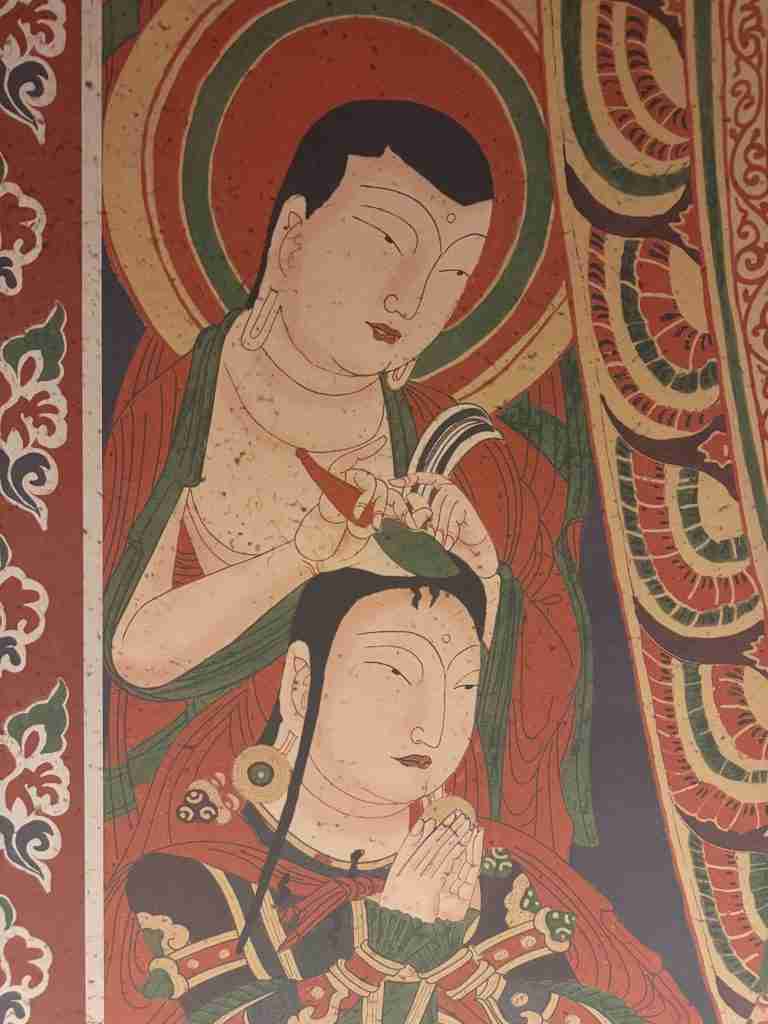
The Teshima Art Museum was designed by Japanese architect Ryue Nishizawa, in collaboration with artist Rei Naito. It opened in 2010, and it doesn’t really have “artworks” in the conventional sense—there are no paintings, no text panels, no guides. Just one installation: Matrix.
The entire building is the artwork.
It’s a single concrete shell—shaped like a raindrop or a seed pod—built directly into the landscape of the island. There are no support pillars. No harsh angles. Just gentle curves, and two large oval openings that let in sunlight, wind, birdsong, and even the occasional falling leaf. The work is continuous, living, shifting. It’s designed to make you feel not just like a spectator—but a participant.
And that water… it’s not symbolic. It’s actual water, engineered with such subtlety that it feels supernatural. The droplets emerge, gather, move, and eventually make their way toward a small depression in the floor beneath the skylight—a kind of internal sea.
Rei Naito’s work often poses the question:
“Was it a blessing to be born?”
And in this space, that question doesn’t feel abstract. It feels embodied.
From WTF to Epiphany
I stood, I sat, I wandered. I began to feel as if I was watching life in motion. Water forming connections, moving toward a shared destiny, changing shape and path depending on its companions. It was beautiful and a little eerie—like watching consciousness without a brain.
And then I had this quiet moment of clarity:
We are like those drops.
But unlike them, we have consciousness. We can choose our direction (or at least believe we can). We make decisions. We resist or surrender. We crash into each other and sometimes become more than we were.
Who knows—I might have stayed all day and had a full-blown epiphany. But like any good band that breaks up at its peak, I figured it was better to leave while I was still in awe.
Friday, August 22, 2025 – Goodbye Takamatsu, Hello Matsue
Goodbye Takamatsu, goodbye Setouchi Triennale, goodbye Seto Inland Sea. We’ve just boarded the train to Okayama, in transit to Matsue. The morning routine was familiar: push our bags through Takamatsu’s seemingly endless shopping arcade to the station, mostly undercover, until the unrelenting Japanese sun inevitably found us. And, as always before a train ride, we raided 7/11 for the essentials—iced coffee and some half-decent snacks to keep us going.
So, the Triennale is now behind us. Was it worth it? Yes… and no. In some ways it was a letdown. Maybe we’re spoiled by Melbourne’s art galleries. Maybe it was the punishing heat. Maybe it was the daily grind of queuing for ferry tickets, waiting in the sun, and those long boat rides. Maybe, maybe, maybe.
But deeper down, I think my real problem is this: so much of today’s art feels like art wank. The curators—rather than the artists—seem to be in charge of taste, forcing childish or half-baked installations on art lovers who then scratch their heads, wondering if the problem is with their own judgement. And too often, the space outshines the art. At times that’s a beautiful collaboration, like the way the Matrix installation was designed with its architecture—a perfect romance of artist and architect. But mostly, it feels like the building, the lighting, and the “concept” are the stars, while the artwork itself fades into the background. Some of the pieces I saw would never have rated a second glance at Tusk Gallery, where the art was always king.
Still, there were gems. Head On. Matrix. And of course, the magnificent architecture of Tadao Ando. Those moments made the trip worthwhile.
Now, on to Matsue—a city we visited last year and loved enough to return to. Matsue sits on the north coast of Honshu, stretched between Lake Shinji and the Sea of Japan, with canals running through its heart, which is why it’s sometimes called the “City of Water.” It’s home to one of Japan’s few surviving original castles, Matsue Castle, a black-walled beauty that still watches over the city as it has since 1611. Not far from here is Izumo Taisha, one of the oldest and most important Shinto shrines in all of Japan, where it’s said the gods of the country gather every October.
Matsue also has a literary spirit—Lafcadio Hearn, the Irish-Greek writer who became Japanese and took the name Koizumi Yakumo, lived here in the 1890s. His house is still preserved, a quiet place where you can sense the East-meets-West blend that defined his writing.
There’s something about Matsue—its mix of water, history, and spirituality—that feels slower, more grounded. Maybe after the ferry queues, the heat, and the head-scratching “art,” that’s exactly what we need.
And yes, I know: I rail against “art wank,” but here I am chasing art festivals across Japan in 38-degree heat. Maybe I’m just as guilty as the curators—only my medium is complaining.
Travel has its own rhythm: you close the door on one place, step onto a train, and a few hours later another city rises up to greet you. Some places disappoint, some surprise, some quietly seep into your bones. Takamatsu gave us ferries and art islands, but now it’s time for Matsue—with its castle, its gods, and its lakeside calm—to show us something different.
Meanwhile, back in Kyoto, Finn seems to be finding his feet. Yesterday he wandered out to the old aqueduct area and walked along an abandoned train line, reconnecting with nature in a way he badly needed. Georgie and I have resolved to stay in Japan another month—not just for us, but to help Finn get grounded, find work, and start weaving a circle of friends here. In a way, our travels are shifting too: from chasing art and cities to helping one of our own find his place in the world.
Saturday, August 23, 2025 – Adachi Art Museum and Gardens
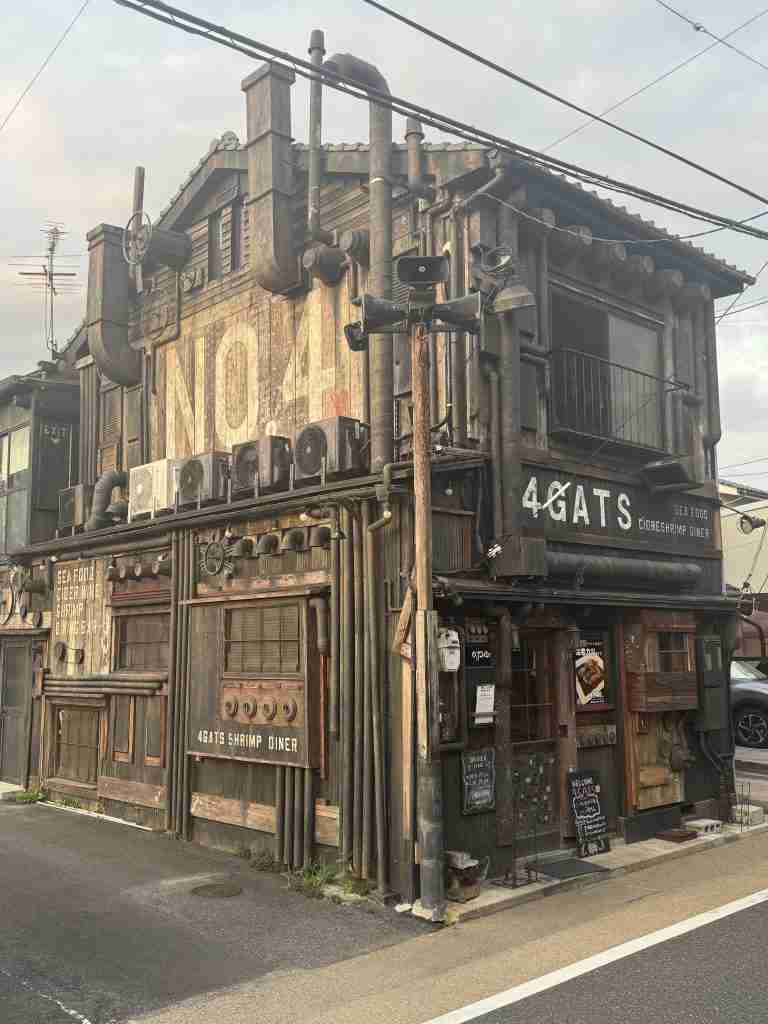
We’re rattling back to Matsue on the train after spending a few hours at the Adachi Museum of Art—a place that somehow manages to blend two of Japan’s greatest traditions: art and gardens.
Inside, we wandered through an impressive collection of 20th- and 21st-century Japanese art and ceramics. The quality was high, but two works stopped me in my tracks. One, a luminous painting of a geisha from the 1930s, captured the quiet grace of the era. The other, painted in 1952—the year I was born—depicted a group of schoolgirls with a kind of fragile optimism that still speaks across the decades.
And yet, looking at art created around the wartime years brings a strange dissonance. It’s hard for me to reconcile that the Japanese people, whose culture I’ve come to admire so deeply, were once considered Australia’s enemies. I imagine they must have seen us—English and Australians—as barbarians too. Standing in front of a delicate painting from that era, I couldn’t help but think of the young kamikaze pilots of the late war years: modern-day samurai, boys climbing into stripped-back planes for their final flight. What was in their minds as they took off for the last time? Pride? Fear? Surrender? The contrast between the brutality of war and the beauty of a painting on a gallery wall is haunting.
Outside, the gardens stretch out like living paintings—immaculate, sculpted, perfected down to the last rock and blade of moss. They are so precise, so carefully tended, that at times it almost feels too much. I admire the craftsmanship, but a part of me craves wildness—the kind of beauty that comes from nature’s own hand rather than the gardener’s.
The museum itself is the vision of Adachi Zenko (1899–1990), a local businessman born in the nearby town of Yasugi. He made his fortune in textiles and real estate, but his true passion was art and gardens. In 1970, he established the museum as a way of bringing the two together—believing that “a garden is also a picture.” His aim was to create harmony between the beauty hanging on the walls and the beauty framed in the windows. Today the museum houses over 1,500 works, including a major collection of modern Japanese paintings by artists such as Yokoyama Taikan, alongside ever-changing seasonal views of the six meticulously designed gardens outside.
Japan constantly surprises me with its juxtapositions. The Adachi gardens embody perfection, while many of the towns and cities outside feel cluttered, grey, and utilitarian. The balance is there: exquisite beauty set against the unremarkable. Perhaps that’s part of Japan’s truth—you don’t get one without the other.
Monday, August 25, 2025 – From Matsue to Osaka
It’s Monday morning and we are speeding through the mountains of northern Honshu, leaving Matsue behind and heading toward Okayama. From there, we’ll catch the Shinkansen to Osaka, where we’ll meet up with Finn for a couple of days.
The landscape outside our window is magnificent—steep forested slopes climbing into the mist, wild mountain streams tumbling beneath bridges, clusters of tiled-roof villages nestled into valleys, and rice fields fanning out in every pocket of flat land. The train glides past it all with quiet efficiency, and I alternate between staring out the window and working on the music I’ve been creating over the past four weeks in Japan. It’s become something like an audio diary of our adventures—a record of feelings, places, and fleeting moments. We are, in a way, like the drops of water in the Matrixinstallation on Teshima: drifting, colliding, changing direction, each movement leaving ripples behind.
Georgie is a wonderful travel companion. She’s easy, adventurous, fun, and never demanding. I often think how lucky I am to share all of this with her.
Physically, I’m carrying a few aches. My back is bothering me more—the nerves feel inflamed. It goes back to a clumsy moment in Kanazawa a couple of weeks ago, when I was being a smarty-pants looking at my phone while queuing for a free late-night ramen at the hotel. I tripped and landed awkwardly. At the time, my pride was more bruised than my body, but in hindsight I should have taken it more seriously. Now it’s painkillers and analgesic cream that seem the likely next steps. On top of that, I’ve been fending off a mild cold or flu, though my immune system seems to be winning.
The salt I started taking two days ago has already helped with fatigue and cramps. Between the daily saunas and the relentless Japanese summer heat, it will need to become a ritual—one of those small adjustments that makes a big difference.
As always, Japanese trains are a pleasure to travel on—quiet, fast, spotless, and even the toilets are cleaner than most restaurants back in Melbourne. If only we could bottle some of that efficiency and civility for home. We’ve stocked up at 7/11 for today’s ride: sushi, sliced vegetables, boiled eggs, cold black coffee… Georgie even has her trusty little bottle of sparkling wine tucked into her bag. Japanese convenience stores are astonishing—if only Melbourne’s were half as good, maybe we’d make a dent in the obesity epidemic and all the health problems that trail behind it.
So here we are—rolling through mountains and villages, music in my ears, Georgie by my side, and Osaka up ahead. Another chapter, another city.
On the Shinkansen
We just boarded the Shinkansen with no time to spare after hopping off the earlier train and weaving purposefully through Okayama Station. I rang Finn from the platform before boarding. He’s a bit unhappy about the size of his bedroom in the share house—and maybe rightly so. It’s a small space for a long stay, and if it begins to weigh on him, it could easily derail his progress here. We’ll have some diplomatic work to do with both Finn and the Borderless House people, to either negotiate a bigger room or find an alternative house. Any obstacle that slows his momentum in Japan is something we need to smooth out.
Our plans for Osaka over the next few days are shaping up to be a mix of the surreal, the cultural, and the futuristic:
Spa World – A wild, uniquely Japanese take on public bathing. It’s essentially a theme park of hot springs, divided into zones inspired by different world cultures—everything from Roman baths to Persian palaces, Japanese rotenburo, and even a Greek-style onsen. Add in saunas, cold plunges, relaxation rooms, and water slides, and you get a bizarre but wonderful hybrid of wellness and entertainment. It’s both kitsch and oddly restorative, and I suspect we’ll come out equal parts bemused and relaxed.
TeamLab Osaka – The latest in the ever-expanding world of TeamLab’s digital art experiences. Unlike the labyrinthine exhibitions in Tokyo, Osaka’s version is more open and flowing, with vast rooms of interactive light, shadow, and sound that shift as visitors move through them. It’s art you don’t just look at—you inhabit it. The installations morph with your presence, making you part of the work itself. Having seen the Tokyo versions, I’m curious to see what new magic Osaka brings.
Expo 2025 Osaka – On Wednesday we’ll dive into the future at the World Expo, held this year on Yumeshima Island. The theme is “Designing Future Society for Our Lives,” and more than 150 countries are participating. Expect cutting-edge pavilions showcasing ideas in sustainability, healthcare, renewable energy, AI, biotech, and cultural exchange. The Japanese government is positioning this Expo as a legacy project, intended not just to wow visitors but to test-drive technologies and ideas that could shape society for decades to come. For us, it’s simply a chance to wander among visions of tomorrow and see what stirs the imagination.
Alongside all of this, the most important part will be time with Finn. Talking through his ideas on how Japan is going, clarifying his goals, and helping him see a path forward. These days in Osaka aren’t just about onsens, digital art, or world expos—they’re about grounding Finn so that his own story here has a chance to take root and flourish.
Tuesday, August 26 – Wednesday Morning on the 27th, 2025 – Gritty Osaka, Glowing Gardens, and Spa World Madness
It’s 9:15 p.m. on our first full day back in Osaka, and I’ll try to capture the whirlwind of the past thirty hours. We rolled into the city around 3 p.m. yesterday and made our way to the rather seedy neighbourhood near Spa World, where Georgie had found us a room—decently sized, about $110 a night, but with a doorway that looks suspiciously like it should lead to a storage unit rather than a hotel. Finn came down from Kyoto to meet us, staying in a cheap place nearby.
My first impression of Osaka was blunt: dirty, gritty, grotty—a shock after the cleaner, calmer cities we’ve been wandering through this past month. But, as always, first impressions are deceptive.
Once unpacked, we met Finn—our first time seeing him in over a week—and went for ramen in a no-frills joint under the neon glow of Tsutenkaku Tower, Osaka’s answer to Tokyo Tower, right in the middle of this carnival-like district. A hop, skip, and jump away was Spa World itself, looming like a bizarre wellness theme park.
After dinner, we jumped on a train to the Osaka Botanical Gardens, where we had a coffee before entering TeamLab Osaka. Unlike the two TeamLab experiences we’d seen in Tokyo, this one is entirely outdoors, set inside the Nagai Botanical Gardens. At night, the gardens transform into a living artwork: trees lit from within so that they appear to breathe, ponds shimmering with floating digital sculptures, and pathways that react to your footsteps. TeamLab call it “digitized nature”—the idea being that technology doesn’t replace nature but amplifies it. The effect is hypnotic, especially with their immersive soundscapes filling the air. We wandered for hours, jaws on the floor, snapping hundreds of photos and videos between the three of us. It was the perfect way to spend our first night back in Osaka.
Finn knew his way around—he’d spent time here in February—so we followed his lead back through the streets, before he did me the great kindness of giving me my testosterone injection. He’s unnervingly good at it: confident, steady, like he’s been doing it his whole life.
This morning we woke late, around 9 a.m., and wandered over to meet Finn at Spa World. If Las Vegas and an onsen had a love child, this would be it. Spa World is 24 floors and 15,000 square metres of sheer, steamy madness: themed baths modeled on everything from Roman palaces to Persian grottoes, Greek spas, and Japanese rotenburo. Saunas of every variety—one with salt you rub all over your body before sweating it out, another bubbling with carbonated water, and a TV sauna streaming zany Japanese shows while you roast. Cold plunges, oxygen baths, nap zones, outdoor pools, neon signage—it’s equal parts relaxation and carnival. It’s completely over the top, a little tacky, and utterly glorious. Finn loves it. So do I.
For lunch we grabbed bánh mì (not quite Victoria Street quality, but passable), then caught a train across town to Nakazakicho. This is Osaka’s bohemian pocket, a cluster of backstreets that survived WWII bombings and later morphed into an alternative neighbourhood of tiny shops, vintage clothing stalls, hole-in-the-wall cafés, and makeshift galleries. Potted plants spill out of rusty cans and wooden crates, shopfronts lean at odd angles, and the vibe is pure 1970s Brunswick Street or Greville Street. We loved it.
Georgie and Finn ducked into a dog café, cooing over a slightly dopey pup. We even passed a cat café that also had owls—two enormous, blinking owls sitting calmly beside the felines, plus another creature with pointy ears that I couldn’t quite identify. Japan never fails to surprise.
The real gem was a place Georgie sniffed out called Amanto Earth Laboratory (Salon de Amanto). Created in 2001 by a collective of artists, writers, and activists, it’s more than a café—it’s a community hub tucked into a half-derelict building that feels like Nimbin in 1973. Inside: rickety furniture, ramshackle lofts, hidden nooks and crannies, and a man in a beret tapping out Thelonious Monk tunes on a battered piano. It felt less like a café and more like stumbling into a time capsule where art, politics, and playfulness still coexist.
From there we drifted to Shinsaibashi, Osaka’s famous shopping arcade. The energy was overwhelming: thousands of people streaming shoulder-to-shoulder beneath endless neon and glossy storefronts, a river of humanity in consumer overdrive. It’s a spectacle as much as a shopping district. We made the mistake of eating in the food court at Daimaru, but hey—travel days always have their culinary missteps.
By nightfall, we were back in our grotty-but-lovable neighbourhood around Shinsekai, the retro district anchored by Tsutenkaku Tower and Spa World. That’s what this area is called, and it fits—“Shinsekai” means “New World,” though its once-futuristic optimism has long since faded into a slightly shabby charm.
This morning, Finn messaged to meet again at Spa World, but we discovered they close every day from 8:30 to 10:00 a.m. for cleaning. With that plan thwarted, we searched for coffee instead. Osaka, unlike Tokyo, wakes up late. We ended up in a smoky little joint called Café de Petit Something, where lonely men chain-smoked over weak coffee. The elderly waitress rasped like she’d smoked two packs a day for six decades, and the whole thing felt straight out of David Lynch’s Twin Peaks—surreal, unsettling, and oddly fascinating.
We parted ways with Finn afterward—he went off to pack for his return to Kyoto, squeezing in one last Spa World session before heading back. Georgie and I stocked up on snacks for todays big adventure: the Osaka World Expo 2025. But that deserves its own post. Eleven hours of spectacle, imagination, and exhaustion. Stay tuned.
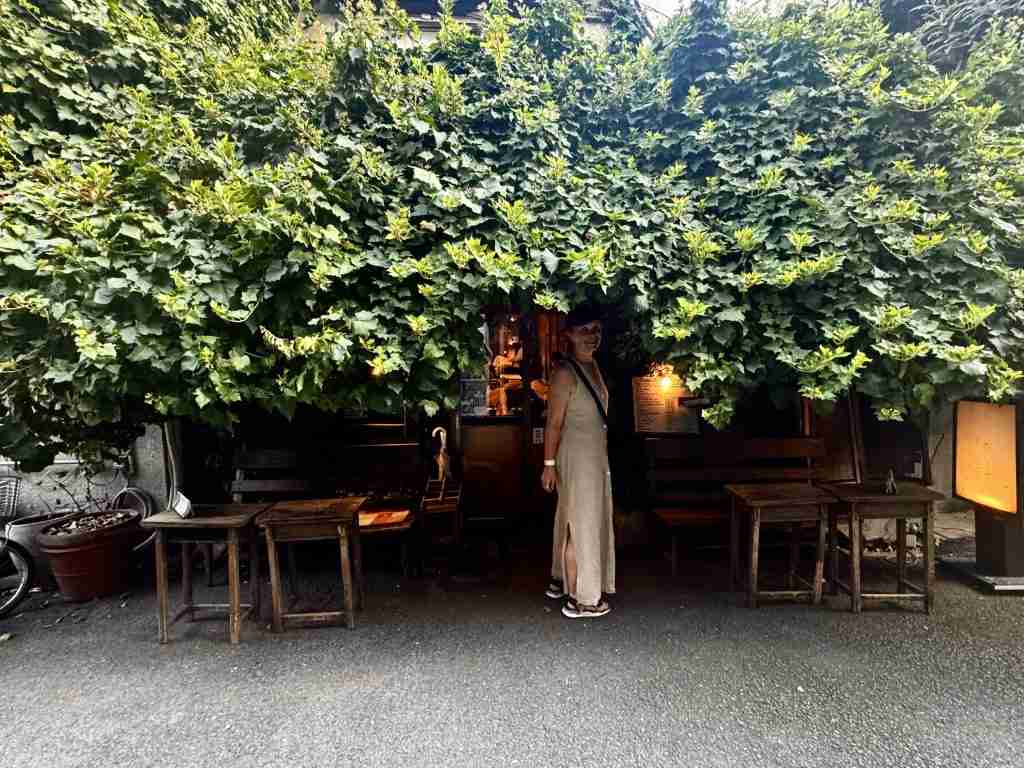
Thursday, August 28, 2025 – From Spa World to the Nakasendō
Way back in the early 1970s, when I was searching for inspiration and ideas, I met a very eccentric Englishman with the most magnificent moustache I’d ever seen—straight out of the British Raj. He was the father of a friend named Peter, who made exquisite handmade leather bags from a little workshop across the road from my first business, Hieronymous Handcrafts.
This Englishman had a curious sideline: he mounted small reproductions of Japanese Ukiyo-e prints onto five-ply board, planed the edges to a perfect 45-degree angle, then lacquered them by hand with coats of shellac until they gleamed. I fell in love with these exotic images. At the time, I didn’t know the names Hokusai or Hiroshige—his taste leaned toward their landscapes—but something in me was stirred. A seed was planted, or perhaps replanted. Years earlier, as a teenager working as a window dresser, I had decided that art would be central to my life.
By the late 1970s, I was experimenting with all sorts of crafts—wooden knitting needles, crochet hooks, spinning wool, making candles, toys, trinkets. My life was about the journey, not the destination. In 1978, just before Christmas and completely broke, I had the idea to buy a book of Japanese prints and some cut boards. For about $20 I made gifts for family and friends—mounted, lacquered prints inspired by those first ones I’d seen years before. They loved them. Soon after, a business was born: Kyoto Prints.
We weren’t selling originals, of course, but reproductions—thousands of them, hand-made, each one sprayed with lacquer. It was my first real step into the art world, long before picture framing, galleries, and everything that would follow. Those prints, and the Ukiyo-e masters who created them, have been a thread woven through my whole life.
One of the greatest of those masters was Utagawa Hiroshige, whose work I handled in reproduction all those years ago. His series, the “Sixty-nine Stations of the Kiso Kaidō” (commonly called the Nakasendō), created with Keisai Eisen between 1834 and 1842, depicted everyday scenes along the inland route connecting Kyoto and Edo. Hiroshige didn’t glorify warriors or lords—he showed the world of ordinary travelers: merchants trudging with heavy loads, women hurrying along in straw hats, samurai passing through snowy villages, bridges shrouded in mist. These were windows into the soul of Japan’s backroads, a portrait of the “floating world” that would later inspire the European Impressionists. Van Gogh himself owned a vast collection of Ukiyo-e prints, studying their bold lines, flat planes of colour, and everyday subjects.
Tomorrow, we’ll step into that history, walking part of the very same road—the Nakasendō—that Hiroshige immortalized. For me, it’s not just another walk. It feels like a loop closing: from mounting those prints by hand in the 1970s to treading the old stones of the trail itself in 2025.
Today began with one last indulgence at Spa World in Osaka. Salt saunas, carbonated baths, oxygen rooms, cold plunges—it was as mad and restorative as ever. From there it was a subway to Shin-Osaka, Shinkansen to Nagoya, and a local train into Nakatsugawa, arriving around 4:30 p.m.
Nakatsugawa sits almost midway between Kyoto and Tokyo, one of the historic post towns along the old Nakasendō. At first, our winding path through the streets made the town look like a poor choice, but then we found our hotel—the Onn Nakatsugawa—a stylish, modern boutique place with touches of luxury. Clean, bright, minimalist rooms, a welcoming feel, and after some of the more threadbare places we’ve stayed, it felt positively indulgent.
Next door, to my delight, was a Takamine Guitar showroom. Nakatsugawa is in fact the birthplace of Takamine, founded here in 1959 and named after nearby Mount Takamine. From humble beginnings as a family workshop, they grew into one of the world’s leading acoustic guitar makers, pioneering onboard acoustic-electric pickups in the 1970s. Icons like Bruce Springsteen, Don Henley, and Garth Brooks helped put them on the map. My own Takamine back in Melbourne has been with me for more than 20 years, so finding myself here felt like meeting the guitar’s ancestral home. The instruments in the showroom are beautiful—classic craftsmanship married to innovative design. I’ll try to sneak in a visit before we leave.
Later, we stretched our legs, climbing a steep set of stairs that gave us a sweeping view back over Nakatsugawa’s tiled roofs and the wooded mountains beyond. This is the geography of the Kiso Valley—rugged, forested slopes, cedar and cypress pressing close to narrow towns, rivers carving paths through green ravines. You can feel the weight of history in the air, the way travelers once did on their way between Kyoto and Edo.
After a fine dinner across the road and some time downstairs booking Finn’s flights, we’re tucked into our room preparing for tomorrow. The Nakasendō awaits—an old road, old prints, and a chance to walk into the art that’s been shadowing me since the 1970s.
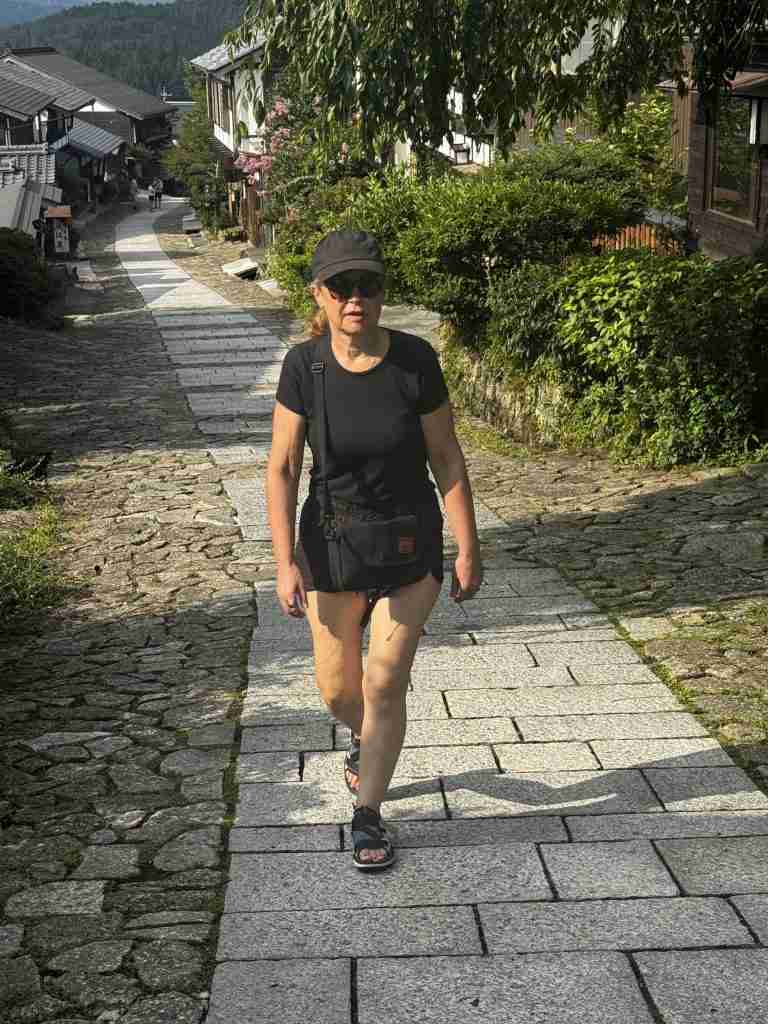
Friday, August 29, 2025 – Walking the Nakasendō: Magome to Tsumago
I woke at 6 a.m. after what felt like a solid sleep. The room at the Onn in Nakatsugawa has been a good base, and the first thing I did was head downstairs to the public bathhouse. There’s nothing quite like the completeness of a Japanese morning soak: sliding into steaming water, then scrubbing and shampooing, shaving, rinsing. It’s a small extravagance that makes you feel brand new. Back in Australia I try to recreate it with my daily sauna and cold plunge, especially in winter, but there’s nothing quite like this ritual here in Japan.
By the time I returned, Georgie was up and soon took her turn in the bathhouse while I worked on some music. We were out the door before 7:30, walking through clear morning light to catch the bus to Magome, where our leg of the Nakasendō Trail would begin.
The bus ride itself was a preview: huge mountains covered in deep green forest as far as the eye could see, big blue skies with drifting clouds, and a quiet peace hanging over everything. The bus dropped us off in what felt like the middle of nowhere, but once we got our bearings and spotted the old Nakasendō marker, we were off—well, trudging uphill rather than running.
Magome is a beautifully preserved Edo-period post town, cobbled streets lined with wooden houses, tea shops, and inns. In the early morning it was almost eerily empty—shops closed, shutters down, not a soul around. Then I spotted a tray of fresh blueberries outside one shop with a trust box. 100 yen a punnet (about a dollar), and they were some of the best blueberries I’ve ever eaten. Bursting with sweetness, I wanted more, but common sense (and a bit of restraint) prevailed.
The walk from Magome to Tsumago is about 8.3 km and one of the most celebrated stretches of the old trail. It winds up into cedar and cypress forests, across old stone paths, through villages where water wheels still turn and wooden houses lean against the mountain slopes. The illusion of coolness in the forest was a blessing, though the reality was that the heat and humidity never really left us.
Along the way: butterflies dancing across the path, dragonflies hovering like tiny helicopters, wildflowers tucked against mossy stones. The trees—bamboo groves, tall Japanese red pines, sugi (cedar), and hinoki (cypress)—whispered in the wind. Old bridges crossed wild mountain streams, where boulders the size of small cars sat piled in the riverbed. These rivers are part of Japan’s extensive hydroelectric network; dams and diversion projects here in the Kiso Valley help power the region, which explains the unnatural placement of so many huge rocks downstream.
Halfway, we stopped at a restored Edo-era house that offered free tea to travelers. Inside, volunteers in traditional dress greeted walkers. We chatted briefly with a Norwegian couple and then more deeply with a young French pair before pushing on. The steep uphill stretches burned our legs, while the downhill paths were even trickier—rough stones, slippery moss, and thigh-shaking descents. Sweat poured off us, but every turn of the trail revealed something new.
By late morning we entered Tsumago, another jewel of the Nakasendō and one of the best-preserved post towns in Japan. With its weathered wooden inns, tiled roofs, and absence of overhead power lines, it feels like a living museum. Hiroshige captured this world in his prints nearly two centuries ago—merchants, pilgrims, and samurai trudging the same inclines we’d just climbed. Walking here, it’s easy to imagine being on the set of a Kurosawa film, with Toshiro Mifune wandering past in a loincloth, scratching himself.
We ducked into a café for a well-earned coffee, then found a small restaurant serving noodles. Simple, restorative, and perfect after hours on the trail.
From Tsumago, we pushed on another 3 km to Nagiso, where the railway station connects the valley back to the modern world. Those last kilometers weren’t easy—steep ups and downs through quiet hamlets, small cemeteries with weathered black tombstones, and sudden vistas of mountains opening up in front of us. Every muscle in our legs got a workout. In one of the villages, we stopped briefly at a little antique shop, though buying anything wasn’t practical. The final surprise came when we reached the station and discovered a café run by a New Zealander directly across the road. Japan is full of these little quirks—unexpected connections in the most unlikely places.
By the time we boarded the train back, it was around 3:30. We were tired, sore, drenched in sweat, but exhilarated. This was a day we needed—away from cities and crowds, immersed in forest, mountains, and the spirit of an ancient road. Walking the Nakasendō today felt like walking not just through geography, but through history and art.
Addendum – Rivers, Rocks, and Power in the Kiso Valley
As we walked down into Nagiso, I couldn’t stop staring at the river. The water itself was clear and fast, tumbling between enormous white boulders that looked almost deliberately placed. Some of these rocks were the size of small cars, others the size of houses. I kept asking myself: how on earth do boulders like this end up in a riverbed?
The Kiso Valley is a dramatic place—steep, forested mountains rising straight up from narrow valleys carved over millions of years. Rivers like the Kiso and its tributaries are fed by snowmelt and heavy rains, and in times of flooding they become torrents strong enough to move vast amounts of stone. The big white boulders we saw are mostly granite, broken loose high in the mountains by landslides, earthquakes, or simply the slow work of freeze-thaw weathering. Over time, they tumble downhill and are carried into riverbeds. During violent storms, these rivers can shift rocks of incredible size, leaving them stranded midstream when the waters recede. It’s geology and gravity in partnership.
Nagiso and the surrounding valley are also part of Japan’s extensive hydroelectric network. Small and medium-scale hydro plants dot the region, harnessing the power of these mountain rivers. That explains some of the diversion channels and odd clusters of rocks that seemed almost sculpted into place. In certain stretches, boulders are rearranged deliberately to manage water flow, control erosion, or funnel water toward turbines. So what looks like chaos—giant stones scattered in the river—can actually be a blend of natural power and human engineering.
Standing on the bridge at Nagiso, looking down at the white granite blocks, I felt that same awe I’d felt all day: the reminder that nature here is powerful, patient, and often a little beyond comprehension. These rocks are storytellers. They speak of earthquakes, storms, floods, and the sheer force of water and time.
Saturday, August 30, 2025 – Back to Kyoto, Back to Decisions
After what was one of the very best days of our Japan trip yesterday, today began in a very different headspace. I woke feeling introverted and weighed down—aching limbs from the Nakasendō walk, frustration over a belligerent guest in Bali who managed to create hours of unnecessary misery, and, most of all, a flood of indecision about Finn and what comes next.
The truth is, the Japanese odyssey hasn’t unfolded the way I hoped it would. Finn’s struggle isn’t about where he is—it’s about who he is. No matter the city, country, or circumstances, the same problems travel with him. It’s not geography; it’s inner terrain. Last night I felt like a tram rattling on rusty tracks, switching routes when too much debris clogs the way. That’s the analogy I’ll hold onto for now.
Until yesterday the plan was to stay another 20 days in Japan, then return to Australia. But this morning, in the sunlight, clarity hit me: better to go back next Tuesday night from Tokyo, all of us together. There’s no compelling reason for Finn to stay, and financially, extending our time here would strain us to breaking point. Enough is enough.
One lesson I keep circling back to is that indecision is poison. It’s a purgatory—neither moving forward nor backward, just suspended, rotting in doubt. Even the wrong decision is better than none. So today I made the call, booked the flights, and the fog began to lift.
We caught the train back to Kyoto, settling into the Rino Hotel in Saiin. It’s perfectly located: a 7/11 downstairs, buses and trains within 100 metres, and right next to Finn’s accommodation. The rooms are simple but clean, and after weeks of bouncing between hotels, a little stability feels good.
We reconnected with Finn straight away. Over a hearty ramen lunch, I laid out the plan: we all fly home Wednesday. To my relief, he was onboard. Decision made, consensus reached. The Japanese experiment may not have worked out as I dreamed, but that’s okay. I need to accept it, make peace, and carry the good moments with me.
This afternoon, in the blazing heat, we’re waiting at a bus stop to head for the outskirts of Kyoto and walk across the Nakao Bridge, a place Finn visited about a week ago.
Nakao Bridge – Crossing History
The Nakao Bridge (Nakao-bashi) is one of Kyoto’s quiet treasures, spanning the Katsura River in the city’s western reaches. Historically, this crossing linked Kyoto to the ancient Nishiyama area, a region of temples, farming communities, and wooded hills. Unlike the famous bridges of central Kyoto (like Sanjō or Shijō), Nakao Bridge has always been more of a local lifeline—a way for villagers, monks, and traders to cross the river on their way toward Arashiyama and the mountains beyond.
The surrounding area still carries that slower, peripheral Kyoto feel: rice paddies, old wooden houses, and distant views of Mount Atago, the guardian peak of western Kyoto. The bridge itself isn’t ornate or monumental—it’s a working bridge—but that’s where its significance lies. For centuries it has been a thread stitching together daily life on both sides of the river.
So here we are, back in Kyoto. The future has been decided: home on Wednesday. Yes, I feel a touch of sadness that our Japanese story is drawing to a close, but far more than that I feel grateful. There have been so many wonderful momentsduring this trip—walking ancient trails, soaking in baths, discovering art, wandering neon streets—that I will treasure for years.
In some ways, this journey has brought us closer together, made us stronger as a family, and reminded me that even when plans don’t work out, the experience itself can still be rich and unforgettable. Japan has given us beauty, surprises, and lessons. That feels like a success in its own right.
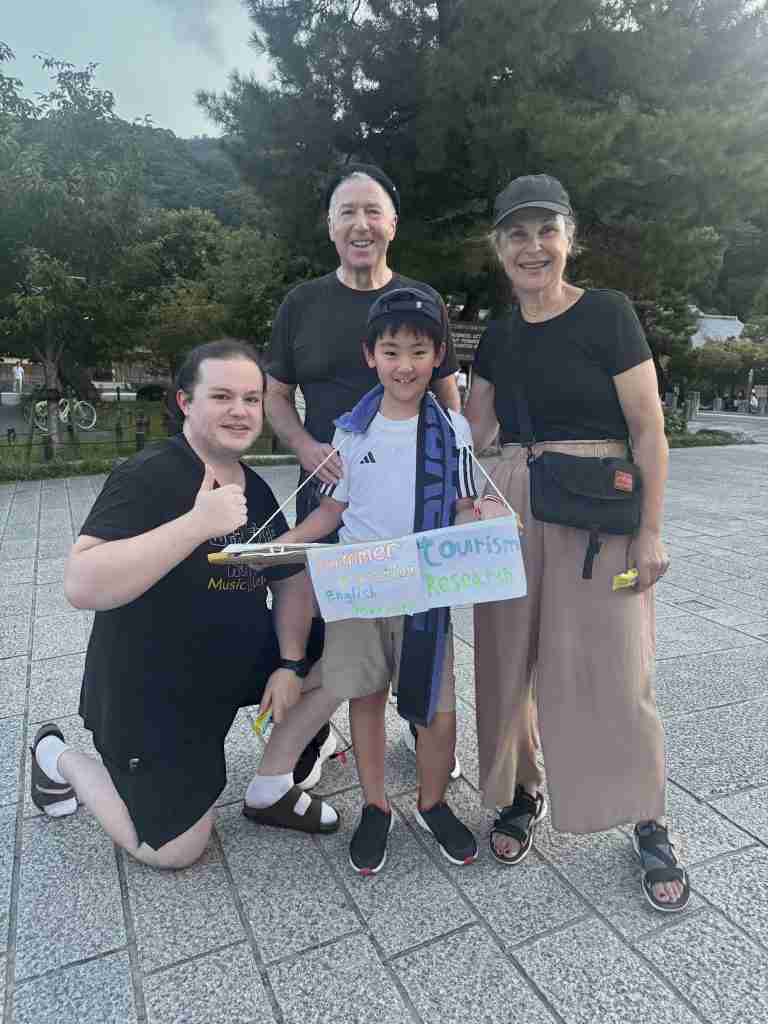
Highlights I’ll Carry Home
The Nakasendō Walk – hiking from Magome to Tsumago, blueberries from a trust box, dragonflies in the forest, and stepping straight into a Hiroshige print.
TeamLab Osaka – wandering through digitized gardens under starlit skies, our jaws on the ground as light and sound turned nature into living art.
Spa World – the craziest, steamiest, most bizarre bathhouse on earth; salt scrubs, carbonated baths, cold plunges, and a thousand square metres of relaxation.
The Osaka World Expo – a glimpse of tomorrow: 150+ countries presenting their visions of sustainability, innovation, and culture. What we loved most was the giant central “ring” structure, a soaring circular walkway that felt both futuristic and spiritual. Standing inside it, surrounded by light and energy, was like stepping into a vision of the future where architecture, art, and humanity converge. That memory will stay with me.
Matsue & Izumo Taisha – castles, canals, and the shrine where the gods of Japan are said to gather, grounding us in myth and history.
Everyday Japan – 7/11 sushi, long train rides through mountains and rice fields, coffee in odd little cafés, and the gentle kindness of strangers.
Sunday, August 31, 2025 – Mountains, Markets, and Memories
Turns out the Rino Hotel is pretty damn good. The public bathhouse here may be the best we’ve experienced on this trip—possibly even better than the famed Dormy Inn. The whole concept of the Japanese bathhouse is such a civilised way to live: cleansing, relaxing, and strangely communal, yet private at the same time. Nobody talks, but you’re always aware of others sharing the same ritual. The separation of men and women feels appropriate, and one thing that stands out every time is how fit and trim Japanese people are. Their low obesity rate is immediately noticeable.
Last night we made our way out to Nakao Bridge with Finn. He was in good spirits, and even acknowledged that my decision for the three of us to return home together was the right call. We walked along the riverbank at dusk, the mountains silhouetted against the sky.
Japan is a country of mountains—about 70% of its landmass is mountainous, especially here on Honshū, the main island. These ranges were created over millions of years by the shifting of tectonic plates, earthquakes, and volcanic activity. Japan sits on the infamous Ring of Fire, where the Pacific Plate crashes into the Eurasian and Philippine plates, buckling the land into steep ridges. The forests that cover these slopes are dominated by tall pines, hinoki (cypress), sugi (cedar), and bamboo groves. These trees aren’t just beautiful—they’ve been central to Japanese culture for centuries, forming the backbone of temple and shrine construction.
The walk along the river gave me space to think. It’s a pity that things didn’t work out for Finn in Japan. There had been a lot of expectations and hope. But now it’s time for a new strategy, one that works better and finally gets results. I’ll never give up.
A highlight of the evening came when we met a father and his young son, maybe 8 years old. The boy was conducting a little survey of foreigners, shyly asking questions like “Where are you from?” and “Where have you been?” It was delightful, a rare chance to interact with locals beyond the usual smiles and bows. The truth is, the language barrier in Japan is huge. There’s also history behind this: for over 200 years, Japan closed itself off from the outside world under the Tokugawa shogunate (from 1639–1853). This isolation, called sakoku (“closed country”), meant foreigners were banned, Japanese were forbidden from leaving, and trade was restricted to a trickle with the Dutch and Chinese. It wasn’t until Commodore Matthew Perry arrived with his “Black Ships” in 1853, demanding trade with the United States, that Japan reopened and began its rush to modernize. It helps explain why English has never been a priority here—Japan built itself largely on its own terms.
Georgie also had a lovely interaction yesterday at Kyoto Station. We’d hit a deadlock with the staff over our Shinkansen tickets—neither side could make sense of the other. Then a kind Japanese woman who had lived in New Zealand for 20 years appeared, translated everything, and solved the problem instantly. A small but memorable act of generosity.
Later, I finally got to ride the Saiin tram line—the Randen. It rattles slowly past people’s front doors, skirting little walking paths and gardens. At night, the glow of street lamps made it feel like a journey back in time. This is one of the very few tramlines left in Japan, and I’m so glad we caught it before heading home.
Afternoon in Takao
This afternoon we ventured into the mountains of Takao, just outside Kyoto, where Finn had wandered a couple of weeks earlier while we were traveling elsewhere. What we thought would be a gentle stroll along a stream turned into something far more intense.
The path wound through a sugi forest—towering Japanese cedars whose straight trunks have been prized for temple and shrine construction for centuries. Their timber is fragrant, durable, and considered sacred. We followed the water upstream until we spotted a trail leading upward. Curious, we climbed.
Up, up, up we went—the path narrowing, the drop beside us becoming alarmingly steep. At one point a yellow rope was strung along the cliff edge for grim death, just wide enough for our feet to shuffle across. We kept climbing, sweat pouring off us in the humid air, until finally common sense prevailed: this was the road to nowhere. We turned back, retracing our steps across the ledge, down to the stream, and eventually up the hill to the main road and bus stop.
So much for a gentle stroll. Still, with the heat in Kyoto hitting 36°C, the cool mountain air was a blessing. By the time we rode the bus back toward Saiin Station, we were drenched but exhilarated, already dreaming of ramen and the Rino bathhouse to soothe our aching muscles.
More Mini-Moments I’ll Treasure
Tokyo beginnings – APA Hotel in Higashi Shinjuku, the neon, the madness, and that first iced coffee at a konbini.
Kakunodate – strolling samurai streets in the searing heat, imagining the past in every wooden beam.
Kurashiki – canals, willows, the Ohara Museum, and our first real sense of Japan’s mix of history and art.
The Setouchi Art Triennale – ferries, islands, Matrix on Teshima, Kusama pumpkins, and Ando’s architectural poetry.
Matsue & Izumo Taisha – the “City of Water,” Lafcadio Hearn’s house, and the shrine where Japan’s gods gather.
Osaka madness – Spa World, TeamLab Osaka in the botanical gardens, Nakazakicho’s bohemian streets, and the neon crush of Shinsaibashi.
The Osaka World Expo – nations dreaming the future, but most of all the soaring central Ring that felt like stepping into tomorrow.
The Nakasendō Walk – blueberries in Magome, dragonflies in the forest, Hiroshige’s road beneath our feet, and the Kurosawa daydream of Toshiro Mifune scratching his bum.
Everyday Japan – 7/11 sushi, boiled eggs on the train, convenience-store sparkling wine, and small acts of kindness from strangers.
It’s now our second-last full day in Japan. Tomorrow we’ll head to the Sunday market we loved last year, buy our Shinkansen tickets for Tokyo, and savour these last moments. Our time here is almost over, but what a journey it has been—beautiful, challenging, surprising, unforgettable.
Being a Westerner in Japan – The Phantom Who Walks
Being an English-speaking Westerner in Japan in 2025 is a curious thing. Most Japanese people don’t speak English—just as most Anglo-Saxon Westerners rarely master another language. But because English is so globally dominant, we tend to feel entitled: we expect to travel anywhere and be understood. That assumption doesn’t hold here. Japan has long been a self-contained world. With a population of around 125 million (not 24 million as I first thought), there’s little incentive for most Japanese people to learn English. They simply don’t need to.
What strikes me most is not the language gap, but the manners. Impeccable. Rules are observed, systems are respected, and this produces a society that runs cleanly, predictably, and without chaos. Even the toilets—whether in a city station or a mountain trail hut—are spotless. That alone says something about national character.
And yet, as a Westerner, you always feel slightly invisible. It’s like being The Phantom—the ghost who walks. You move among people, but you’re never fully seen. You’re tolerated, sometimes even warmly acknowledged, but rarely embraced. You’re an outsider looking in, permitted to watch, but never quite to join. Even when you stumble upon common ground with someone, the language barrier hangs like a smoke screen, preventing light from fully breaking through.
I’ve always been good at engaging with people, finding ways to connect across cultures, but even I feel the edges of that glass wall. In Japan, you’re here on Japanese terms. Their history, their cultural pride, their way of being—it’s their world, and you remain a visitor. An observer, not a participant. You can scratch the surface, but not much more.
This is what Finn was up against. He arrived here hoping for connection, but he struggled to find Westerners or English speakers he could talk to, exchange ideas with, share viewpoints. Without that lifeline, he was left isolated—adrift in a world where he couldn’t find a foothold. In some ways, it mirrored his life back in Australia: the same sense of disconnection, only now amplified by distance and culture. For him, Japan became black-and-white rather than technicolour.
For me, it’s different. I have Georgie beside me, and that makes all the difference. I don’t mind lapsing into silence, being the observer, even disappearing into the background. In the bathhouses, nobody speaks anyway—just a polite silence, an unspoken acceptance, even as you sit naked in a room full of naked men. For me, that quiet invisibility can be oddly comforting.
But for Finn, who needs belonging, friendship, and conversation, Japan became a lonely mirror. That’s why the decision to go home together feels right. You can’t plant roots in soil that won’t hold them.
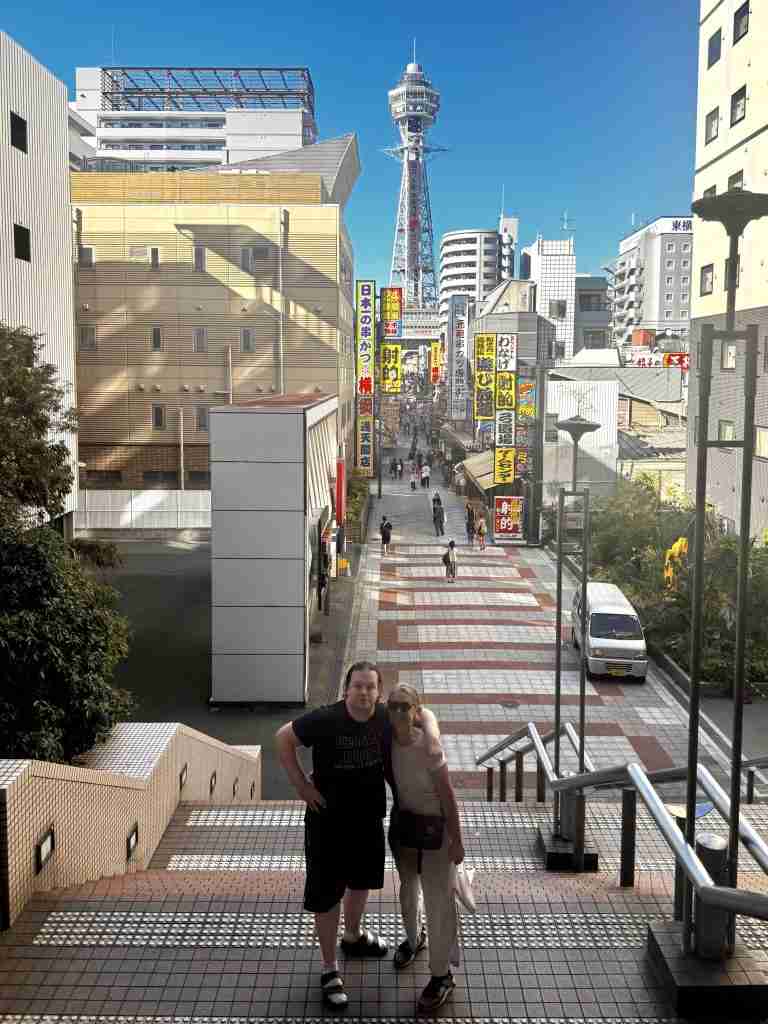
Monday, September 1, 2025 – The Final Countdown
Springtime in Melbourne. Autumn in Japan. The final countdown. We’re preparing to catch a train to Osaka for one last indulgence at Spa World—crazy, quirky Spa World with its endless saunas, themed baths, and icy cold plunges. We’ll return to Kyoto late this afternoon, pick up some new sandals for me at the shopping mall, and if all goes well, end the night at Light Cycles in the Kyoto Botanical Gardens before our final sleep in Japan. Not necessarily our last trip here, but who knows? Que sera, sera.
I’ve been thinking a lot about intentions and counter-intentions. It’s fascinating how easily our plans collide with unexpected obstacles, and how much the outcome depends not on the obstacle itself but on how we respond. It’s easy to flare up emotionally, to stew or boil over. But if you take a step back—analyze, weigh things rationally, respond with balance and maybe a little acceptance—the path forward is usually clearer, calmer, and more productive. A couple of situations cropped up over the past few days that tested us, but in the end they resolved positively.
This morning Georgie and I walked down to Aeon Mall for a coffee. I strayed off the rails and grabbed a couple of pastries—carbs have been my weakness in Japan these past two weeks. Once we’re back in Melbourne, I’ll tighten things up again and return to the straight and narrow. That’s when the real work with Finn will begin.
Will things pan out the way I want? I hope so. Can I control the outcome? To some degree, yes. The question is how. Do I set up a shrine, say prayers to the ancestors, and walk in circles scratching my left earlobe—or do I sit down, create a clear plan, and work step by step toward a goal? Hopefully an agreed-upon goal. That’s the real key: agreement. I’ll need to set parameters, outline accountability, and be clear on which behaviours I’ll tolerate and which I won’t. The future is still just an idea, but positive postulates have a way of becoming reality if you build the right structure beneath them. Step one: write the plan, show it to Finn, and secure his buy-in. That would be progress.
Spa World, One More Time
We’re on the train to Osaka now, and a few hours later we’ll be back on this same line returning to Kyoto. Spa World never disappoints. In fact, it gets better each time we go. Today was special—being there with Finn, sharing two hours of uninterrupted communication between saunas, cold plunges, and baths. It was the best bonding time we’ve had in a while.
On my last visit I stumbled upon something new: an electric pulse massage built into the large carbonated bath. If you sit in the right spot, electrodes in the water send a gentle current through your muscles. It’s a weird, tingling sensation at first—like your body is being nudged from the inside—but it’s oddly therapeutic, helping to relax muscles and improve circulation. Another example of Japan’s love for combining health, quirk, and a little bit of mad science.
TeamLab Kyoto – Coming Soon
I’d hoped to squeeze in one more digital-art immersion before leaving, but unfortunately the brand new TeamLab Kyotodoesn’t open until late October. From what I’ve read, it’s going to be huge—one of their largest permanent installations yet. Unlike the Tokyo and Osaka versions, which are housed in repurposed buildings or gardens, the Kyoto site will be a purpose-built complex, weaving together TeamLab’s signature blend of interactive light, sound, and projection with Kyoto’s own cultural and natural heritage. The idea is to create not just an exhibition, but a shifting “universe” of digital environments that evolve with the seasons. A pity we missed it by a few weeks, but it gives us a reason to come back.
Now we’re headed for the big mall we visited a few weeks ago to pick up my new sandals. One more practical errand before the curtain closes on this Japanese chapter.
But more important than sandals or shopping malls, today reminded me of what really matters: time with Finn. Sitting side by side in the saunas, plunging into icy baths, talking freely without interruption—it felt like a bridge we’d been trying to build for years. Japan hasn’t worked out for him the way we hoped, but in its own way, it’s given us something even more valuable: moments of connection, trust, and understanding. For me, that’s worth more than anything we could have planned.
Tuesday, September 2, 2025 – The Final Shinkansen
We’re on the Nozomi Super Express Shinkansen, racing from Kyoto to Tokyo with stops at Nagoya, Shinagawa, and a couple of others before arriving at Tokyo Station around 3 p.m. This is our last Shinkansen ride of the trip, and I feel a pang of nostalgia already. The distance from Kyoto to Tokyo is about 450 km, and the Nozomi does it in just over two hours, cruising at speeds up to 285 km/h (177 mph). Once again, I’m in awe of the Japanese rail system—fast, punctual, comfortable, and seamless.
We each stocked up on goodies from convenience stores near the hotel and at Kyoto Station before boarding. My “carb holiday” continues—self-indulgence today, reality tomorrow when Melbourne calls me back to discipline.
This morning was spent in a now-familiar rhythm: coffee, packing, and one last soak in the hotel bathhouse. If I had to rank the hotels of this trip, the Onn Hotel in Nakatsugawa takes first place, with Kyoto’s Rhino Hotel a close second. But if we judged solely on bathhouses, the Rhino comes out on top—10/10, the best public bath of the lot.
If You Are Staying in Kyoto
Over the past two years we’ve stayed in Kyoto three times, each in very different places.
2024: APA Hotel near Kyoto Station – ultra-convenient but anonymous. A business hotel with tiny rooms. Great if you just want to be near the trains, but not much soul.
2025: Urban Hotel, 20 minutes from the station – cheap, basic, functional. Not bad, not great. A bed, a roof, but little else.
2025: Rhino Hotel in Saiin – the surprise of the trip. Spacious rooms (bigger than anywhere else we stayed), an extraordinary public bathhouse, and a location that grew on us the more we explored.
At first, Saiin seemed too far out. It’s not the postcard-perfect, tourist-heavy Kyoto most people imagine. But by the end of our stay, we realised it was exactly right.
Saiin is about 16 minutes by bus or train to central Kyoto. The Hankyu Kyoto Line runs straight from Saiin Station to Kyoto-Kawaramachi in the downtown area, and westward to Osaka, with an easy transfer at Umeda for the Osaka Metro. That meant we could go from our hotel door to Spa World in Osaka in about an hour, for less than $7.
And then there’s the Keifuku Randen Tram Line, one of the last surviving trams in Kyoto. From Saiin, you can rattle along through narrow backstreets and suburban gardens, passing within metres of front doors, to reach temples and quieter corners of the city. Riding it feels like stepping back in time.
Saiin itself is lively but local. Lots of cheap eateries, izakayas, ramen joints, and cafés. No tourist crush, no Instagram queues—just everyday Kyoto life. It’s also an excellent base for side trips: easy access to Takao in the mountains, Nakao Bridge on the Katsura River, and of course Kyoto Station for Shinkansen connections.
The Rhino Hotel, at around $110 a night, gave us the biggest room of our trip plus the luxury of that bathhouse, and right downstairs a 7/11 stocked with every drink, snack, and emergency supply you could want.
Why Stay in Saiin?
It might sound crazy to recommend staying outside the tourist core, but here’s the case:
More Space, Less Cost – Rooms are larger and cheaper than central hotels.
Real Kyoto – You live among locals, not busloads of tourists.
Transport Hub – Hankyu trains, buses, and the Randen tram put the city and Osaka within easy reach.
Food at Your Doorstep – Dozens of affordable restaurants within walking distance.
Balance – You can dip into Kyoto’s temples, gardens, and shopping districts, then retreat to a quieter neighbourhood.
For us, Saiin turned out to be the sweet spot: comfortable, economical, well-connected, and surprisingly full of character. If I return to Kyoto, this is where I’ll stay.
The Shinkansen hums beneath us, smooth as silk, and Tokyo draws nearer. In a few hours we’ll transfer to the Airport Express, then it’s back to Melbourne. The end of one story, perhaps the start of another.
Hotels We Stayed At – Japan 2025
1. APA Hotel, Higashi Shinjuku (Tokyo)
Start of the trip, August.
Compact, business-style APA: tiny rooms, functional facilities. Perfect for diving into Shinjuku’s neon overload, but not much space to breathe.
2. Dormy Inn Takamatsu (Takamatsu, Shikoku)
During the Setouchi Art Triennale leg.
Excellent hot spring baths, sauna, and cold plunge. Famous for its quirky free late-night ramen. A reliable, relaxing base in the city.
3. Dormy Inn Kurashiki (Kurashiki, Okayama Prefecture)
When exploring the Bikan quarter & Ohara Museum.
Rooftop onsen with views. Clean, efficient, well-located near the canal district. A classic Dormy Inn—small rooms but very well designed.
4. Green Rich Hotel (Matsue, Shimane Prefecture)
For Matsue & Izumo Taisha visits.
Mid-range comfort. Not flashy, but provided a restful base between sightseeing.
5. Manten Hotel Ekimae (Kanazawa, Ishikawa Prefecture)
Kanazawa stay.
Five minutes from the station. Large public baths with saunas, comfortable rooms with Simmons beds, and a solid breakfast. Great convenience for exploring Kanazawa’s highlights.
6. Machida Hotel (Kakunodate, Akita Prefecture)
In the samurai town of Kakunodate.
Probably the only true hotel in town. Simple, straightforward, but ideal location for wandering through the samurai district.
7. Sotetsu Fresa Inn Ginza (Tokyo)
After returning from Kakunodate.
Modern, business-style chain hotel in the upscale Ginza district. Compact but polished, with clean, functional rooms and easy access to shopping, restaurants, and Tokyo Station. Great value for central Tokyo.
8. Onn Hotel (Nakatsugawa, Gifu Prefecture)
Before walking the Nakasendō Trail.
Stylish, boutique-like, and surprisingly spacious for rural Japan. Your #1 favourite—modern design, excellent vibe, and perfectly placed for Magome and Tsumago.
9. Rhino Hotel (Saiin, Kyoto)
Final Kyoto base.
Spacious rooms (the largest of your trip), outstanding value (~$110/night), and an exceptional public bathhouse—10/10. Location in Saiin turned out to be a revelation: cheap eateries, good local life, direct train access to downtown Kyoto and Osaka. Your #2 favourite overall.
Thursday, September 4, 2025 – Back in Melbourne
After almost five weeks—34 days to be precise, or 35 if you count the travel—we are home. Back in our living room with the heater on, the stillness feels almost surreal. In Japan we were rarely alone: always surrounded by people in the streets, convenience stores, bathhouses, and especially railway stations. Now, with only silence and the gentle hum of home, it’s hard to believe that intensity has ended.
I’ll miss the ritual of arriving at a Japanese train station with suitcases stacked, backpacks dangling, heading off toward some new and wondrous destination. For me, that’s an ideal state of being: far superior to flying and, in Japan, as fast as lightning. Head down at my laptop, writing or making music, then Georgie’s voice: “We’ll be there in 5 minutes, I’m going to the door.” It was even exciting to navigate the stations themselves.
The one that stands out for sheer scale is Shinagawa Station in Tokyo. We had gone to an art facility nearby and, walking back, were confronted by what felt like a wall of humanity—tens of thousands moving in formation, as overwhelming as a Chinese military parade. Yet every step was orderly, every movement flowed. The most daunting overall, though, was Tokyo Station: a cathedral of steel, glass, and people, where you can feel both lost and exhilarated at the same time.
I won’t miss the brutal Japanese summer sun. It beats down unrelentingly, forcing you to scuttle across the street for a sliver of shade or pray for the mercy of a passing cloud. Hard to believe that winter ever comes to Japan after living through its hottest summer in a century. Umbrellas were everywhere—not for rain, but as parasols against the glare.
I will, however, miss the style of the Japanese people. They take pride in their appearance, grooming, and posture. Clothing choices, hairstyles, even the way they walk—all are deliberate, graceful, and dignified. The contrast with the crowd we encountered when we landed in Brisbane could not have been starker. That difference made me resolve to take more pride in my own presentation—clothing, health, and posture.
And oh, how I will miss convenience stores. Where else can you step into a 7/11 and emerge with boiled soy eggs, crisp slices of cabbage, radish and carrot, and an ice-cold can of strong black coffee? Nutritious, cheap, and available on every corner. It sounds unbelievable to anyone who hasn’t experienced it, but you really could live quite well out of Japanese convenience stores.
I’ll also miss the cleanliness. Public toilets you can trust anywhere—stations, shops, forests—always clean, hygienic, and often with more features than you’d expect in a five-star hotel. In Japan, even the smallest details are cared for.
Back here in Melbourne, I want to ride trains more often, the way I did after trips to Europe and Japan in the past. There’s something about trains that shifts your perspective on a city, making you part of its living pulse.
Reflections on Culture
As the train sped through Japan in recent days, a thought crossed my mind: a culture is built by those who came before us. We can choose to embrace that inheritance or to change it, for better or worse. In Japan, culture feels deeply rooted. Its values, traditions, morals, and unspoken rules are passed down generation after generation, shaping how people live, work, and interact. The result is a civilization with a clearly defined identity, polished by centuries.
The same could be said of India, where layers of Hindu, Buddhist, Islamic, and colonial British influences have created a cultural fabric that is thousands of years old, still visible in everything from food to festivals. Indonesia, though younger as a nation-state, draws on centuries of Hindu-Buddhist kingdoms, Islamic sultanates, and local traditions, particularly in places like Bali, where spiritual rituals remain woven into daily life. China’s cultural heritage—Confucian, Daoist, Buddhist, imperial—spans millennia, and despite political upheavals, still guides family structures, philosophies, and social behaviours.
By contrast, Australia and America are young countries. Only a few hundred years of settler history, built on fragments of European culture transplanted to a new land. In Australia, my own formative years were shaped by a mix of British hand-me-downs and the emerging suburban identity of the “quarter-acre block.” Parents, TV, newspapers, and radio were the cultural compass. Compared to Asia’s deep rivers of tradition, ours feels more like a shallow stream.
That doesn’t mean it lacks value. It just means we’re still in the process of defining it. Where older civilizations have continuity, ours has experimentation. Where they have centuries of ritual, we have improvisation. Both can produce beauty—but the weight of history in Japan, India, China, or Indonesia makes you realise how young and raw places like Australia and America still are.
So, Japan fades into memory—for now. Five weeks of temples, trains, mountains, markets, art, and everyday encounters. A land of discipline and order, beauty and contradictions, where tradition meets the cutting edge. I feel grateful for the experiences, the lessons, and the moments of connection. And though I must now let go of Japan and settle back into Melbourne life, I carry its example with me: pride in appearance, care for small details, respect for tradition, and the quiet strength that comes from centuries of cultural continuity.