Laser Focus: A New Trial for Small Fibre Neuropathy
I’m 73 years old, and for the most part, I’m in pretty good shape. I eat well, I’ve been alcohol-free since 2019, I walk at least 15,000 steps a day, I go to the gym regularly, and I’m continually tweaking my protocols to optimise my health and longevity. Over the past few years, I’ve done everything from blood testing and hormone therapy to hyperbaric oxygen, glutathione IVs, and a ketogenic diet.
Despite all that, one persistent issue has remained: small fibre neuropathy.
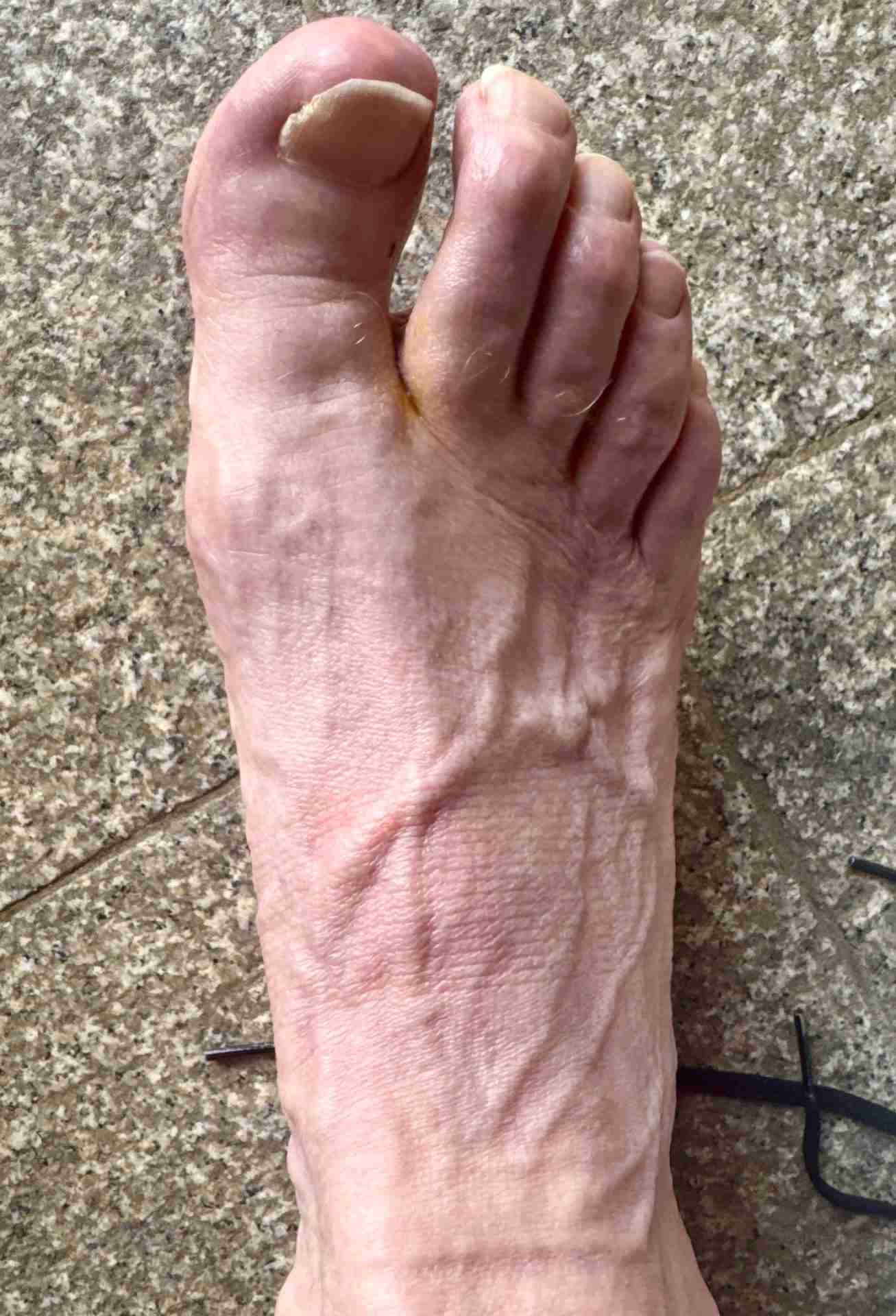
For those who haven’t come across it, small fibre neuropathy (SFN) affects the tiny nerve fibres responsible for pain, temperature, and autonomic function. In my case, it manifests in my feet—numbness, burning, tingling, and at times an inflamed, sore feeling that’s hard to describe. It flares unpredictably. One moment I’m fine, and then suddenly my feet feel like they’re on fire. I’ve had to adjust how I walk, how I recover, and even how I sleep.
This week, I’ll be starting a new therapeutic trial at 2 Right Feet, a Melbourne podiatry clinic that’s incorporating advanced technology into patient care. They’ve already run one successful laser therapy trial and are now launching a second trial using a different brand of laser technology from Rehacare. While the core technology is the same, this new laser has some design and performance differences they want to assess in a clinical setting. I’ve been invited to take part.
The treatment involves six sessions over three weeks, and I’ll be documenting the process as carefully as I can. The goal is to see whether this kind of photobiomodulation (laser therapy) can help reduce pain, inflammation, and possibly even support nerve recovery.
Laser therapy has been gaining momentum in both the clinical and sports rehab worlds. The idea is simple enough: targeted light at specific wavelengths can stimulate cellular repair, reduce inflammation, and enhance mitochondrial function. That means more energy production, improved circulation, and in some cases, better nerve function. There’s research suggesting it can help with neuropathic pain, especially in cases linked to diabetes or chemotherapy. Mine is a little different—probably rooted in past alcohol-related damage, metabolic syndrome, and maybe even low-level autoimmunity—but the underlying mechanisms are similar enough that it may still help.
I plan to write about each session and track any changes in symptoms—how my feet feel before and after each treatment, whether the burning subsides, whether the numbness shifts, and whether I notice any difference in how I walk or recover after long days on my feet. I’ll also be watching for any unexpected reactions or signs of progress that emerge over the three weeks.
Small fibre neuropathy is often underdiagnosed and misunderstood. It’s not dramatic, but it’s relentless. I’m hopeful this trial will at least bring some relief—or at the very least, give me another data point on what works, what doesn’t, and where the science is heading.
If it helps, I’ll be shouting it from the rooftops.
Hopes, Expectations, and the Reality of Living with Neuropathy
I’m starting my laser trial next Thursday.
Whether or not it brings any meaningful results remains to be seen, but as with everything else I’ve tried over the years, I’ll be documenting the process honestly and in real time. I’ve done so much already—IV therapy, HBOT, sauna and cold plunges, ketogenic diet, walking tens of thousands of steps per week. I’m no stranger to experimentation or commitment. What I’m less familiar with is relief.
By now, I’ve grown used to the pain and discomfort in my feet. I’ve learned to live with it. It’s like ambient music playing in the background of my consciousness. Always there. Sometimes loud, sometimes barely noticeable, but never completely gone. After a long walk, the burning and aching become intense. If I didn’t know what it was—if I hadn’t had this diagnosis of small fibre neuropathy—I’d be terrified by the level of tingling, pain, and numbness I experience daily. Especially in the balls of my feet and my toes. That area constantly throbs, like the dull buzz in your gums after a dental anaesthetic wears off. It’s not always painful, but it feels disconnected—foreign.
The heat makes it worse. During my long walking days in Japan, the discomfort escalated to the point that I had to resort to analgesic ointments and open sandals just to manage it. Strangely, my feet can also swing the other way and go icy cold. When that happens, it’s like the warmth has been lost forever. I’ve found that cold plunges, especially after a sauna, or soaking my feet in near-freezing water can sometimes calm things down. One of the hotels in Japan offered soft ice packs for guests’ sore limbs—I’ll definitely look into getting some for myself.
What I can say now, in this moment as I sit writing, is that the nerves in my feet don’t feel inflamed. That gives me a little hope. Maybe they’re repairing quietly in the background. Nerves heal slowly—millimetres at a time—so patience is essential. So is belief. That’s part of why I’m doing this trial. Even if this laser therapy doesn’t transform everything, maybe it shifts something. Maybe it tips the balance.
I often remind myself that this condition didn’t come out of nowhere. I brought it on myself, in some way. Years of drinking, dietary abuse, lifestyle neglect. That chapter ended almost seven years ago. Since then, I’ve lived a very different life—clean, focused, deliberate. No alcohol. Almost no processed food. Exercise, sleep, discipline, curiosity. I’ve done everything I can to reclaim what I lost, to repair what I damaged.
If I had a time machine, I’d go back and rewrite it all in an instant. But I don’t. What I do have is this moment. This body. These feet. This life. And this opportunity to try one more thing.
So yes, I’m about to embark on another attempt to improve the quality of my life. To see if it’s possible to restore some normal function to these nerves. To ease the discomfort that accompanies every waking moment. Not because I’m desperate. But because I believe we don’t stop trying. Not if we want to keep moving forward.
Laser Therapy for Small Fibre Neuropathy – Session 1
Today I began a new trial at 2 Right Feet, the Melbourne podiatry clinic where I’ve been seeing Jaspreet, my podiatrist, for many years now. This is part of a new clinical trial they’re running to test the effectiveness of laser therapy for chronic pain and nerve-related conditions. The trial is being offered free of charge to a small group of patients so the clinic can gather feedback and assess outcomes. I’ll be having seven sessions in total, spaced over three weeks, with the last one taking place just before I return to Bali on October 2.
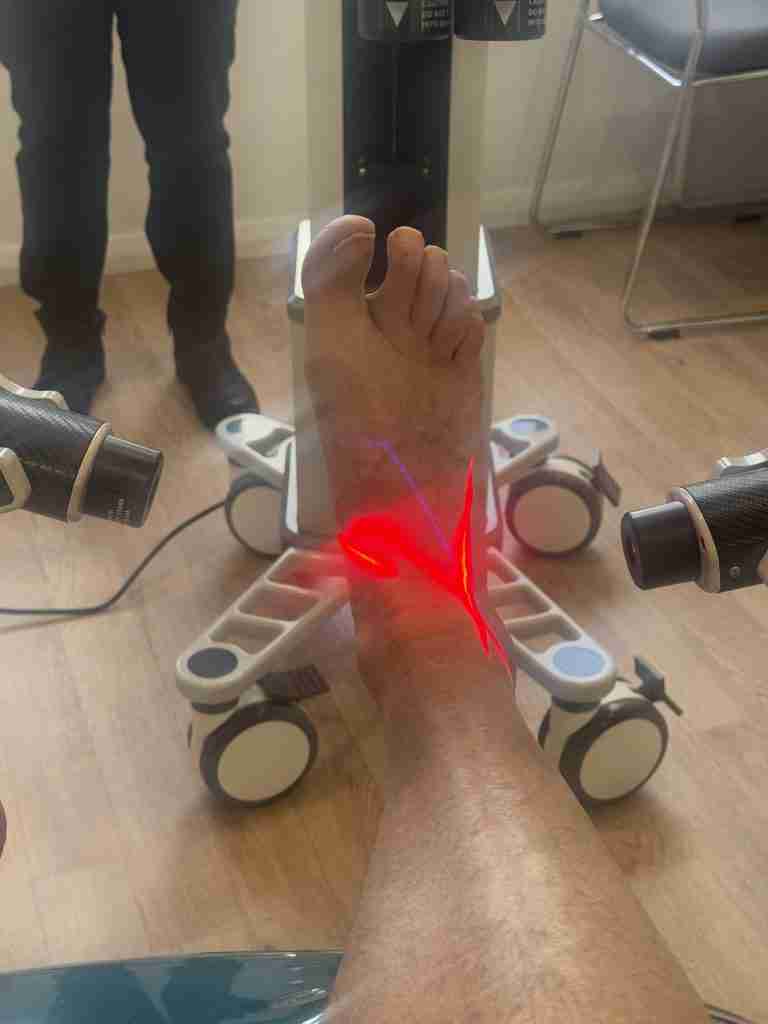
The system they’re trialling is a Rehacare 2.0 Class 3B Cold Laser — a form of low-level laser therapy (LLLT), also known as photobiomodulation. The device uses two types of light:
808nm infrared light, which penetrates deeply into muscles and nerves
650nm red light, which works closer to the surface to stimulate blood flow and cellular repair
Together, these wavelengths are said to improve circulation, reduce inflammation, encourage nerve regeneration, and even stimulate ATP production—the energy currency inside our cells. In simple terms, it’s light therapy designed to support the healing and repair of damaged tissues and nerves without generating heat or breaking the skin.
Today’s treatment was simple and painless. Each foot received about five minutes of targeted laser therapy, with four infrared light heads positioned around the ankles. The device pulsed silently while I sat still, feeling only a gentle warmth and the occasional tingling sensation as the light worked its way through the tissue.
Early Impressions
I didn’t expect any results after just one session. But strangely, on my 30-minute walk home from the clinic, I noticed a small shift. I felt just a little lighter on my feet, a little less burdened by the usual burning and soreness. That could easily be placebo. Or maybe it was the hopeful part of my mind trying to give the technology a head start. Either way, it felt worth noting.
The symptoms I live with—burning, tingling, numbness, inflammation—have become such a constant presence in my life that I sometimes forget what a “normal” foot is supposed to feel like. The pain can flare when I walk too far, when my feet get too hot, or seemingly for no reason at all. It’s worse in summer, and in Japan I had to resort to analgesic creams and open sandals just to stay functional. Cold can be just as difficult—sometimes my feet feel like blocks of ice, and it’s as if they’ll never warm up again.
Why I’m Doing This
I don’t expect miracles. I’ve tried a lot over the years. But I haven’t given up on the possibility of some improvement. Even a 10% reduction in symptoms would be a meaningful shift. Even if all it does is reduce the daily irritation by a notch, that would be worthwhile.
This laser therapy—at least in theory—might be able to support:
Nerve regeneration
Microcirculation
Inflammation control
Mitochondrial repair
Tissue healing and functional recovery
Those are big promises, but they’re not without clinical foundation. The science is still evolving, and not every patient responds. But I’m interested in what it might offer for someone like me—73, active, health-conscious, walking 15,000 steps a day, living clean and doing everything I can to make up for the damage I did in an earlier chapter of life.
I’ll continue to document each session as I go. If it works, I’ll share the experience openly. And if it doesn’t, that’s still part of the story. Either way, it’s another step forward in understanding what it means to live well—and keep moving—even with a body that’s not always on your side.
Today I’m about to embark on the second session of my laser therapy at 2 Right Feet. I’ve done a bit of research into Mitochondrial repair, ATP production and microcirculation which helps the whole process make more sense. I really shouldn’t be expecting instant results. Here’s what I found.
How Does Mitochondrial Repair Increase ATP?
Your cells — including nerve cells — rely on mitochondria to produce energy in the form of ATP (adenosine triphosphate). Think of mitochondria as microscopic power stations.
Photobiomodulation (laser therapy) works by shining specific wavelengths of red and infrared light deep into tissues. These wavelengths are absorbed by a mitochondrial enzyme called cytochrome c oxidase — this is like flipping a switch that boosts the mitochondria’s ability to generate ATP.
When mitochondria function better, cells:
Repair faster
Clear out waste more efficiently
Send and receive signals more accurately
This is crucial for nerves, especially small, damaged ones like those in your feet, because damaged nerves are metabolically demanding — they need lots of ATP to maintain structure and send signals. More ATP = more healing capacity.
How Could This Help Nerve Repair in My Feet?
In small fibre neuropathy, the tiny nerve endings in your feet — responsible for sensing heat, cold, pain, and touch — become damaged or dysfunctional. These nerves don’t regenerate easily. But laser therapy may help in several ways:
Increased ATP production: fuels nerve regeneration at the cellular level.
Reduced oxidative stress: calming inflammation that disrupts nerve signaling.
Activation of nerve growth factors: encouraging regrowth of damaged fibres.
Support to Schwann cells (which insulate nerves): improving signal transmission.
Over time, this can potentially lead to:
Less burning and tingling
Better sensation
Reduced hypersensitivity
More “connected” feeling in the feet
What Is Microcirculation?
Microcirculation refers to the blood flow through the smallest blood vessels in your body — the capillaries, arterioles, and venules that feed your skin, nerves, and tissues.
When microcirculation is compromised (which often happens in metabolic damage, diabetes, or long-term inflammation), your nerves don’t get enough oxygen or nutrients, and waste products aren’t cleared efficiently. This causes further damage.
Laser therapy is known to:
Dilate capillaries
Improve red blood cell flow
Stimulate nitric oxide release, which helps open blood vessels
Better microcirculation means:
Nerves get the oxygen and fuel they need
Healing speeds up
Inflammation is cleared more effectively