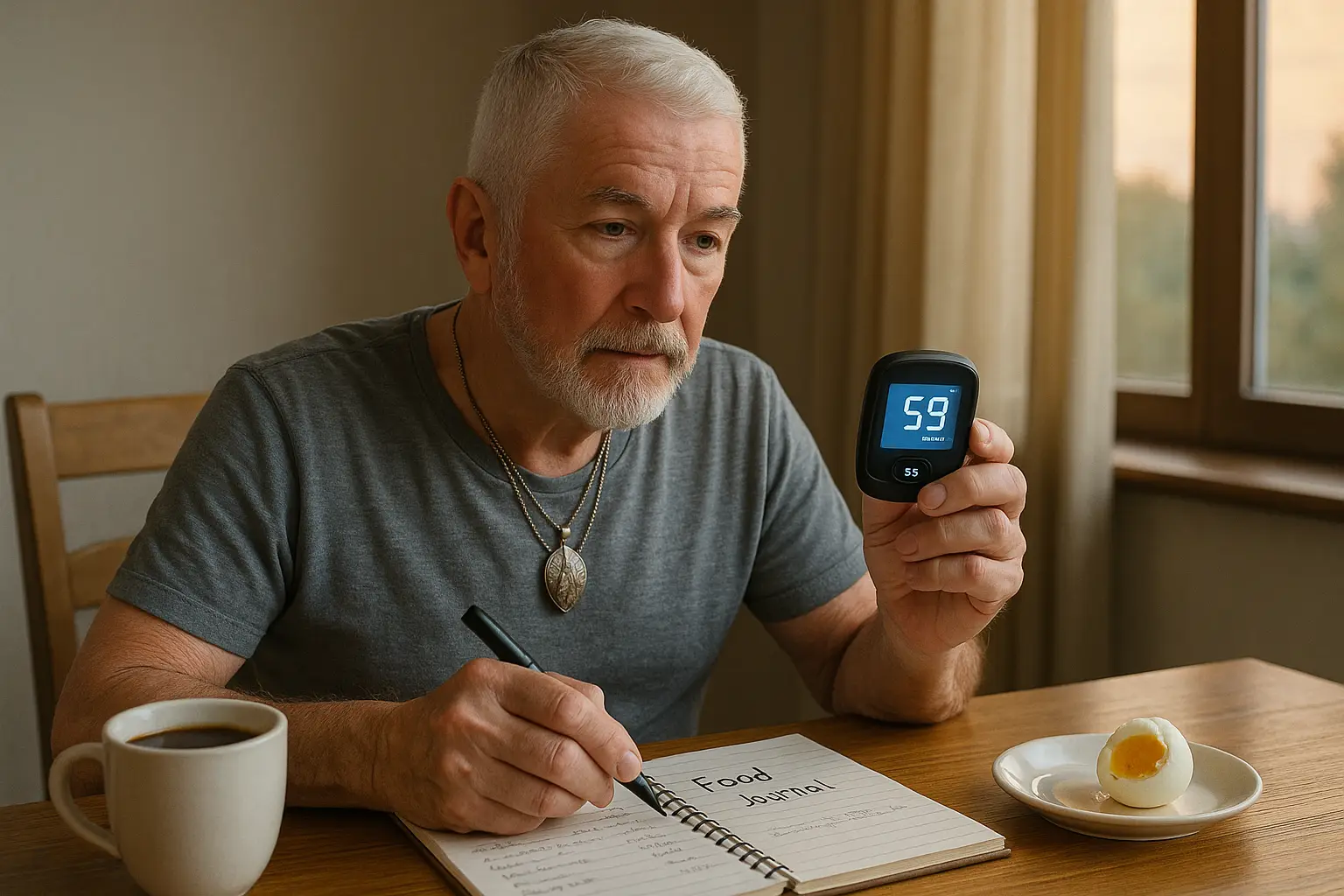
The Metabolic Conundrum: Why Is My Morning Blood Sugar Still High?
Here’s my conundrum.
Two and a half weeks ago, I got the results from my latest HOMA-IR test, taken just before I left Bali. They were excellent—almost textbook. A huge turnaround from early March when I discovered I was pre-diabetic. Back then, my HbA1c, fasting insulin, and HOMA-IR were all waving red flags. I’d been slipping. Not in terms of my willpower or nutrition, but in how my metabolism was behaving after a long stretch of reduced movement following a broken leg.
I thought I’d cracked it.
Nighttime readings are spectacular. For instance:
Two nights ago:
Blood Sugar: 4.1 mmol/L
Ketones: 2.9 mmol/L
Last night:
Blood Sugar: 4.3
Ketones: 3.1
But then I wake up.
And suddenly:
Morning fasting glucose: 5.9 mmol/L
Ketones: 0.1 mmol/L
What the hell is happening?
A Snapshot of My Day
Let me be clear: I’m eating whole foods—good fats, clean proteins, bone broth, cruciferous veg. Yesterday it was steamed cauliflower with butter, veggie soup loaded with greens and collagen-rich broth, and snacks like eggs, cream, macadamias, and MCT oil. I didn’t overeat. I didn’t cheat.
And yet, this pattern keeps repeating: clean as a whistle at night… pre-diabetic by sunrise.
So What’s Going On?
Let’s break down some possibilities—both physiological and metabolic.
1.
The Dawn Phenomenon
According to Dr. Ben Bikman and many others in the metabolic health space, what I’m experiencing could be the dawn phenomenon. It’s a natural, hormonal surge that happens in the early morning (usually between 4–8 a.m.) and leads to an increase in glucose production by the liver.
This happens even in healthy people. The body releases cortisol and growth hormone to prepare you for waking. These hormones tell the liver to release glucose into the bloodstream—basically giving your body fuel for the day.
This might be exaggerated in people with current or past insulin resistance, because the liver may overshoot the glucose release, and your muscles may not be efficient at soaking it back up.
In my case, given my history, it might be a normal process—just louder.
2.
Metabolic Memory (aka: the Ghosts of Past Habits)
One concept that I find fascinating—and frustrating—is what I’m calling metabolic memory.
Can the body “remember” two decades of metabolic abuse?
Ben Bikman often talks about how insulin resistance starts long before blood sugar goes up. For years, the body copes by producing more insulin. You only see the breakdown when the pancreas can’t keep up.
So even after six years of clean living, my cells may still be partially resistant, especially in the morning when my body is under mild stress (fasting, cold, exercise). It’s like the scar tissue of my metabolic past is still healing.
3.
Physiological Insulin Resistance (aka: Keto Adaptation)
Ironically, some of us in long-term ketosis develop what’s known as physiological insulin resistance. This is a benign state where the body conserves glucose for the brain and relies more heavily on fat for fuel. In this case, your morning glucose might be slightly elevated, but insulin levels remain low, and ketones are high.
But here’s the twist: my morning ketones are low. So that theory doesn’t fully explain my pattern.
4.
Cortisol Spikes, Sleep Stress, or Inflammation?
Even subtle stressors can raise cortisol—which increases glucose. This includes:
Interrupted sleep
Mental or emotional stress
Exercise late at night
Low-grade inflammation
I’ve been feeling good overall—energy is high, weight is stable—but cortisol isn’t always “felt.” It can be biochemical, not emotional. I’ll be exploring this further with my Oura Ring trends and potentially CRP or cortisol labs.
5.
Still-Resolving Insulin Resistance
Maybe this is the most important truth: healing takes time.
If I spent 20 years creating metabolic dysfunction, maybe six years—even six really good years—aren’t quite enough. Especially when those years included cancer, a fractured leg, periods of limited movement, and an aging body.
As Bikman says, “Insulin resistance is a chronic condition, not a binary state.”
You don’t go from broken to fixed overnight. It’s a continuum.
What I’m Doing Next
This morning, I made a decision:
I’m logging every bite and drink in Cronometer
Not just writing it down, but properly entering it—macros, calories, and nutrient density.
I’m ordering a Continuous Glucose Monitor (CGM)
I want to see what’s happening in real time—not just morning and night.
I’ll do another HbA1c test next week
I want to see what the past 90 days actually look like.
Why It Matters
I’m healthy, strong, mentally sharp. But I also want to be those things at 80, 90, and 100. And if I’ve still got residual insulin resistance—or something subtler like a cortisol dysregulation—I want to know now, not after something major shows up.
This isn’t just about me.
There are a lot of people out there doing everything right on paper—and still seeing strange patterns in their glucose. If that’s you, I hope my investigation helps shine some light.
This journey isn’t over. And I’ll keep digging.