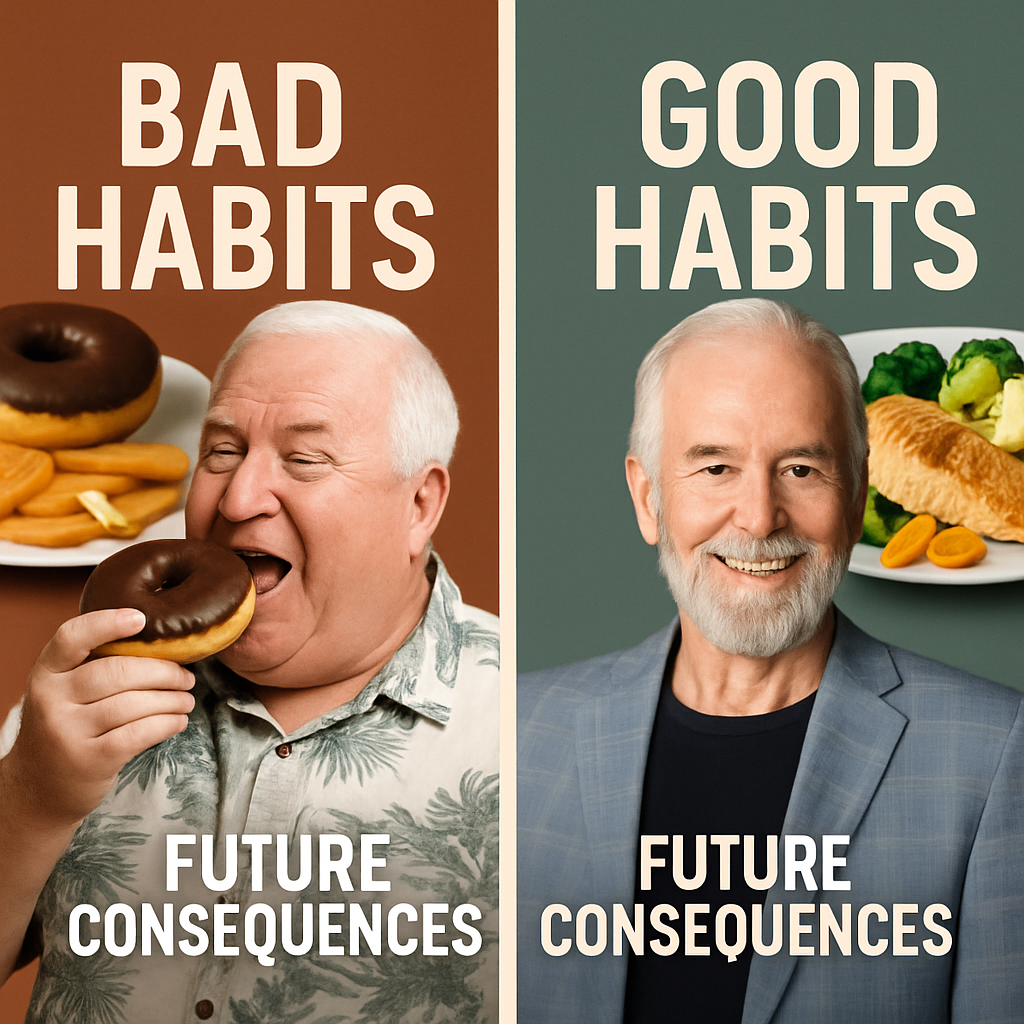
Good Habits, Bad Habits: The Simple Math of Cause and Effect
I was listening to a podcast this morning and heard a line that hit me like a bell:
“Good habits reward you later. Bad habits reward you now.”
So simple. So obvious. And yet, so true.
When you really sit with that, you start to see how every little choice we make is part of a longer equation—one that either pays out dividends in the future or slowly, quietly, accumulates a debt that we’ll eventually be forced to repay.
A Real-Life Cake Walk
Not long ago in Ubud, I was deep in the trenches of trying to get back into ketosis. It wasn’t easy. I’d walk past the bakery section of Casa Luna and see a glistening slice of cake out of the corner of my eye. For a fleeting moment, my brain would light up—just one bite, just this once. But I’d remind myself: That bite could set me back for days.
That’s the deal with bad habits. The sugar rush comes quick—but so does the crash, the cravings, the metabolic disruption. And each time you give in, you’re reinforcing the loop that keeps pulling you further from your goals.
The Slow Fade of Alcohol
Back in 2016, I was still obese and deep into my nightly drinking ritual—mostly spirits. I went to a GP who told me I had pre-diabetes. She didn’t explain it well, and the “pre” made it sound harmless. So I kept going. One drink led to another, night after night.
I got short-term relief, sure. But what I didn’t see coming was the long-term consequence: small fibre neuropathy—a nerve condition that now causes burning, pain, and numbness in my feet. Even though I made big changes in early 2019—ditched the alcohol, fixed my diet, started exercising daily—I’m still dealing with the physical aftermath of choices made nearly a decade ago.
That’s the cruel trade-off of bad habits. The pleasure is immediate. The damage is delayed. But once it shows up, it’s often permanent.
The Discipline Dividend
Today, I skip the bread. I avoid the cakes. I plan my meals. I test my blood sugar and ketones. It’s not always easy, and it’s not always fun. But here’s what I know now:
The little deprivations I choose today are an investment in tomorrow.
They may come with a twinge of loss now and then—but the payoff is huge: vitality, clarity, energy, and the potential to live not just longer, but better.
Every good habit is like putting money in the bank. You don’t see the compounding immediately—but it builds. It stabilises. It protects. And over time, it buys you freedom.
The Trap of Fleeting Pleasures
The trouble with fleeting pleasures is that they’re… well, fleeting. They spike your dopamine, then vanish. And the only way to get that hit again is to repeat the behaviour—over and over. That’s how the trap tightens.
Eventually, the pleasure fades—but the damage lingers:
Blood sugar spikes.
Insulin resistance.
Weight gain.
Brain fog.
And in many cases, chronic illness.
It’s a high-interest loan with brutal repayment terms.
Final Thoughts
So here’s what I remind myself—and maybe it’ll help you too:
Good habits hurt a little now, but they heal.
Bad habits feel good now, but they harm.
It’s that simple.
The math is always running in the background. The question is—what kind of balance do you want in the end?