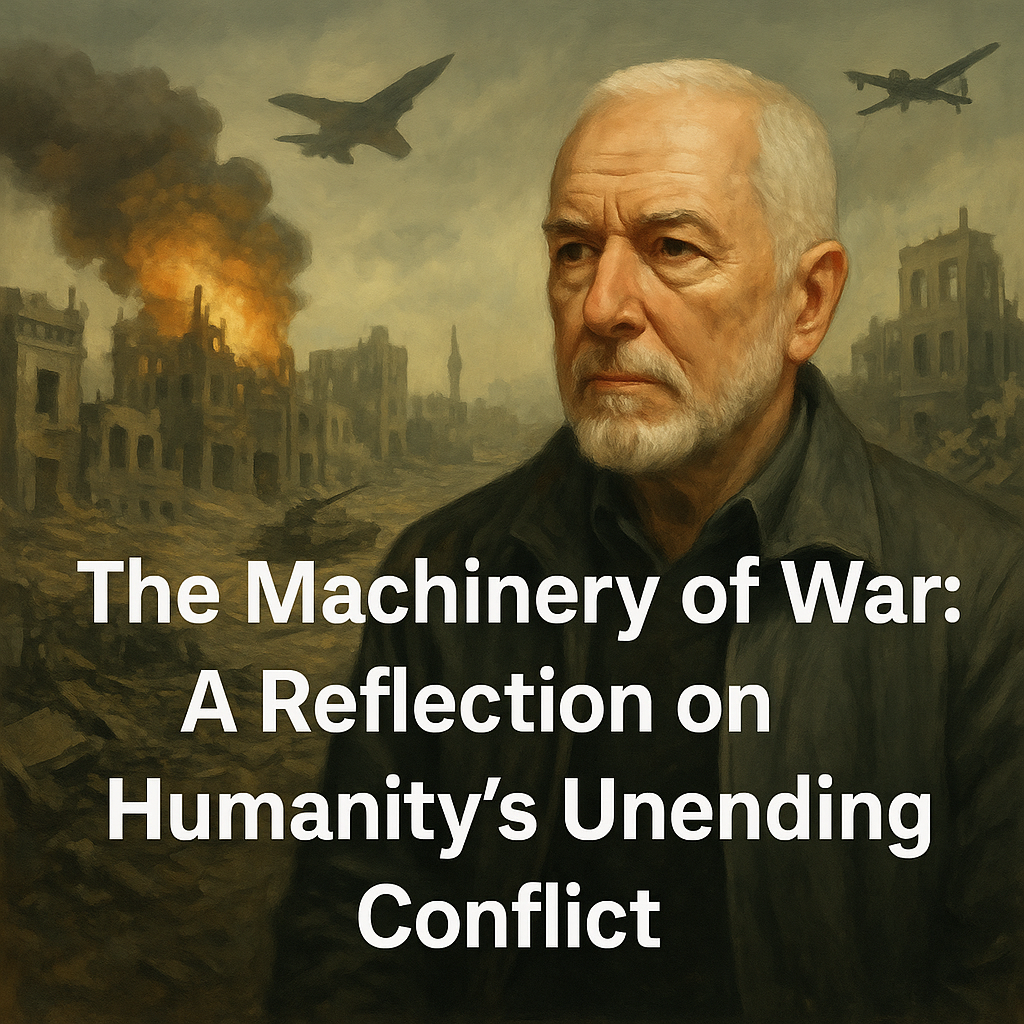
The Machinery of War: A Reflection on Humanity’s Unending Conflict
I gazed out my window this morning, taking in the serene beauty of the Australian landscape—the blue sky, the gentle sway of trees, the peaceful ambiance. It’s a stark contrast to the chaos engulfing other parts of our world this morning. While I enjoy this tranquility, countless others face unimaginable horrors: bombs, drones, missiles, and the relentless march of war.
The 20th Century: A Century of Unprecedented Bloodshed
The 20th century stands as a testament to humanity’s capacity for destruction. Estimates suggest that between 108 and 187 million people lost their lives due to war-related causes during this period. The two World Wars alone accounted for a significant portion of these casualties, with World War II claiming between 70 and 85 million lives . These figures are not just numbers; they represent individual lives, dreams extinguished, and families torn apart and as a side note, our leaders were willing to close the world down to attempt to stop a pandemic that may or may not have been scripted! But these same people glorify and justify war.
The Rise of Neoconservatism: A Catalyst for Modern Conflicts
In the latter half of the 20th century, a political movement known as neoconservatism began to influence U.S. foreign policy significantly. Originating in the 1960s among liberal hawks disenchanted with the Democratic Party’s pacifist tendencies, neoconservatives advocated for a proactive, interventionist approach to global affairs .
Key figures like Paul Wolfowitz and Dick Cheney played pivotal roles in shaping this ideology. Wolfowitz’s 1992 “Defense Planning Guidance” document, often referred to as the “Wolfowitz Doctrine,” emphasized unilateral action and preemptive strikes to maintain U.S. global dominance . This doctrine laid the groundwork for the 2003 invasion of Iraq, a conflict that resulted in significant loss of life and regional instability. If you look closely into the countless other conflicts in recent times you might find evidence of this doctrine lurking in the undergrowth.
The 21st Century: A Continuation of the Cycle
The new millennium has not brought the peace many hoped for. Recent conflicts in Gaza, Ukraine, Syria, Iraq, Sudan, and Yemen have resulted in staggering death tolls:
Gaza and the West Bank: Over 60,000 people have been killed, with civilians bearing the brunt of the violence.
Ukraine: Estimates suggest that around 1 million individuals, including soldiers and civilians, have perished in the ongoing conflict.
Syria: The civil war, which began in 2011, has led to over 500,000 deaths.
Iraq: Since the 2003 invasion, civilian deaths are estimated to be at least 200,000, with some figures suggesting up to 1 million fatalities.
Sudan: Civil war has resulted in approximately 300,000 casualties.
Yemen: The ongoing conflict has claimed up to 400,000 lives .
These numbers are more than statistics; they represent a collective failure to prioritize peace and human life over power and profit.
The Role of Media and Public Perception
One cannot overlook the media’s role in shaping public opinion and, by extension, policy. Governments often rely on media narratives to justify military actions, framing interventions as necessary for national security or humanitarian purposes. This manipulation of information can desensitize the public, making it easier to garner support for wars that may not serve the populace’s best interests.
A Call to Consciousness
It’s easy to feel powerless in the face of such overwhelming violence. However, change begins with awareness. By questioning narratives, seeking truth, and holding leaders accountable, individuals can contribute to a collective shift in consciousness. It’s imperative to recognize the humanity in others, to empathize with those affected by conflict, and to advocate for policies that prioritize peace and diplomacy over aggression.
Conclusion
As I reflect on the state of our world, I am reminded of the profound responsibility we share. The cycle of war and violence is not an inevitability; it’s a choice perpetuated by those in power and, by extension, by our silence. Let us choose to break this cycle, to envision a world where conflicts are resolved through dialogue and understanding, and to commit ourselves to the arduous but essential task of building lasting peace.