A Life of Music: My Oldest Companion
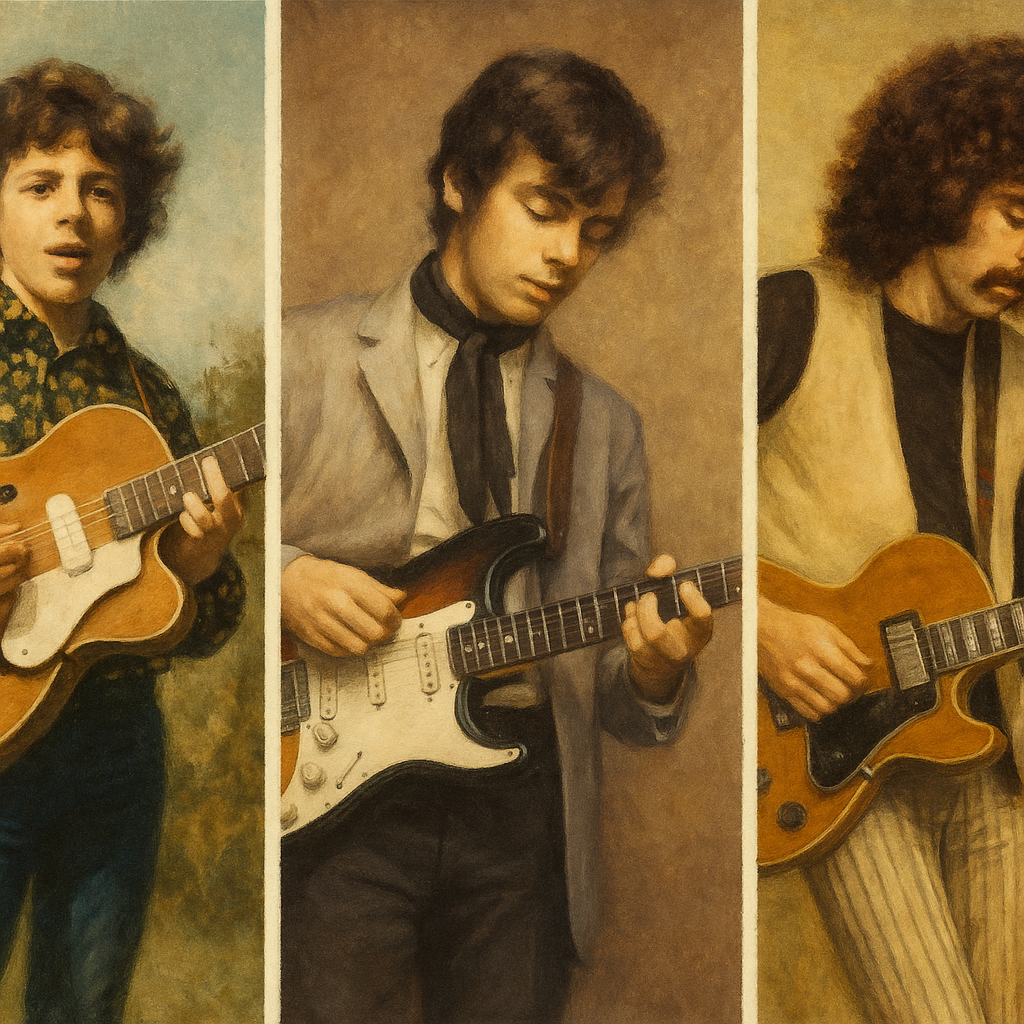
When I was 10 years old, I fell in love for the first time. It wasn’t with a girl—it was with music. That was the year Telstar came out, a strange and wonderful instrumental by an English band called The Tornados. With its soaring melody and space-age electronics, it captured something bigger than sound—it captured possibility. It was the anthem of a world on the edge of cosmic discovery, and for a young boy in 1962, it was utterly spellbinding. That track lit a fire in me. From that point on, I was certain I needed to be a guitarist in a band.
This was even before the surf music explosion, before the Beatles. Somehow, I managed to make that dream happen. I played in bands, I took solos, I kicked up storms. But like so many things I was naturally good at, I lacked the discipline and perhaps the maturity to take it further. I never learned theory. I didn’t practice enough. I rode the wave of inspiration but never built the boat to sail further. And yet… music never left me. It’s been one of the most consistent and loyal companions of my life. For over seven decades, it has soothed me, lifted me, thrilled me, and reminded me of what it means to feel deeply and to be alive.
My taste has never been confined to one style. I’m not genre-loyal—I’m emotionally loyal. If it moves me, I listen. Jazz, ambient, rock, classical, funk, world music—they all serve a purpose. They become the soundtrack to different states of mind, different landscapes of experience. I believe music is one of the great gifts of being human. It transcends language. It penetrates barriers. It communicates something more essential than words ever can. In that way, music is a form of magic—perhaps the purest form we have.
I’ve always had huge respect for good musicians—not just for their talent, but for their devotion, their discipline, their precision, their passion. There’s something divine in a tight band that grooves as one—a synergy of creativity, mathematics, rhythm and soul. These people communicate with their whole being. They can make you cry or dance or remember who you are. That ability to channel something larger than themselves is, to me, a form of sacred service.
In recent years, I’ve taken that love into a new realm. I’ve started experimenting with digital music. For a long time, I kept it private, even felt a little embarrassed—as though creating with software instead of a Stratocaster was somehow “cheating.” But I’ve let go of that idea. I’ve realised it’s a legitimate form of expression, as valid as any other. The tools don’t matter—it’s what you do with them that counts. After all, there are only twelve notes in the Western musical scale, yet the number of possible combinations, interpretations, and emotions they can produce is infinite. Give the same ingredients to ten chefs and you’ll get ten different meals. Music works the same way.
My breakthrough moment came two years ago when I set off on a trip to Europe. I gave myself a creative challenge: to make a new piece of music every time I took a flight or even when I went on a road trip. Each track had to be completed within the flight time. It was playful at first, but it evolved into a powerful discipline. These days, I try to create one new piece each week. I still have a long way to go when it comes to mixing, production, and mastering. But I’m finally ready to share what I’ve made. My music might not be revolutionary, but it’s honest. It’s infused with my life experiences—encounters, moments, landscapes, memories. Each track is a sonic journal entry, a personal reflection rendered in sound.
People often ask me what kind of music I listen to, and the answer is: it depends. On the mood, the weather, the moment. I love music that makes me feel something real—sometimes grief, sometimes awe, sometimes pure joy. The greatest moments are those when I’m listening and suddenly I’m lifted, carried into an emotional space I didn’t expect to enter. That’s love, in its purest form. And the kind of music I’m drawn to most? Improvisation. I love when artists create in the moment, when they’re not reciting something memorised but are communing with each other in real time, feeling their way forward. That kind of spontaneity takes incredible trust, skill and openness.
As for me, I improvise too—maybe not as brilliantly, maybe not as fluently, but I bring my full heart. And in many ways, my approach to music mirrors my approach to life: I may not always know what I’m doing, but I do it as honestly and joyfully as I can.
I’m now in my eighth decade of life, and music is more important to me than ever. It uplifts me. It keeps me curious. It gives me a sense of purpose. And now I feel it’s time to start sharing what I’ve created with anyone willing to listen. Not because I think I’ve made something extraordinary—but because I believe in the power of music to connect us. If even one person finds a moment of calm, inspiration, or joy in something I’ve made, then it’s worth it.
Music has carried me through love, heartbreak, discovery, loss, and rebirth. It’s always been there in the background, guiding me like a compass I didn’t always know I was following. It’s more than a hobby. It’s part of my soul. And the beauty of it is—I still get the same thrill now that I did in 1962 when I first heard Telstar. That sense of wonder and love… it never left.