You’re Not Doing Keto (Unless You Can Prove It)
You’re Not Doing Keto (Unless You Can Prove It)
Let’s not sugar-coat this — literally.
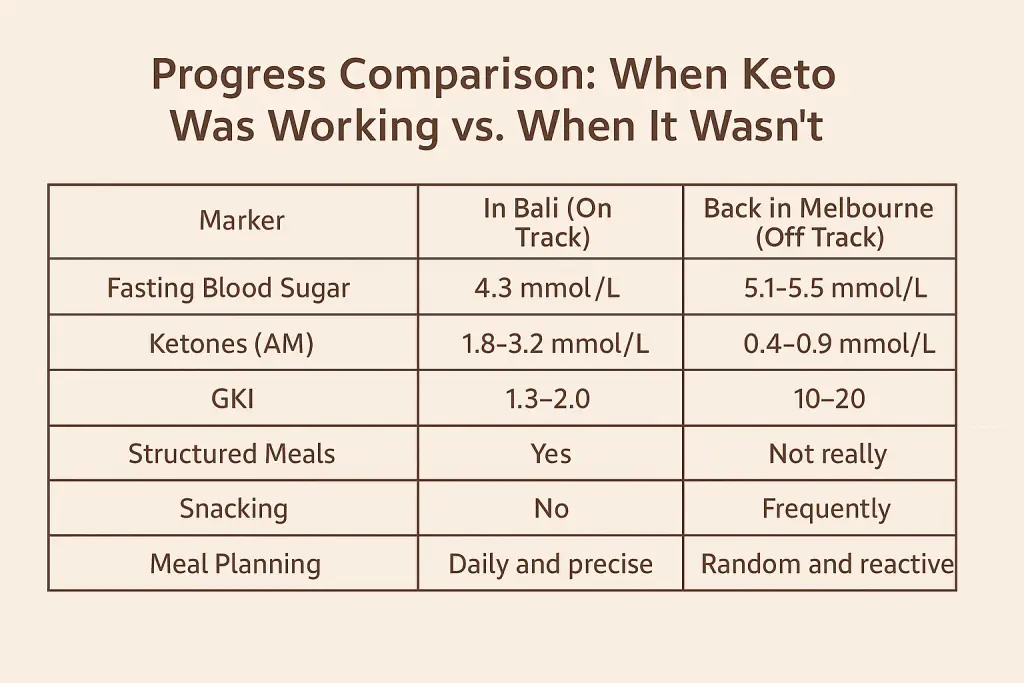
I’ve been trying to restart therapeutic ketosis since returning to Melbourne, and my results have been pitiful. I’ve watched my GKI blow out to 10, even 20, and I’m here to tell you: this is what happens when you bullshit yourself.
It’s easy to say you’re “doing keto” — but unless you’re testing, tracking, planning, and holding yourself accountable with actual numbers, you’re probably not even close.
Keto Is a Metabolic State — Not a Vibe
You don’t “kind of” do keto.
You either shift your metabolism to burn fat for fuel, or you’re still living off glucose — even if you think you’re eating clean.
That’s the magic (and burden) of ketogenic nutrition:
It’s measurable.
And if you’re not measuring, you’re guessing.
The Reality: What I’ve Learned (Again)
Since landing back in Melbourne, I’ve had access to all the little indulgences I couldn’t get in Bali.
Raspberries? Yes.
Coconut yoghurt? Oh yes.
A splash of cream here, a handful of nuts there?
All “innocent” on the surface, but together? A carb bomb.
Suddenly, I’m eating whenever I feel like it, skipping structure, and making decisions based on desire instead of data.
Result?
My morning blood glucose has crept over 5 mmol/L, my ketones have tanked, and my GKI is back in the danger zone.
If You’re Serious, You Need Discipline
Here’s the hard truth I’ve relearned:
You must track your macros. No exceptions.
Meal timing matters. Structured meals, no snacking.
Commercial ‘keto’ products are garbage. Chemist and supermarket shelves are filled with fake keto junk.
Planning is essential. If you leave the house without knowing what you’ll eat, you’re sunk.
Once your fasting glucose goes over 5, something is wrong.
No room for self-deception. Your blood tests will tell the truth.
Chronometer: Your Keto Truth Serum
One of the best tools for getting real is the Chronometer app.
It lets you:
Log every bite
See your net carbs clearly
Track macros and calories
Monitor micronutrient intake
Export your data and cross-reference it with blood sugar and ketone readings
And it’s free to start. No excuses.
Testing: The Only Way to Know
I use a Freestyle Optium Neo, which reads both blood glucose and ketones. I test:
First thing in the morning (fasted)
Before bed
This gives me my GKI (Glucose-Ketone Index) — a real-time indicator of metabolic state.
GKI = (Glucose in mmol/L) ÷ (Ketones in mmol/L)
If it’s:
>9: You’re not in ketosis.
6–9: Borderline.
3–6: Mild ketosis.
<3: Nutritional ketosis.
1 or below: Therapeutic ketosis — the gold standard for treating cancer, insulin resistance, or type 2 diabetes.
What a Real Keto Day Looks Like
🔥
Goal: 75–80% fat, 15–20% protein, <5% carbs
Example Day:
Morning (Black Coffee + MCTs):
Bulletproof-style coffee (25g butter, 2 tbsp MCT oil)
Lunch:
3 duck eggs, avocado, olive oil drizzle
10 macadamias
Dinner:
200g pork belly
Steamed cabbage with coconut oil
1 tsp apple cider vinegar
Water:
2–3L with electrolytes
Snacks?
None. They break the fasted-fat-burn state.
Why Does It Matter?
Because keto done properly can reverse metabolic disease.
It can lower insulin, stabilize blood sugar, reduce inflammation, starve cancer cells, and shift body composition.
But not if you’re winging it.
If your GKI is over 6 and you’re trying to treat cancer, you’re not even close.
Getting insulin down is the slow, patient work of weeks and months of strict discipline.
It’s hard. But it works.
Final Thoughts: You Can’t Fake This
Keto isn’t a vibe. It’s a measurable, biological shift.
You’re either in it or you’re not. And if you’re not tracking, testing, and prepping, you’re probably just on a low-carb diet — not keto.
So next time someone says, “I tried keto, but it didn’t work for me,” ask them:
“What was your GKI?”
“What were your macros?”
“How often did you test?”
Chances are… they weren’t doing keto.