Hernias: The Bulge You Can’t Ignore — My Spigelian Story
The Surprise Passenger
About a year ago, during a routine ultrasound for something else entirely, I was told I had a hernia. Not just any hernia — a Spigelian hernia. Never heard of it? Neither had I.
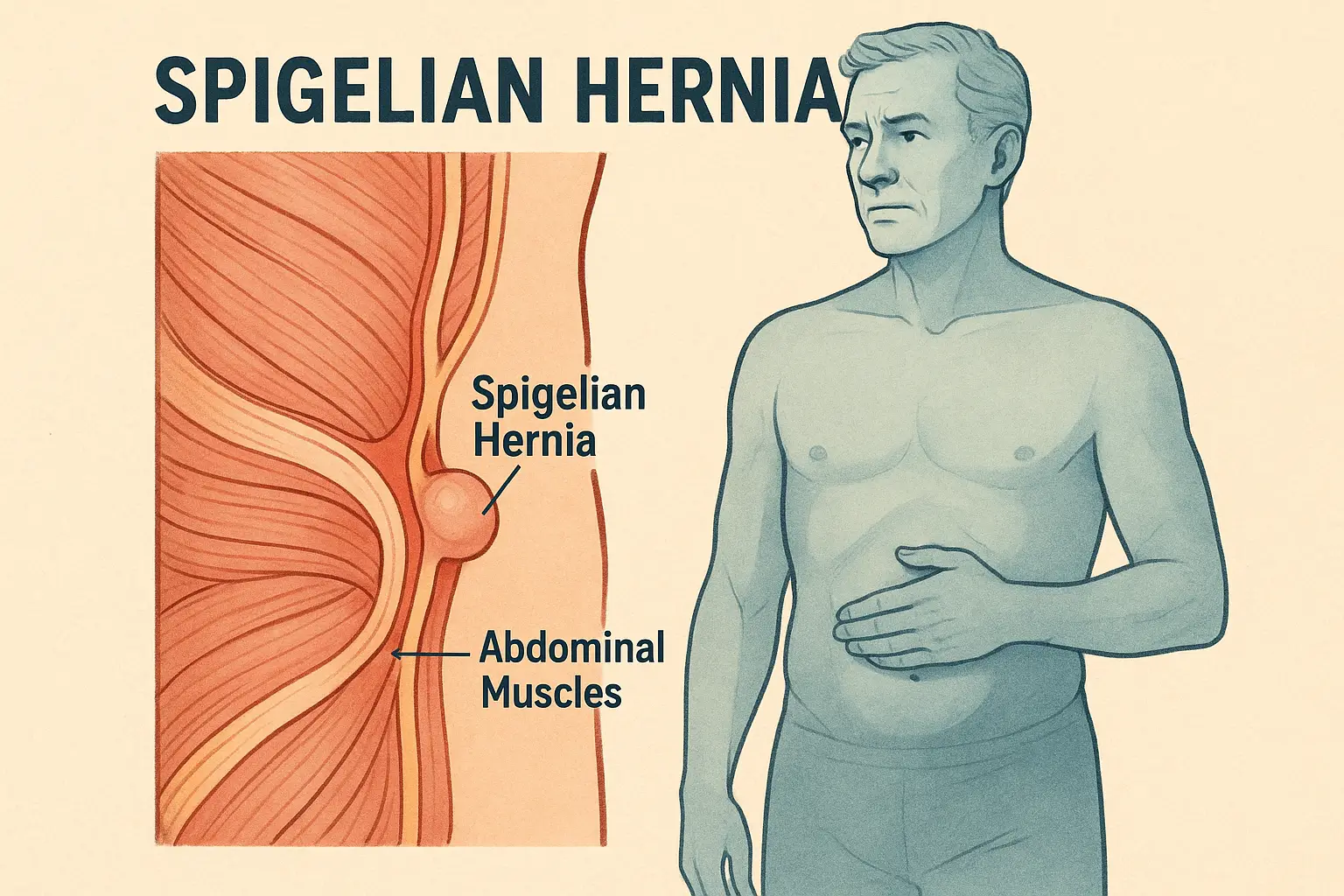
Turns out, it’s the kind of hernia that likes to stay hidden, lurking between layers of abdominal muscle instead of popping out like the more common inguinal or umbilical types. No visible lump, no dramatic swelling — just a stealthy little protrusion sneaking out through the Spigelian fascia, the part of your abdominal wall near the edge of the rectus muscle.
What Makes a Spigelian Hernia Different?
Most hernias occur where the abdominal wall is naturally weaker, like the groin or belly button. But Spigelian hernias form through a defect in the fascia (connective tissue) rather than an open canal. This makes them harder to detect and potentially more dangerous because they can become strangulated — when blood flow gets cut off to the trapped tissue — without much warning.
How They Happen
Like many things, they can creep up slowly. They’re often caused by:
Straining from lifting heavy weights
Chronic coughing or constipation
Pregnancy or obesity
Previous abdominal surgeries
Loss of structural support as visceral fat melts away (yes — even getting leaner can make these more noticeable)
I’ve had abdominal cramps for years and always blamed my liver (back when it was fatty, scarred, and still recovering from a decade of whisky and Vodka). Later I suspected my gallstones were the culprit. The hernia was the quiet guest hiding at the party.
The Bali Episodes
I’ve learned that if I’m going to get a hernia cramp, it’s probably going to be at the gym or in the sauna — two places where pushing limits is the norm. Last September, while training in Bali, I had one of the worst episodes: a pulsating, bulging mass on my left side that felt like a terrified cat under my skin. Then I had another nasty episode 5 weeks ago in Sanur.
More recently, another “cramp and bulge” snuck up on me after a sauna. But this time, it was on the right side. Another hernia? Possibly.
And yes, losing visceral fat (which I’ve done over the past 3 months) — the kind wrapped around your organs — can unmask underlying hernias by reducing pressure that may have temporarily “held things in.” A leaner belly can sometimes reveal more than abs.
When to Take Action
I’ve heard (and I believe) that Spigelian hernias should be repaired sooner rather than later. They’re more prone to strangulation because of their narrow neck — not much room for trapped tissue to escape. Still, being me, I haven’t let it stop me. I walk with a 10kg weight vest, train most days, and still enjoy life. But after the sauna scare, I’ve decided it’s time to act.
The Operation and The Mesh Question
In Australia, we’re lucky. Our public health system is solid, and if you need a hernia repair, the operation will eventually be covered. The downside? The wait. Months, sometimes more.
That’s why I’ve contacted Eastern Health (in Melbourne) again, hoping to move things forward.
Most hernia repairs — including Spigelian — are done laparoscopically using a synthetic mesh to reinforce the abdominal wall. The mesh reduces recurrence, but it’s not without controversy.
Concerns About Mesh:
Chronic pain (often from nerve entrapment)
Mesh migration or erosion
Infection risk
Autoimmune-type reactions (rare, but documented)
Difficult-to-treat complications if the mesh needs to be removed
Alternatives:
Pure tissue repair (no mesh), usually reserved for small hernias or in select patients — but recurrence rates are higher.
Biologic mesh, made from animal tissue, which is absorbable and may be used in infected or high-risk cases — but it’s expensive and not commonly used in public systems.
Can Hernias Be Treated Naturally?
The honest answer? No — not if it’s already formed. You can support the surrounding area with core-strengthening (once cleared), reduce pressure with good posture, and avoid straining. But hernias don’t reverse on their own. You can manage them, maybe prevent them from getting worse, but surgery is the only way to close the gap.
Some things that might help in the meantime:
Wearing a hernia belt for support during activity
Avoiding constipation or heavy lifting
Maintaining healthy weight
Gentle core work under supervision (eventually)
But if there’s cramping, bulging, or risk of strangulation? It’s time for the knife — ideally in skilled hands.
Coming Clean and Taking Action
This blog isn’t just an info dump — it’s my nudge to finally face the music. I’ll be taking this post (or parts of it) with me to the doctor on June 2. And if you’re reading this because you’ve got a weird ache or bulge you’ve been ignoring — please don’t.
Sometimes that little lump is telling you a big story.