Day Three in Amed: Que Sera, Ceremonies, and the Comfort of Contradictions
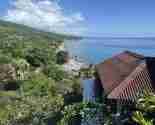
Day three begins in Amed — and it’s safe to say I’m growing fond of the place.
We’ve decided to stay longer, though we’re moving rooms this morning. Our current accommodation feels like something out of Cold War East Germany, complete with a vaguely haunted aesthetic and no hot water — but the charm of this sleepy coastal village more than makes up for it. We’ll be trading up to a room in classic Bali 1980s seaside style, which seems to be Amed’s default setting. It’s dated, yes, but strangely perfect. A touch of salt in the air, almost views of the sea, and a life where there’s no pressure to do anything.
After the constant motion of Ubud — racing from sauna to cold plunge to gym, juggling protocols and performance — it’s refreshing to just… stop. Write a little, maybe make a bit of music, eat simply, hold hands across the table, and gaze out at the sea, endless and unbothered by our ambitions.
We did venture into “town” yesterday. It looked promising at first — a few stylish façades glimpsed through rain-streaked windows on the way in. But up close, it was underwhelming. We settled at a restaurant called Rimba, probably the best ambiance in town — and, of course, owned entirely by a westerner.
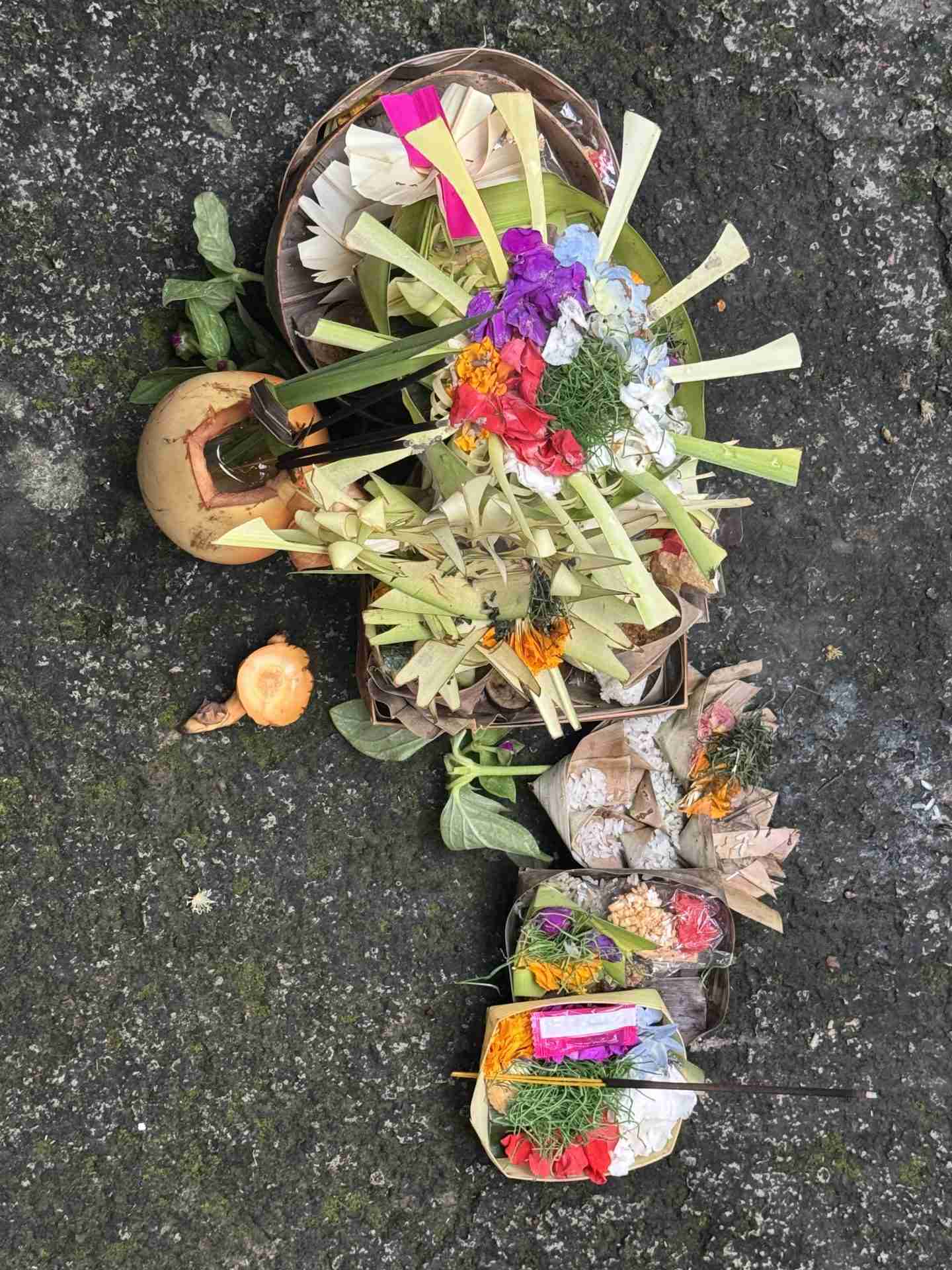
This got me thinking again about Balinese aesthetics. On the whole, the Balinese don’t design for visual elegance in the way westerners do. Form follows function here, and the function is deeply tied to ceremony, devotion, and tradition. Aesthetics in Bali are reserved for temples, offerings, ritual music, and dance. Everything has its place, and that place rarely changes. Their art, their food, their music — there’s an unspoken formula, an inherited pattern that repeats itself, year after year, ceremony after ceremony. It’s a kind of cultural conservatism, but not in the political sense — more a guarding of essence, a resistance to unnecessary change. And in this, there is something both admirable and mysterious.
Speaking of mystery — Galungan is just around the corner. Already in Ubud, the penjors will be going up: long bamboo poles adorned with coconut leaves and offerings, arcing gently over the roads in sacred welcome. In three days, the spirits of the ancestors are said to return home to visit. It’s a beautiful concept — families prepare the house, make offerings, and invite the unseen world to cross over and reconnect. A time of reverence, celebration, and alignment.
This morning, I found myself pondering one of the great Balinese contradictions: How can a culture so deeply immersed in ancestor worship also believe in reincarnation?
If the soul is reborn again and again, who exactly is it that returns at Galungan? How can our great-grandparents visit us from beyond if they’ve already been woven back into the fabric of another life?
But that’s where Balinese Hinduism is so richly unique. It’s a vibrant blend — Indian Hinduism, yes, but also animism, maybe Buddhism, ancestral veneration, and a deep respect for the seen and unseen realms that surround daily life. Rather than seeking logical consistency, it embraces spiritual simultaneity. The soul is both eternal and temporary. The ancestors both live again and remain present. Gods reside in mountains and rivers, but also within us. Time moves in circles, not lines.
In a way, maybe it’s not contradictory at all. Maybe it’s just… Balinese.
And maybe I could learn something from that. Maybe the search for logical resolution is part of my own mental trap — trying to line everything up in neat rows, when in fact the deeper truths are woven more like offerings: intricate, impermanent, symbolic, and meant to be felt, not solved.
So, for now, I’m letting go of my recent philosophical wrestling matches. I’ve decided that being present is more rewarding than trying to crack the simulation.
Even my attempt to stay in therapeutic ketosis has quietly given way. There is MCT oil, bought with me but no grass-fed butter here. But there’s grilled fish, prawns, calamari — fresh from the sea — and eaten with salt and a squeeze of lime eaten in simple warungs. That, too, is healing.
We’re back at our favorite morning café, sipping coffee and looking out to the glittering ocean. Georgie is reading; I’m writing. There’s flute music playing gently in the background, mingling with the soft crash of waves. I can feel the pace of life loosening its grip. Even time moves differently here.
In a few days, we’ll head to Candi Dasa for a touch of beachside comfort. But for now, we are suspended in a week of que sera sera — whatever will be, will be.
And that’s more than enough.