Melasti at Amed: A Morning of Waves, Gongs, and Memory
Georgie and I arrived in Amed yesterday, and I have to admit — I’m pleasantly surprised. Our hotel is a bit of a shithole, but after spending the afternoon lushing around like a couple of teenagers and settling into the rhythm of the place, we decided we could tolerate it for the two nights Georgie booked. Honestly, the view makes up for a lot. I’m already wondering why it’s taken me so long to come back to this part of Bali.
If memory serves, the last time I passed through this coast was in 1996. Allissa was 14, Paul was 16. We’d come to Bali to tend to the wounds left by Melanie’s departure, and part of that healing process became a long, winding road trip up the east coast. I remember navigating potholed roads above steep ocean cliffs until we reached Lovina. That journey feels like a lifetime ago now. My memories of it are blurred — part real, part invented, stitched together by the passage of time.
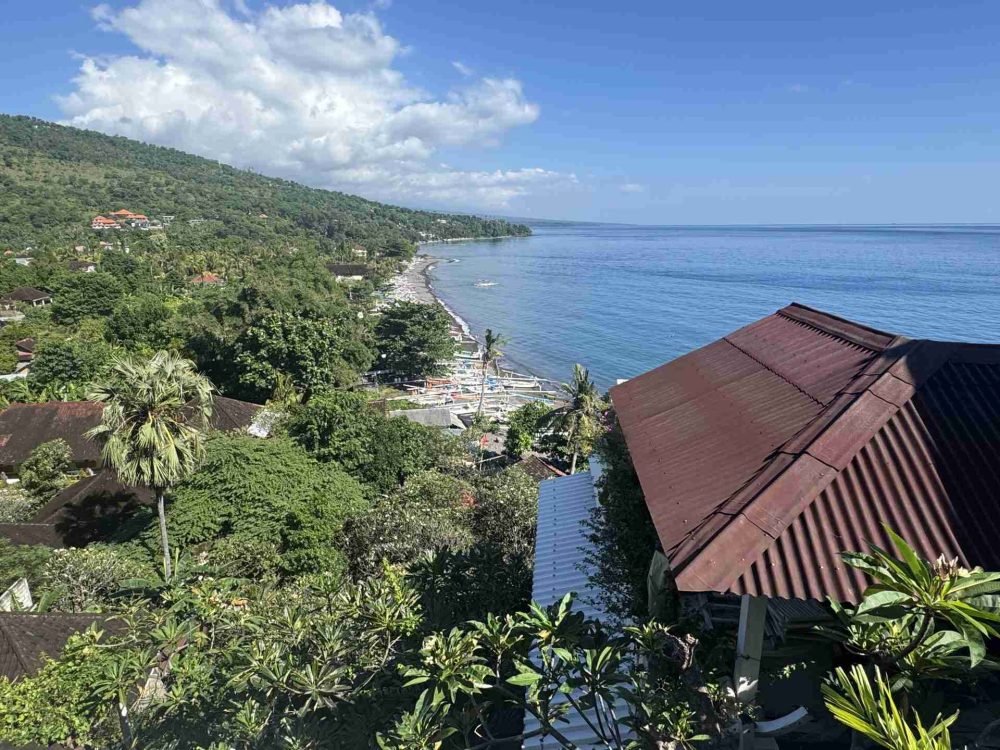
When we arrived in Amed yesterday, the sky was heavy and grey. Rain pelted the roof in sheets. Today, though, the scene has transformed. The sun is dazzling over the calm ocean, turning every wave into a shimmer. We’re sitting at Waeni’s Sunset View Café, perched above the sweeping arc of Amed Beach, where the curved row of jukung (traditional fishing boats) lines the black volcanic sand like teeth in a gentle smile.
Galungan begins in three days, and this morning, we were treated to something quietly extraordinary: the Melasti ceremony.
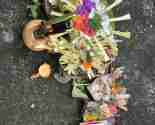
Melasti is one of Bali’s most sacred purification rituals, held just before Galungan. It’s a time when entire communities walk to the sea carrying sacred objects from their temples — pratima, umbul-umbul, and other symbols of the divine — to be ritually cleansed in the ocean. It is believed to cleanse not just the objects but the souls of the people, washing away spiritual impurities so they may welcome Galungan with clean hearts and minds.
From our quiet vantage point, we watched the villagers move down to the beach in their white ceremonial clothes — a soft procession of devotion, swaying parasols, and offerings. And then came the gamelan.
The music began slowly, the distinctive metallic clang of gangsa and the rounded warmth of kendang drums joining in as the ceremony unfolded. At the heart of it all were the deep, resonant gongs — ancient voices that seem to speak from within the island itself. There’s something both hypnotic and ecstatic about the way Balinese gamelan interlocks and pulses. It’s not just rhythm — it’s ritual in sound.
As the ceremony reached its height, the sea lapped quietly at the offerings laid upon her shore. Smoke from incense drifted upward, crossing paths with sea mist and morning sunlight. It was like watching spirit and matter meet in a brief, gentle embrace.
There’s something about Amed that already feels like medicine. Slower, quieter, somehow untouched. I think I’m going to enjoy the next six days here — maybe even more than that. I can imagine having a house in this place, one with a view of the ocean and space to listen to the stillness between the waves… or the echo of a gong carrying across the water.
What a way to begin the day. What a place to remember how to just be.